THE UNIVERSITY OF SASKATCHEWAN’S MAIN CAMPUS IS SITUATED ON TREATY 6 TERRITORY AND THE HOMELAND OF THE MÉTIS.


THE UNIVERSITY OF SASKATCHEWAN’S MAIN CAMPUS IS SITUATED ON TREATY 6 TERRITORY AND THE HOMELAND OF THE MÉTIS.
News

  • By October 19, 2011

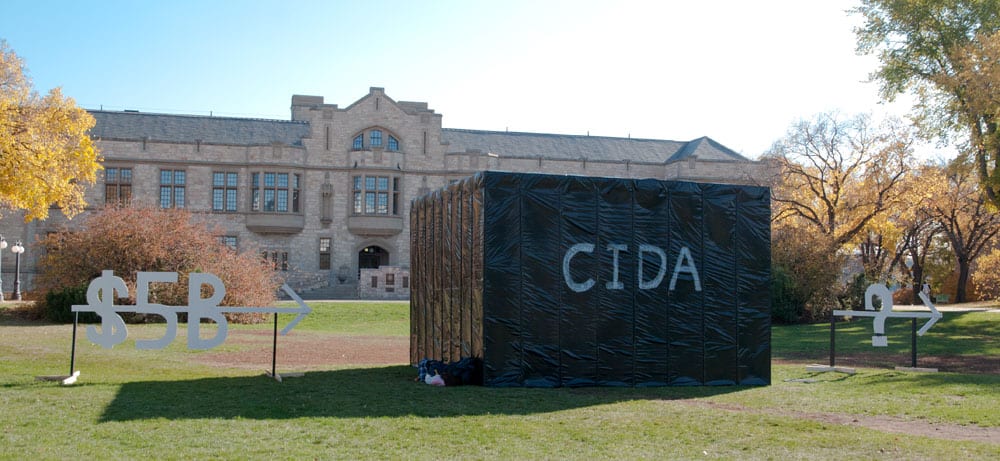
    Students walking through the Bowl on Oct. 17 may have seen a large black box with the letters “CIDA” scrawled on it. This mysterious display was part of Engineers Without Borders’ attempt to raise awareness about the need for international aid transparency.

    The Canadian International Development Agency spends $5 billion annually on development and poverty reduction around the world. After it is allocated, it becomes extremely difficult to follow up on how effective that aid was.

  • The 99% march in Occupy Saskatoon

    By October 19, 2011

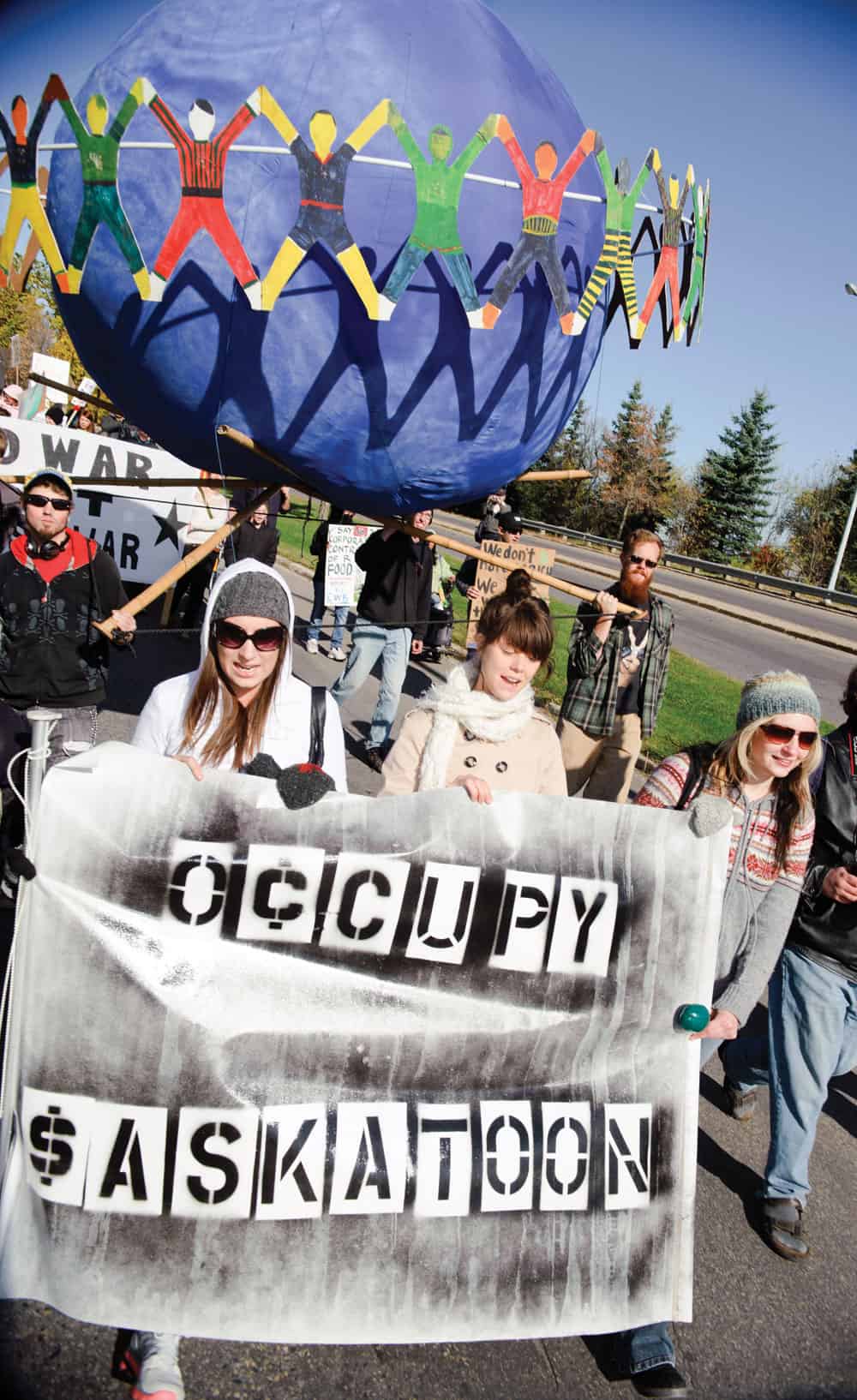
    More than 400 protesters in Saskatoon marched from the University Bridge to Friendship Park in a show of solidarity with the Occupy Wall Street movement on Oct. 15. This “Day of Global Action” saw groups in 1,445 cities around the world join the movement that began in New York City on Sept. 17.

    Protesters in Saskatoon chanted, “We are the 99 per cent,” and “Whose streets? Our streets!”

  • BRIEF: NDP student candidates off to a rocky start

    By October 18, 2011

    Catlin Hogan, a University of Saskatchewan student running in Martensville, is at home resting after his release from the hospital. The political studies student was in a car accident Oct. 12, resulting in a leg injury.

    Meanwhile, the campaign office of Aaron Ens, a University of Regina student running in Swift Current, was vandalized Oct. 14 when a tire iron was thrown through the window. Ens was not in the building at the time.

  • Cycling commuters live longer: Saskatoon Cycles

    By October 16, 2011

    Local group Saskatoon Cycles claims that shifting from a car to bicycle for short trips can increase your lifespan by up to 14 months.

    Recently, the City of Saskatoon has made some effort to accommodate cyclists, with shared traffic lanes, new routes and maps and a handful of exclusive traffic lanes. But Shaw says there are still sections of the city where it is dangerous to share the road with a vehicle.

  • No name, no shame

    By October 16, 2011

    In the wake of a scathing editorial in one of the world’s leading science journals, Canadian handling of research misconduct has been called into question.

    The journal Nature criticized the Natural Sciences and Energy Research Council of Canada for refusing to publicly identify researchers found guilty of misconduct in its Sept. 28 issue. James Turk of the Canadian Association of University Teachers says his organization agrees with Nature and advocates a change.

  • Wall targets university students with first campaign promise

    By October 15, 2011

    Not 24 hours after the 2011 Saskatchewan provincial election officially got underway, Premier Brad Wall made his first campaign promise addressing the costs of post-secondary education.

    Late Oct. 10, Wall made his formal visit to the Lieutenant-Governor asking him to dissolve legislature and issue the writ of election. By early Oct. 11, Wall introduced the Saskatchewan Party’s plan to help potential post-secondary students, if re-elected.

  • Top physicists speak at annual undergrad conference

    By October 14, 2011

    The University of Saskatchewan will have 150 more physics students on campus from Oct. 13 to 16 as part of the Canadian Undergraduate Physics Conference.

    This will be the 47th year of CUPC, hosted annually since 1965. The U of S has only played host to the conference once before, in 1993. Stephen Wolfram is the creator of the Mathematica programming language and the website Wolfram Alpha, which is billed as a “computational knowledge engine.” Although Wolfram Alpha looks like a search engine, its results are quite different.

  • Canada is a “hydro-climatic time bomb:” water policy expert calls for changes to counteract damages

    By October 14, 2011

    Kirk Hall was filled to the brim on Oct. 7 with both students and professionals for a lecture regarding water policy reform.

    The speaker was Rob Sandford, a member of the expert Forum for Leadership on Water, or FLOW. His address focused on the implications of climate change and its economic cost in relation to Canadian water resources.