THE UNIVERSITY OF SASKATCHEWAN’S MAIN CAMPUS IS SITUATED ON TREATY 6 TERRITORY AND THE HOMELAND OF THE MÉTIS.
THE UNIVERSITY OF SASKATCHEWAN’S MAIN CAMPUS IS SITUATED ON TREATY 6 TERRITORY AND THE HOMELAND OF THE MÉTIS.
News

  • By November 9, 2011

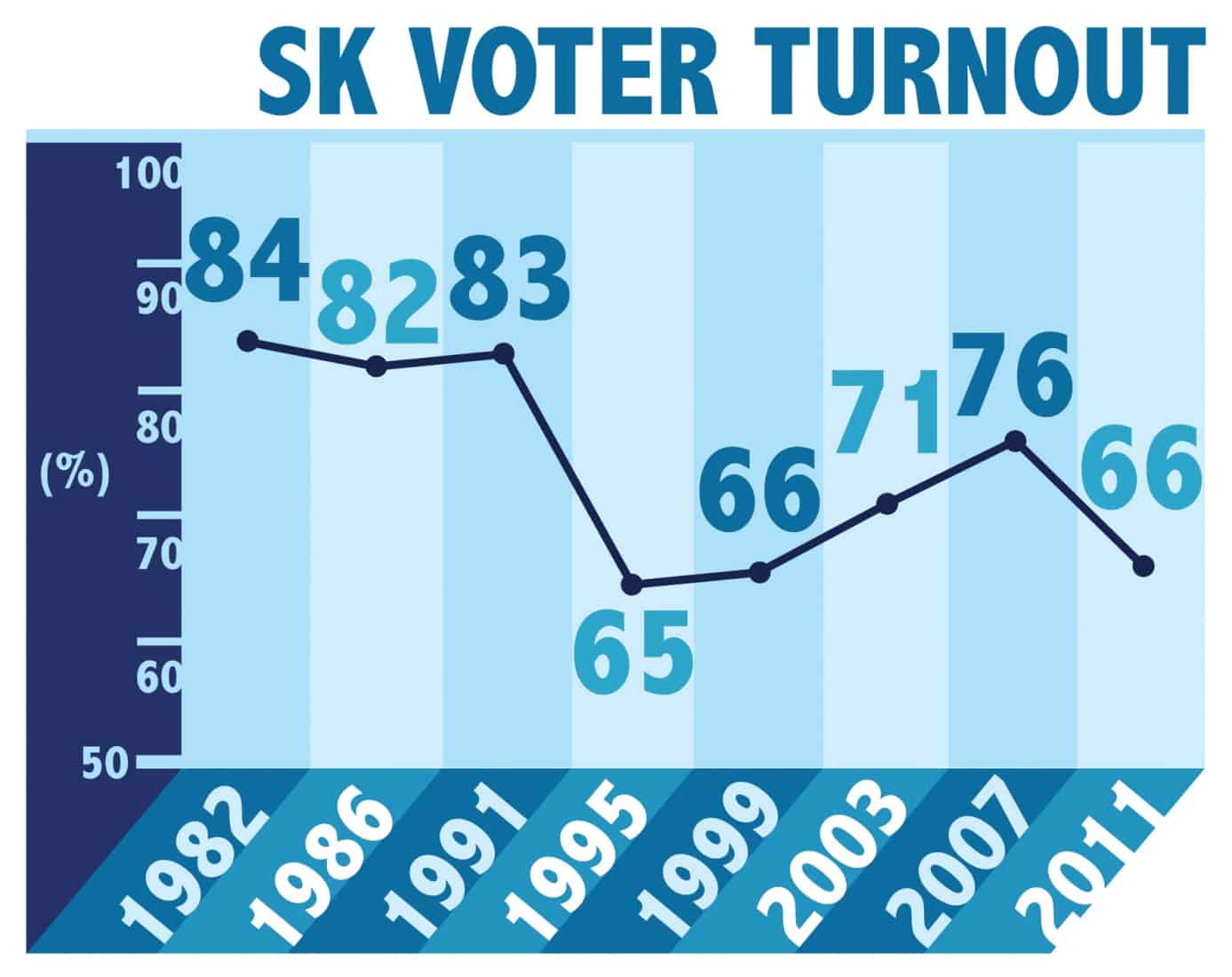
    Leading up to the election, the Sask. Party polled an astonishing 40 points ahead of the NDP, and was even leading them in the traditional NDP strongholds of Saskatoon and Regina. Perhaps in part because of this, voter turnout dropped from 2007’s 76 per cent down to 66 per cent.

    Despite this precipitous decline, Saskatchewan still saw a higher turnout than many provinces. Manitoba and Ontario, which both had elections earlier this fall, had respective turnout rates of 57 per cent and 42.9 per cent.

  • NDP incurs devastating losses; Lingenfelter steps down

    By November 9, 2011

    In its worst placement since 1982, the NDP lost 11 seats and saw its vote share dip by five per cent. Reduced to nine Members of the Legislative Assembly, the opposition caucus faces an uncertain future. Party leader Dwain Lingenfelter was defeated in Regina Douglas Park. He is the first provincial NDP or Co-operative Commonwealth Federation leader in Saskatchewan history to ever lose his seat.

  • Wall and Sask. Party garner biggest election win in province’s history

    By November 9, 2011

    In an election that delivered precisely what was expected, the Saskatchewan Party handily won a second majority on Nov. 7.

    The Sask. Party picked up 64 per cent of the popular vote across the province, breaking the previous record for a single party’s share of the vote. That record was set in the 1912 election, when Walter Scott led the Liberal Party to a victory with just under 60 per cent of the vote.

  • Winnipeg universities embrace gender-neutral washrooms

    By November 6, 2011

    The University of Winnipeg aims to have gender-neutral washrooms on campus by the end of the academic year.

    “If students identify as transgendered, they need to have a safe space where they feel comfortable in terms of meeting a basic need like going to the washroom,” said Debra Radi, the U of W executive director of the office for the vice-president academic.

  • Saskatoon growing? Not so fast: U of S professor warns economy not as golden as others claim

    By November 5, 2011

    In the wake of reports about Saskatchewan’s recent economic and population growth, a University of Saskatchewan professor cautions that the numbers are not as impressive as they may seem.

    In an Oct. 25 op-ed published in the StarPhoenix, Saskatoon Mayor Don Atchison claimed that “the prosperity and strong economic growth Saskatoon is now experiencing are here for the long term. The forces are aligned to continue to build Saskatoon’s success for at least the next 25 years. That’s not just wishful thinking, but is an economic fact.”

  • U of S among first Canadian schools to install public bike repair station

    By November 4, 2011

    Cyclists on campus in need of a speedy tune-up have a new bike repair stand to inflate tires and tighten screws.

    A Dero Fixit repair stand was installed Nov. 3 on a cement pad between the Arts and Thorvaldson buildings. The green steel stanchion can hold a single bike at a time, and is equipped with a manual air pump and an assortment of tethered screwdrivers, wrenches and Allen keys.

  • Politics 2.0: PR firm rolls out election-predicting app, website for Saskatchewan

    By November 3, 2011

    Predicting the results of provincial elections has never been easier, thanks to a new application available online and for smartphones.

    The election predictor, created by public relations company Hill and Knowlton Canada, allows individuals to make predictions by either splitting or swinging votes between different parties.

  • USSU releases political priorities shortly before election

    By November 2, 2011

    With less than two weeks to go before the provincial election, the University of Saskatchewan Students’ Union released a document outlining its demands of the provincial political parties.

    The timing was unusual for a document of its type, which groups usually use to extract promises from campaigning politicians desperate to curry favour with the electorate. USSU President Scott Hitchings acknowledged as much, saying the external affairs board he chairs got off to a late start this year.