
THE UNIVERSITY OF SASKATCHEWAN’S MAIN CAMPUS IS SITUATED ON TREATY 6 TERRITORY AND THE HOMELAND OF THE MÉTIS.
THE UNIVERSITY OF SASKATCHEWAN’S MAIN CAMPUS IS SITUATED ON TREATY 6 TERRITORY AND THE HOMELAND OF THE MÉTIS.
BLAIR WOYNARSKI
Arts Writer
Vampires. Have we had enough of them? Not yet, it seems. But while millions swoon at the thought of their own vamp boyfriend, Let Me In takes a darker, sparkle-absent approach to the genre.
Based on the 2008 Swedish film Let the Right One In, which I have not seen, though I’m told it is an accurate adaptation. The plot follows 12-year-old Owen (Kodi Smit-McPhee), a reclusive boy continually tormented by three bullies at school. His home life is little better: he lives with his hyper-religious and alcoholic mother who is in the process of getting a divorce from his father.
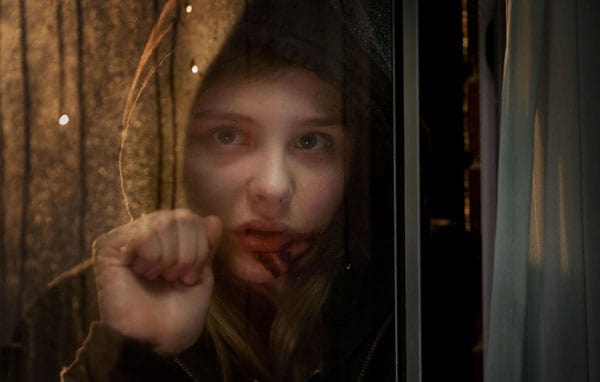
One day, a mysterious girl named Abby (Chloë Moretz) moves into the apartment next door with her father. Abby initially tries to keep her distance from Owen but the two inevitably form a bond. The problem is that Abby is a vampire who needs her father to go out into the night and kill people to bring back blood for her to drink. Owen stumbles upon this dark secret but he doesn’t know if he should run away.
It is not a horror film, per se; it’s more of suspenseful drama. It felt like a classical horror, relying on building atmosphere rather than going for outright shock-value. At times it veers toward the chilling and gruesome but the violence doesn’t get overplayed or tiresome. The terror is based on a slow build with several sharp spikes along the way.
Smit-McPhee has to carry the film. He is certainly not an acting prodigy but he hits the right chords as the precocious but desperately lonely pre-teen. He captures moments of terror and his conflicted attraction to Abby plays at both endearing and ominous levels, though his emotional range lacks across the film in general. The relationship between the two children is genuine, which was probably the movie’s greatest challenge.
Moretz stands out in particular. She garnered attention earlier this year as Hit Girl in Kick-Ass, but Abby is as dark and subdued as Hit Girl was colourful and stylishly overblown. She gives a mature performance, with measured pacing and clarity of purpose, seamlessly bringing out the duality of Abby’s existence as a lonely girl and a vicious monster. She displays emotional depth that points toward a good career past her teen years.
The Abby/Owen relationship forms the core of Let Me In, bringing together the need for friendship, the uncertainty of pubescent love and the terrifying tragedy of Abby’s endless bloodlust. It pulls off the relationship aspect but begins to fall apart in other departments. The story of Owen’s alcoholic mother and his parents’ impending divorce seems shoe-horned in and doesn’t ultimately go anywhere. It establishes Owen’s feelings of solitude but takes up plenty of screentime without contributing to the main plot or coming to any meaningful conclusion.
The real terror of Let Me In doesn’t come from vampires; it comes from schoolyard bullies. Owen is tormented at school, as many kids are, but this goes far beyond ordinary social commentary. They are far too sinister to be considered any regular representation of schoolyard antagonism and the ringleader makes Ace from Stand By Me look simply misunderstood. Abby is tragic, while the bullies are inexcusably evil. Beyond that, dynamics between bullies changes from scene to scene. While they serve a purpose to the plot, the characterization strays from its original intention.
As a vampire movie, Let Me In is dark, moving, intelligent and spiced with enough horror to keep anyone satisfied. It unfortunately gets bogged down with extraneous plots that are not handled with the same deftness as the central relationship. Still, fans of the genre should give this a go.

Leave a Reply