
THE UNIVERSITY OF SASKATCHEWAN’S MAIN CAMPUS IS SITUATED ON TREATY 6 TERRITORY AND THE HOMELAND OF THE MÉTIS.
THE UNIVERSITY OF SASKATCHEWAN’S MAIN CAMPUS IS SITUATED ON TREATY 6 TERRITORY AND THE HOMELAND OF THE MÉTIS.
TANNARA YELLAND
Arts Writer
Maybe you found it in the library, squished between copies of serialized vampire novels. Maybe a hip older sibling or friend passed it on, sensing your need. Maybe you were forced to read it in school and you never forgave your teacher. Chances are if you read it, your reaction was strong and you will either forever hold a soft spot for prematurely grey hair and the people who just can’t find a way to fit into the world, or you grimace every time someone waxes poetic about the book that changed their life.
Whatever the method, regardless of their reaction, countless youth have been exposed to J.D. Salinger’s classic novel The Catcher in the Rye since its publication in 1951. Since the initial furor that resulted in the book being banned and burned throughout the States and beyond, Catcher has become a paean of sorts for disaffected and unhappy youth the world over.
For better or worse, Salinger’s most popular novel has often been equated with its author, as if the two were somehow interchangeable. The fact that Salinger himself took off for the hills and lived in seclusion for most of his adult life, as protagonist Holden Caulfield wanted to, only serves to strengthen the feeling that Salinger and Caulfield bear more similarities than differences.
But the world, or the part of it that cared anyway, was reminded of one important difference recently: whereas Holden will forever live his crummy life on ever-yellowing pages, Salinger was a real man and a mortal.
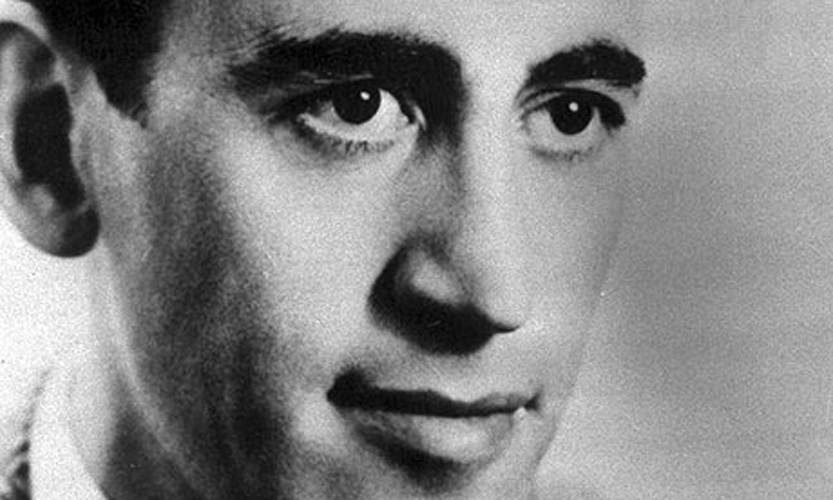
On Jan. 27, at age 91, Jerome David Salinger died.
Clearly, as evidenced by my having taken the time to write out this haphazard elegy, I belong to the camp that found in Holden Caulfield a kindred spirit. It would be difficult to explain how sad I always feel when, after re-reading Catcher in the Rye, I have to admit that I am much more of a phony that I would ever like to admit.
Salinger’s writing is imbued with a razor-sharp wit and a sometimes disturbingly clear vision of the world. The desperate search for sense in a world that offers none and rejects you because you took the time to ask for it drips off every page of Salinger’s work.
Probably my personal favourite is the story “Teddy,” which appears at the end of Nine Stories. The story offers an interesting view of death and what follows. From the window of his parents’ bedroom on a cruise ship, protagonist Teddy sees someone toss an orange peel onto the ocean. In between dealing with his argumentative father and, at best, well-intentioned mother, Teddy reflects on the orange peels.
“ ”˜Some of them are starting to sink now. In a few minutes, the only place they’ll still be floating is my mind. That’s quite interesting, because if you look at it a certain way, that’s where they started floating in the first place. If I’d never been here at all, or somebody’d come along and sort of chopped my head off right while I was…
“ ”˜After I go out this door, I may only exist in all the minds of my acquaintances,’ he said. ”˜I may be an orange peel.’ ”
Salinger meant a lot to me, and to a lot of people. And now he’s dead. Maybe he would not like that I am writing about him, but hopefully he would understand.
And if he doesn’t, I guess it no longer matters. Everything is shitty, just like he said (more or less), and now one less person is around who was willing to say so.
1919: born, New Year’s Day
1939: takes evening writing class taught by Story editor Whit Burnett; Burnett publishes Salinger’s story “The Young Folks” and becomes his mentor
1941: begins submitting stories to The New Yorker; seven are rejected, and “Slight Rebellion Off Madison” is deemed unpublishable after the Pearl Harbour attack; it is printed in 1946
1942: drafted to Army; sees action at Utah Beach on D-Day and in the Battle of the Bulge
1945: hospitalized for “battle fatigue,” a euphemism for mental breakdown
1951: Catcher in the Rye is published and spends 30 weeks on the New York Times bestseller list despite mixed reactions and several U.S. counties banning it
1953: move toward reclusive lifestyle sees large spike after an interview with high school students is featured prominently in Cornish, New Hampshire’s newspaper The Daily Beagle
1955: marries Claire Douglas; they have two children, Margaret and Matthew, before divorcing in 1967
1972: begins year long relationship with 18-year-old Joyce Maynard at age 53
1986: sues to stop publication of a biography written about him without his permission; it is published in 1988
1988: marries Colleen O’Neill, a nurse 40 years his junior
2010: dies, Jan. 27; is survived by Colleen and his two children

Leave a Reply