THE UNIVERSITY OF SASKATCHEWAN’S MAIN CAMPUS IS SITUATED ON TREATY 6 TERRITORY AND THE HOMELAND OF THE MÉTIS.

By The Sheaf December 2, 2013
Despite Ford’s own stance on crime, he has openly admitted to purchasing, possessing and using a banned substance as well as drinking and driving.
By Canadian University Press February 27, 2013
Saskatchewan has the highest HIV infection rates in all of Canada, and the number is growing. Some are looking to Vancouver’s experience with Insite as inspiration for harm reduction techniques.
By Canadian University Press February 7, 2013
Issues of hazing, steroids and player eligibility have raised huge controversy recently, and the league as well as its schools have had to impose harsh sanctions on the teams involved.
By Canadian University Press January 1, 2013
With two US states voting last month to decriminalize the substance—and recent polls indicating that the majority of Canadians are in favour of legalization—would it be in the best interest of British Columbians to follow suit?
By Canadian University Press November 27, 2012
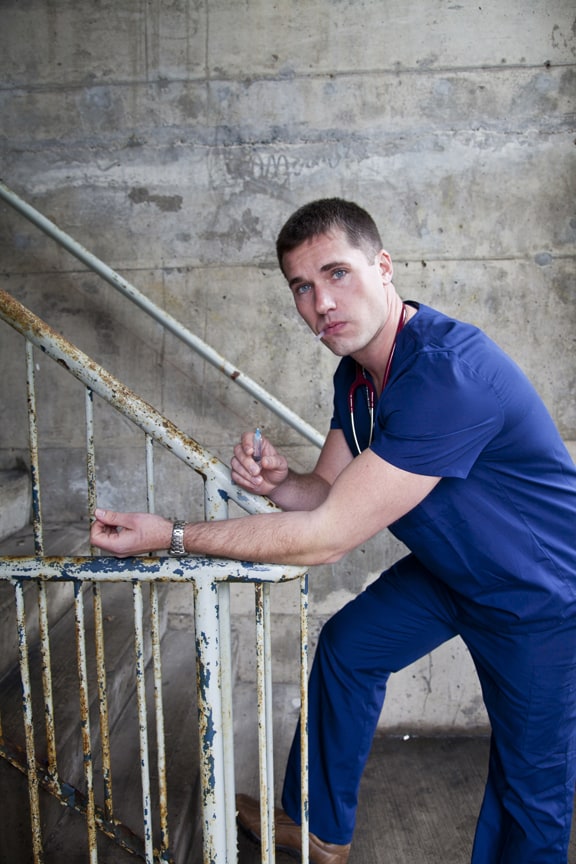
Benjamin Cox had a successful life. Working as a nurse in Inuvik in the Northwest Territories, Cox had a steady job, and was well respected by his colleagues, his patients and numerous members of the tightly knit community. However, before long, the St. Francis Xavier graduate would become the centre of a scandal that would shake his community to its core. He had become addicted to painkillers, stealing leftover doses from the patients that trusted him.
By Canadian University Press November 9, 2012
A team of researchers led by University of Victoria professor Tim Stockwell concluded raising the minimum price of beverages with high alcohol content reduces their consumption. A study focusing mainly on pricing strategies in Saskatchewan concluded that prices should be raised for any drink over 6.5% alcohol content.
By Canadian University Press November 2, 2012
The Ontario Trillium Foundation awarded a $150,000 grant to the Canadian Centre for Ethics in Sport on Oct. 1. The money will be used to develop a project highlighting the risks of taking performance enhancing drugs (PED) and presenting it to Kitchener-Waterloo high schools.
By Lewis Casey February 17, 2012
The University of Saskatchewan has a long and obscure history with mental health research. In the ’60s, professors Humphry Osmond, Abram Hoffer and Duncan Blewett used LSD therapy on both themselves and their patients to produce groundbreaking research and discoveries into the nature of mental illness and addiction before the drug was criminalized in 1969.
The film was introduced by the history department’s Erika Dyck, a major consultant on the film who helped ensure its accuracy. After the film ended she led a discussion on the content of the documentary, and later met with the Sheaf to discuss her own work in more detail.