
THE UNIVERSITY OF SASKATCHEWAN’S MAIN CAMPUS IS SITUATED ON TREATY 6 TERRITORY AND THE HOMELAND OF THE MÉTIS.
THE UNIVERSITY OF SASKATCHEWAN’S MAIN CAMPUS IS SITUATED ON TREATY 6 TERRITORY AND THE HOMELAND OF THE MÉTIS.
DUSTIN HARRISON
Opinions Writer
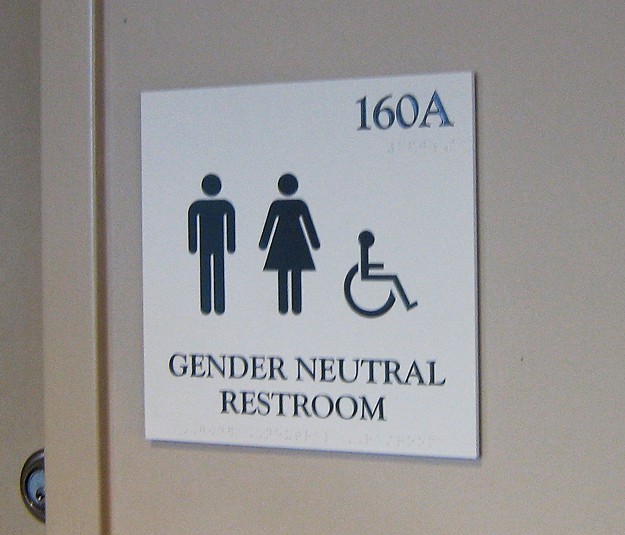 This past February, the House of Commons passed C-389, a private member’s bill introduced by Bill Siksay, the MP for Burnaby-Douglas, B.C., that proposed the addition of the terms “gender identity” and “gender expression” to the sections of the Canadian Human Rights Act and Criminal Code, which outline prohibited grounds of discrimination and what constitutes a hate crime. Pre-existing grounds of discrimination include race, religion, sex, age and disability.
In Siksay’s own words when introducing it, the bill “would give transsexual and transgender Canadians direct access to the protections provided for in the Canadian Human Rights Act and the Criminal Code of Canada that they so urgently need.”
Although Stephen Harper and most of the Conservative MPs ultimately voted against the bill, during debate no one stood to oppose the bill on any ideological or principled grounds and the bill passed through committee quickly without any amendments being made. The only opposition that did arise came out of MPs taking issue that the bill was vague — as it did not explicitly define “gender identity” and “gender expression” — and unnecessary, as they felt the current versions of the legislation in consideration were sufficient in providing protection for transsexual persons.
While MPs managed to keep any alarmist reactions to a minimum, others did not feel so inclined. Spokespersons from groups such as the Institute for Canadian Values, the Campaign Life Coalition, and REAL Women all came forward with claims that girls’ bathrooms and change rooms would be turned into hotspots for pedophiles should the bill be passed.
Siksay addressed this concern by reassuring people that the bill “would not change criminal and other sanctions that exist for assault, sexual assault, pedophilia, indecency, harassment, exhibitionism or voyeurism,” and that such reactionary commentary implied “that transpeople are somehow criminal by nature, an idea that is patently false.” A quick perusal of my girlfriend’s Criminal Behaviour textbook confirmed that “there is no single profile that encompasses a majority of sex offenders.”
She even highlighted it for studying, so you know it must be true.
Having passed in the House of Commons, the bill now is being debated in the Senate. If — and that’s a big if — it passes there and is given Royal Assent, it will officially become law.
Now, I’ll save you the drudgery of addressing the concerns raised by MPs about the semantics and legalese of the two documents the bill amends, as I assume most of you reading this are not going into law and really don’t care. Instead, let’s turn to the basic question behind all of this: Are gender identity and expression legitimate grounds of discrimination that should be defended against?
Here, I readily admit that I am torn. On the one hand, I agree that no one should ever be discriminated against because of gender — even if it means mixed bathrooms and men finally learning that women fart just as much as we do, and women learning that men almost never wash their hands. Male, female, other — who cares? We’re all just people in the end.
But, on the other hand, I’ve never been sexually assaulted, nor to my knowledge has anyone that I am closely associated with, so it’s easy to be glib about these things. On top of that, I can’t help but admit that while Shirley Manson may been fine with boys in the girls’ room and girls in the men’s room, I imagine most Canadians would be opposed to this, even if they did like singing to Garbage back in the ’90s.
Would you be fine with adult men changing next to your 11-year-old daughter or sister? Even if it is solely out of taboo and social convention, I find it hard to imagine that many of you could answer in the affirmative without cringing a bit first, if you’re able to answer it positively at all.
However, beyond the semantics of legislation and shared bathrooms being icky, I feel there is a more fundamental problem that needs to be addressed here.
As a society we do not have a very good common understanding of gender. If I were to ask what the difference between gender and sex is, some of you would reply that there is none and some of you would distinguish the two, both sides claiming their answer to be obvious, universal and incontestable. The former may say that we are what we are, regardless of how we feel about it, and the latter that gender is part of a person’s identity and sex is a biological characteristic.
Even the parliamentarians that were arguing for a greater understanding of gender outside of sex in debating this bill were using the terms transgender and transsexual interchangeably.
Until we have a reasoned, open discussion and come to a consensus on what the terms male, female, sex and gender mean and enshrine our conclusion in a legally-binding official document, I fear that those of us outside the traditional binary system of gender identification will remain with very little legal protection against discrimination and hate crimes.
– –
image: Laura Crossett/Flickr

Leave a Reply