
THE UNIVERSITY OF SASKATCHEWAN’S MAIN CAMPUS IS SITUATED ON TREATY 6 TERRITORY AND THE HOMELAND OF THE MÉTIS.
THE UNIVERSITY OF SASKATCHEWAN’S MAIN CAMPUS IS SITUATED ON TREATY 6 TERRITORY AND THE HOMELAND OF THE MÉTIS.
LISA THALHEIMER
Opinions Writer
 I wouldn’t exactly call myself a stickler for political correctness, but I do like to err on the side caution, especially when it comes to issues of race.
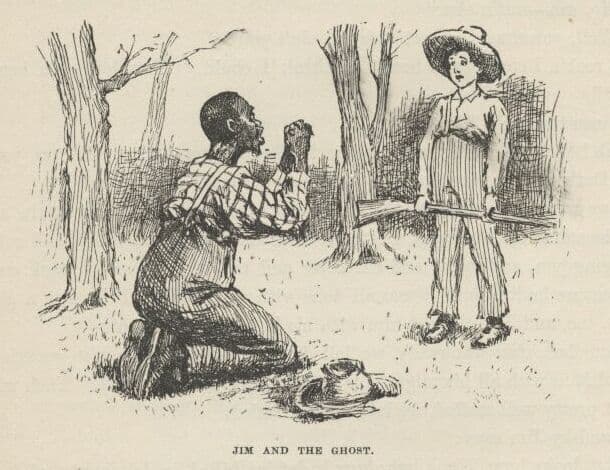
That being said, I think that the recent decision to remove the N-word from The Adventures of Huckleberry Finn, and to replace it with “slave,” is one of the worst ideas I’ve heard in a long time.
Alan Gribben, the Twain scholar who has been tasked with revising the classic novel for NewSouth Publishers, says the main reason he chose to include the revision is because he has been approached by many teachers and parents who feel restricted in their ability to teach the book in classrooms due to the presence of the word.
Frankly, I think this is a terrible reason to revise the novel.
I understand that in today’s society the N-word is considered one of the most slanderous and offensive insults of any sort, in any language. For example, in this article, even though I’m not writing in either a negative or offensive tone”š I have chosen to refrain from using the word simply because it is so loaded. That being said, I think that the N-word, as it is used in The Adventures of Huckleberry Finn, holds more teaching potential than it does harmfulness.
I respect and appreciate parents and teachers who don’t want children to use or be exposed to racial slurs in any capacity. However, exposure to politically incorrect words is inevitable, no matter how hard parents and educators try to protect their children. Such language permeates pop culture — just look at music and movies that high-school-aged kids are watching and listening to. By introducing a novel like The Adventures of Huckleberry Finn into the classroom, educators and parents have the opportunity to teach kids the word, the history behind it and why it is no longer a socially acceptable term to use.
Not only will replacing the N-word detract from a potential teaching opportunity, but it will give the entire book a different tone. When we hear or read of a person being referred to by a racial slur, especially in today’s sensitive society, there is an element of shock and an implication that cannot be duplicated by any other word.
Students need to learn this, and there is no better means to do so than by providing them with an example of the abhorrent circumstances under which the word was originally used.
Furthermore, by including this revision, a huge part of American history will be swept under the rug. Unfortunately, the prevalence of oppressive attitudes towards black people and their culture is a key element to North American history, especially in the southern United States where the novel takes place. By removing the N-word and replacing it with “slave,” the aspect of race becomes extremely down-played, which takes away one of the main reasons why Huckleberry Finn should still be taught in high schools. I don’t think the parents and educators who want the N-word removed understand the anti-racist message that the book attempts to deliver.
As an education student, one of the main things that I am learning is to bring multiple subjects together to enhance and reinforce important lessons. Huckleberry Finn gives the English teacher, not just the history teacher, an outlet to discuss racism, the origin of racial slurs and why they’re not considered to be politically correct in everyday conversation.
If parents and teachers were really concerned about their children being exposed to racial slurs I think they should recognize that it is going to happen, and that novels like The Adventures of Huckleberry Finn are positive places to start learning, discussing and talking about the societal ills which racism is at the heart of.
– –
image: Wikimedia Commons

Leave a Reply