
THE UNIVERSITY OF SASKATCHEWAN’S MAIN CAMPUS IS SITUATED ON TREATY 6 TERRITORY AND THE HOMELAND OF THE MÉTIS.
THE UNIVERSITY OF SASKATCHEWAN’S MAIN CAMPUS IS SITUATED ON TREATY 6 TERRITORY AND THE HOMELAND OF THE MÉTIS.
VICTORIA MARTINEZ
Senior News Editor
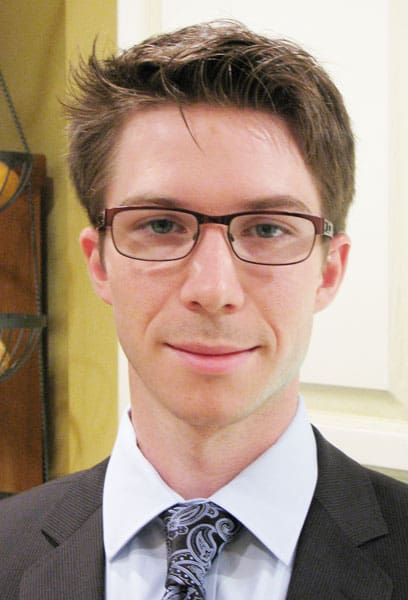 Tom Posyniak didn’t think much of his national award winning essay when he submitted it.
The work, on the chasm between Canada’s national environmental goals and the scattered policy throughout the provinces that slows progress, is the winner of Policy Options magazine’s first constitutional affairs essay competition.
Most impressively, Posyniak won the honour at the end of only his first year of law at the University of Saskatchewan.
“Any sort of final exam is sort of tumultuous and stressful…. When you get through it you get a sort of surplus of time,” said Posyniak of how he came to the competition.
All that extra time meant he had to do something to keep his mind off getting grades back and he saw the Policy Options competition as little more than practice.
“I didn’t want to hand it in,” he said. “I didn’t have any marks at that point, I didn’t know where I stood.”
The essay competition gave competitors free choice on what matter of policy to focus on, which gave Posyniak the chance to focus on issues of interest and value to a huge segment of the population — he chose a constitutional issue with important policy implications.
“I just think climate change is so important for the next 50 years. And we’ll be using the legal tests in a way that would have been uncomfortable in the past,” he said.
Specifically, the Canadian federal government is committed to reducing greenhouse gases by 17 per cent from 2005 levels by 2020. Unfortunately, it’s not really up to the federal government to create a lot of the necessary policies — provinces hold much of the relevant jurisdictions.
His winning essay, which looks into the intricacies of provincial and national constitutional separation, and the interprovincial bureaucracy that would come with strong action on climate, also discusses the current state of affairs. Multi-province co-operation has, up until now “been largely ineffective, breaking down into a lowest-common-denominator, voluntary approach,” Posyniak explained.
As we have seen in countless international agreements, voluntary goals don’t often see real completion.
“The federal government must be prepared to take the legislative initiative to guide provincial governments,” explained Posyniak in his essay. He suggests using Supreme Court decisions to guide federal-provincial dialogues. In order to create a strong working relationship between the provinces and the federal government on climate change, it will take a “robust application” of national doctrine.
Apparently, the judges from Policy Options saw good sense in Posyniak’s work, despite Posyniak’s own misgivings. Out of 27 entries from 11 Canadian law schools, his was chosen to be published in their magazine and awarded $1,500. Like any student, that money will pay off a debt already accrued: his new computer.
As far as his policy talent is concerned, he’s got bigger priorities for now.
“I can see myself doing policy discussions much later on. My priority right now is to become a lawyer,” he said. “I come from a political science and history background — from that perspective it’s always quite interesting.”
All of this, from a guy whose mom had to make him apply.
Tom Posyniak’s essay can be read here.
Leave a Reply