
THE UNIVERSITY OF SASKATCHEWAN’S MAIN CAMPUS IS SITUATED ON TREATY 6 TERRITORY AND THE HOMELAND OF THE MÉTIS.
THE UNIVERSITY OF SASKATCHEWAN’S MAIN CAMPUS IS SITUATED ON TREATY 6 TERRITORY AND THE HOMELAND OF THE MÉTIS.
KEVIN MENZ
Associate News Editor
Kory Teneycke announced his resignation on Sept. 15 as vice president of business development at Quebecor Media — a Canadian media company currently attempting to establish SUN TV, a proposed news and opinions television station targeted at a conservative audience.
Teneycke, former communications director for Prime Minister Stephen Harper, resigned after suspicions that he played a role in sabotaging an online petition opposing SUN TV.
On July 5 the Canadian Radio-television and Telecommunications Commision denied Quebecor’s request to receive a category 1 licence that would have given SUN TV the same must-carry priority that only a few “all-news” channels receive. Had it received the licence, it would have to be carried by all cable and satellite providers throughout Canada and would be found very early in the channel listings, unlike most channels of its current type — category 2a: analysis and interpretation.
Of course, this decision came as no surprise to most observers as the CRTC had announced in March that they would not consider new licence applications until October 2011 at the earliest.
Teneycke, however, continued to push for SUN TV’s must-carry licence.
“We’re looking for a cable specialty licence,” said Teneycke recently following the CRTC’s decision. He was confident that SUN TV would receive a satisfactory license in time for their Jan.1, 2011 projected launch date.
A category 1 licence is extremely difficult to attain and is only granted to the most necessary news channels. In fact, by Sept. 2011, even CBC’s and CTV’s specialized news channels will move from category 1 to category 2 licenses.
A category 2 licence is for more news-analysis style programming and does not provide must-carry priority; each category 2 station negotiates its distribution with each provider.
In late August, SUN TV asked for a category 2 licence but with a “mandatory access” privilege. This would establish a new category requiring every cable and satellite provider to offer the channel in at least one of their channel packages.
While this request is still being considered, there have been rumours that the Harper government attempted to push CRTC Chairman Konrad von Finckenstein out of office.
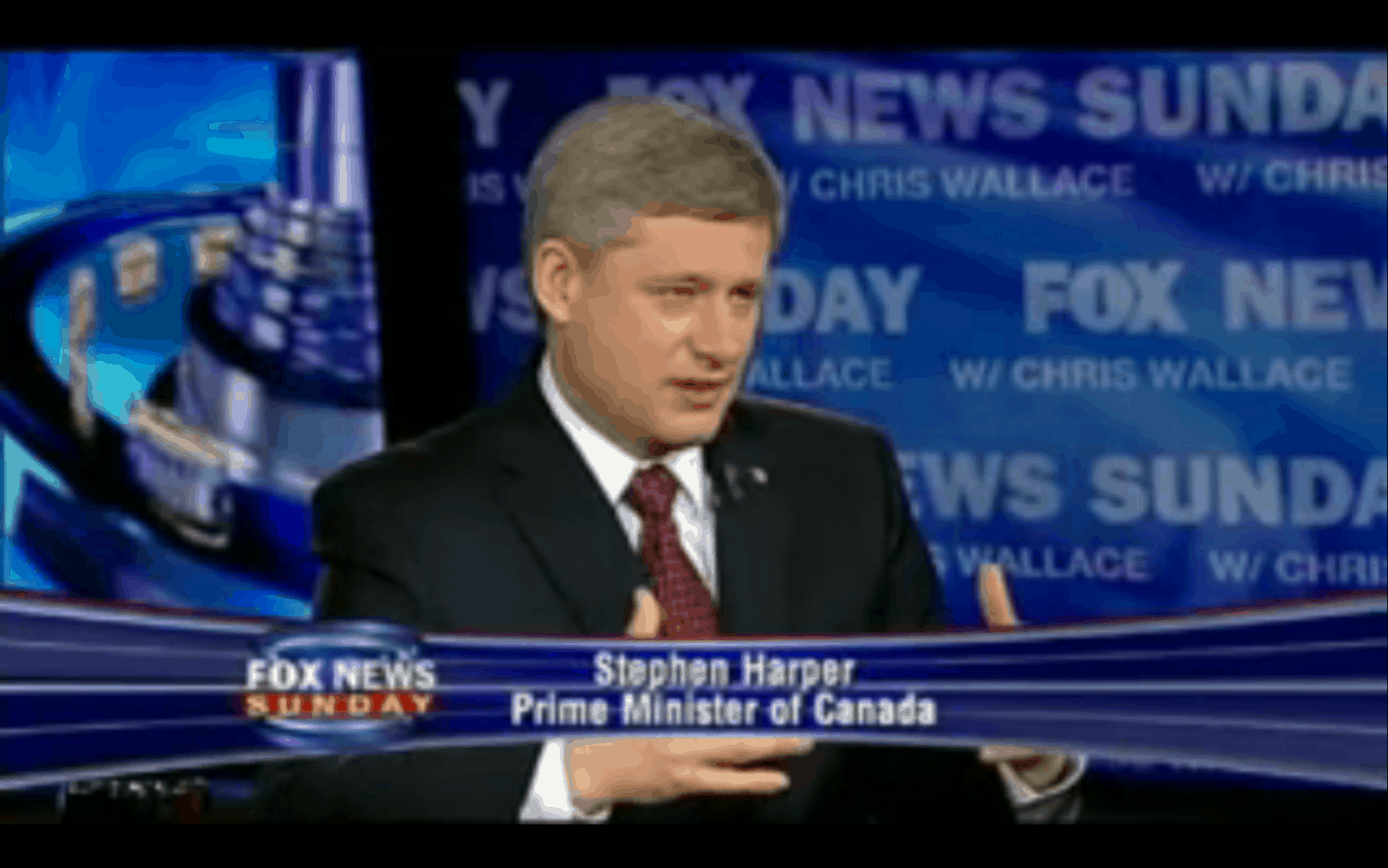
Indeed, these rumours appear believable considering Harper and Teneycke had met with Fox News owner Rupert Murdoch on March 30, 2009, and that a conservative news channel may be a long-term goal for the prime minister.
If true, this would imply that the Harper government had a vested interest in the SUN TV station in order to better serve a political agenda — thus making “mandatory access” very important for Harper.
According to Lawrence Martin of The Globe and Mail, Harper was offering Finckenstein a position as a judge or as ambassador to Chile.
This rumour of political pressure from Harper was enough for Avaaz.org, an online advocacy community, to start an online petition titled “Stop ”˜Fox News North.’ ”
Within six days the petition had over 75,000 signatures. However, within those six days Avaaz was threatened by lawyers from SUN TV stating they would sue unless Avaaz changed its petition.
All reports are extremely vague as to what the requested change was. SUN TV may have wanted Avaaz to remove the accusations against Harper from their petition’s description and to answer accusations of fraudulent signatures — Snuffleupagus, Boba Fett and numerous Ottawa journalists who denied signing it were amongst these fraudulent names.
Unfortunately this strategy backfired against SUN TV as Avaaz claimed their petition had been deliberately sabotaged. They even raised over $70,000 in 24 hours to investigate the apparent sabotage.
“It seems likely that the people behind this attack wanted the public to think that Avaaz is a spamming organization,” said a statement from the organization. “They targeted key journalists in an effort to damage Avaaz’s reputation in the press.”
On Sept. 3, during a televised debate on CBC between Teneycke and Avaaz executive director Ricken Patel, Teneycke stated that “I, like some of these journalists, was signed up to this petition.”
Patel responded by stating that “somebody did that last night just as you were writing the op-ed [attacking Avaaz’s petition as fraudulent] that you then published in your newspapers the next morning. You [Teneycke] seem to have knowledge of it and I’m wondering how you came to the knowledge of that.”
Patel then offered to hire KPMG to audit the petition to check its legitimacy and, on Sept. 14, Avaaz requested a criminal investigation by both the Ottawa Police and the RCMP into identifying the source of the fraudulent signatures.
The next day Teneycke resigned from Quebecor.
The alleged petition sabotage overshadowed Avaaz’s lack of actual evidence against Harper and may have hurt Teneycke’s cause in the end.
In a letter to the editor of The Globe and Mail, Finckenstein said that, “I would like to categorically state that no one at any level of government has approached me about the Sun TV application or my own mandate.”
While this letter does not directly shut down accusations that Harper offered judgeships and ambassadorships to Finckenstein, it is enough to consider the pressure tactic rumours against Harper as just that, rumours.
Therefore it must be stated that although the tactics employed to support SUN TV were sloppy, Avaaz was careless in their petition as they did not have their accusation 100 per cent fact-checked — Patel even stated that Avaaz had no legal proof of government CRTC pressure aside from Martin’s reports in The Globe and Mail.
This carelessness on both sides distracted from the actual issue at hand — SUN TV’s attempt to receive special privilege from the CRTC.
Luc Lavoie, Teneycke’s replacement, has stated that SUN TV will continue as planned.
Avaaz is also back on track fighting against the proposed station.
“This isn’t over,” said Patel. “Canadians are not just concerned about a prime minister’s former spin doctor, they’re concerned about a channel that backs the prime minister’s political agenda, asking for special government favours to fund its launch.”
Many Canadians feel that CBC has a left-wing bias but by moving CBC News Network to a category 2 licence, the CRTC is showing that analysis-style news shows will all be placed on the same level of broadcasting.
Of course, if SUN TV is granted a special category 2 licence, one would expect to see the same licences granted to the CBC and CTV.
While the proposed new station might run the risk of polarizing Canadian politics into a state much like American politics, it is likely to have a minor effect if it is not given must-carry priority. There are already numerous conservative and liberal media out there and perhaps the proposed SUN TV station is just a larger reflection of an already polarized Canadian political landscape.

Leave a Reply