
THE UNIVERSITY OF SASKATCHEWAN’S MAIN CAMPUS IS SITUATED ON TREATY 6 TERRITORY AND THE HOMELAND OF THE MÉTIS.
THE UNIVERSITY OF SASKATCHEWAN’S MAIN CAMPUS IS SITUATED ON TREATY 6 TERRITORY AND THE HOMELAND OF THE MÉTIS.
IAN REGNIER
News Writer
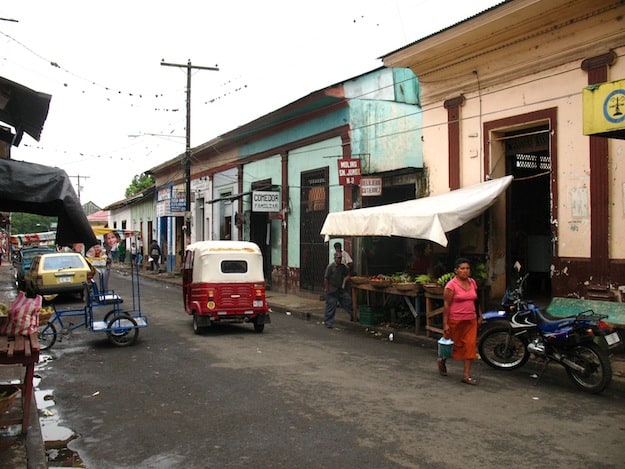
“We will take the road to San Marcos,” beamed Ronal, my new friend who hails from Nicaragua’s Atlantic coast. He works in my placement community, La Garnacha.
I was accompanying him one hot July morning for his weekly Sunday pilgrimage through the Segovia mountain range to the community of San Marcos. We were barely a hundred yards west from La Garnacha on this “road” before it became what so many things in Nicaragua had become for me —uncertain.
The straight and narrow gravel path suddenly changed into a winding terrain of rocky ravines embedded amongst the wild valley greenery. I was by no means “green” to surprise shifts of trail and overt obstacles offered by the landscape that Salman Rushdie so poignantly described as being shaped like a jaguar’s smile.
Two months earlier I had climbed the mighty Volcan San Cristobal with guerilla endurance but it still inevitably kicked my ass. Taking such treks helps curb one’s youthful yearnings to have everything be delivered with order.
However, on this particular journey with Ronal, I consciously wanted to shake off a naïvety more acute than mere curves of the path.
Ronal embarks on this venturous hike each Sunday to help the poor of San Marcos.
Once we arrived at our destination I could immediately sense the purpose of his plight. I can only describe the place using words familiar in resource-plenty Canada, where plight is used without meaning. If my community La Garnacha qualifies as a “have” then San Marcos is definitely a “have not.” There’s no electricity, a weak water system, meager plantation and no baseball field (very un-Nicaraguan!).
Who could I blame for this deprived barren site? The International Monetary Fund? Foreign non-aid? The president Daniel Ortega? All or maybe none. Either way, my disgruntled muse was misguided.
Instead of waiting on some higher authority, Ronal embraced a do-it-yourself development ethos with an unwavering conviction to help those in need. This action required no half-baked bleeding-heart rhetorical piffle to sway neoliberal hecklers. He came to San Marcos out of obvious humanity for a struggling people.
Walking through the community, Ronal modestly guided me from house to house where I was greeted with many sturdy handshakes and welcoming smiles. Ronal inquired on the health of those whom had fallen ill lately and noted necessary medicine.
All were invited to the noon celebration mass led by the community matriarch, a stout, proud woman who Ronal warmly addressed as “hermana.” Community members gathered in the church at the generally stress-free Central American pace, which I too now functioned at.
The turnout was not as great as Ronal had hoped but the mass commenced cheerfully anyway.
To begin I requested the opening number “Tu Gloria” in order to hear the soul swelling chorus line: “Dulce maria publica mi voz.” The congregation’s voices showered the holy melody while three gents plunked away on big Spanish guitars. Ronal followed with a socially conscious sermon with interludes of youths reading various scripture passages.
Afterwards, during the “pass” I sallied to make an impression on the fine Nica chicas sitting across the pews.
The mass closed with a traditional versicle-and-response hymn led by the matriarch. She sang interchanged blessings to San Marcos, La Garnacha, San Nicholas, Esteli, Nicaragua and for the final verse beautifully belted out “¡Viva y Saludos Canada!” Solidarity.
Before Ronal and I bid our “despedidas” we received hearty plates of gallo pinto, fresh tortillas and delicious coffee.
I had seen material poverty but shown a spiritual fortune. The former should never be idealized but rather improved through the inspiration of the latter.
San Marcos may remain a stranded limbo on the vast periphery to many but I ripened myself by seeing it up close and raw. Such was one day of my three-month Intercordia journey. A journey you can live to the fullest and have your stories never lull.
Intercordia is a travel education program run in partnership with the St Thomas More College. Find out more at intercordiacanada.org.
– –
image: Robert Blackie
Leave a Reply