
THE UNIVERSITY OF SASKATCHEWAN’S MAIN CAMPUS IS SITUATED ON TREATY 6 TERRITORY AND THE HOMELAND OF THE MÉTIS.
THE UNIVERSITY OF SASKATCHEWAN’S MAIN CAMPUS IS SITUATED ON TREATY 6 TERRITORY AND THE HOMELAND OF THE MÉTIS.
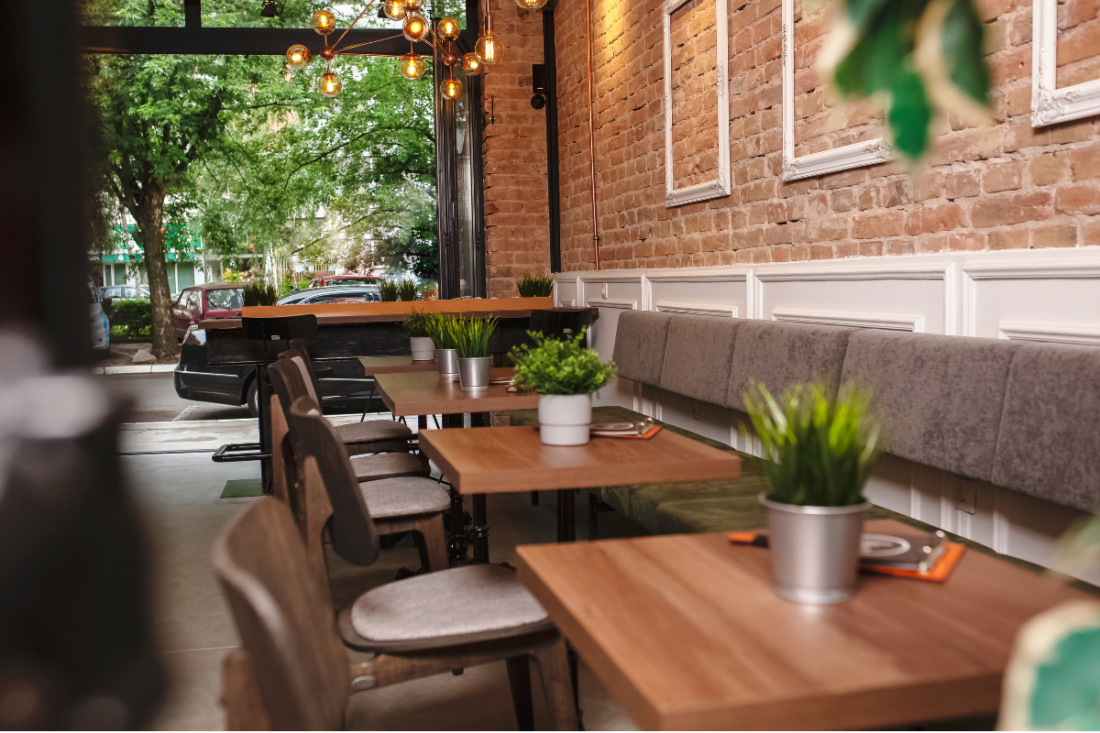
When we create our ideal cities, who will we allow to be a part of them?
When you get off work or wrap up a day of classes, where might you go? Coffee shop, run some errands, and most likely, you’ll head home. But can you think of a place outside of those two destinations where you can pass time that isn’t your First Place (home) and isn’t your Second Place (work, school) … but a third, leisurely and social space where you can just pass time?
Where would you go to meet someone new? Where have you met the current social circles that surround you now? Most likely from the forced proximity of your university classes or between the rushes at work. Most of our social circles revolve around which classes we’re in, and maybe we make friends with a few coworkers. Ask yourself, aside from school, work and home, is there anywhere else you can go to just exist?
Sociologist Ray Oldenburg coined the concept of a “third place”: a distinct space away from work or home that gives society informal public gathering places. He argues that these spaces have always existed throughout society, and are an important pillar of local democracy and community. Think cafés where you could sit for hours, public libraries that felt alive, parks that invited people to linger, bars where conversation mattered more than turnover. Not home, not work, just a tertiary space where community actually happens.
Today, they are vanishing or being hollowed out, and the culprit (once again) is late-stage capitalism doing exactly what it does best, extracting value from anything that cannot defend itself. In our reality, every square foot must justify itself financially. A space that allows people to gather without constant consumption is seen as inefficient. Community becomes a byproduct at best, an obstacle at worst. The result is a landscape where social life is either commodified or displaced entirely.
North America is particularly bad at resisting this trend, with many households owning two or more vehicles. Urban planning prioritizes cars over people, suburban sprawl isolates rather than connects and public investment in shared spaces is treated as expendable. Compare this to cities where plazas, transit and walkability create natural third places.
European cities like Copenhagen and Milan are ranked as some of the most walkable cities in the world based on time taken to walk to key amenities in the city, such as schools, restaurants, shops, and hospitals. Of the top 50 countries on the ranking, 45 of them are European cities. Historical factors contribute to this, as European cities developed before the invention and popularization of the automobile.
North American cities by comparison are hugely car-centric in their urban design, like designing highways to increase traffic flow, or neighborhoods and suburbs that require cars to connect them to the rest of the city. Thus the physical disconnect means casual interactions disappear. Loneliness increases, even as people are more digitally connected than ever. We have never had more ways to communicate, yet fewer places to simply be together.
It’s important to acknowledge that it’s more than an antisocial new generation—people are not choosing isolation because they prefer solitude. In reality, even those looking for community are hard-pressed to find it. Individuals are navigating a system that has made genuine public life harder to access. Ask your groupchat, where can you go out without spending money? Should simple social interaction come with a $27.50 price tag every single time? When every outing requires spending, when every space is surveilled or controlled, community is barely allowed to be a part of everyday life, and instead becomes a hollow luxury to be sought out on special occasions.
The problem is not just that third places are disappearing. You might still be able to meet up with a friend at a coffee shop, or have a picnic at the public park. The problem is that these third spaces are completely antithetical to the capitalist status quo of our societies, where paces are being optimized into being transactional. When you think of Starbucks, convenience is one of many things that come to mind—drive-thru windows and to-go cups don’t exactly invite you to linger.
There was once a time when the local Starbucks was the place to set up your laptop and do work for the day, emulating cozy local businesses to foster an environment for customers to just hang out. That business motto is unrecognizable now. Seating is sparing, Wi-Fi comes with time limits and the unspoken rule is clear: if you are not spending, you are not welcome.
Even public spaces like parks and libraries are increasingly privatized or policed in ways that discourage loitering, defined by Merriam Webster as “to remain in an area for no obvious reason”. Intuitively, that sounds like quite a reach. Prohibiting the act of simply existing without evident purpose is dystopian, and traces all the way back to medieval England. Anti-loitering laws are meant to deter possible crimes—which actually means they operate on prejudice and tend to target specific demographics.
So what happens when your first place (home) or second place (school/work) are not a guarantee? The erosion of third places hits unhoused people first and hardest, because for them, these places were never leisurely and optional. Third places, for some, are essential.
When cities strip away spaces where you can sit without spending money, use a washroom or exist without being questioned, they are removing basic survival infrastructure. Public libraries, transit stations, parks and community centers have long functioned as informal shelters during the day. As these spaces become more regulated, securitized or quietly privatized, the message is that your presence must be justified by consumption, and those who cannot pay are pushed out.
This is often framed as maintaining “order,” but in practice, it is displacement. Benches are redesigned to prevent lying down. Loitering laws are enforced more aggressively. Businesses adopt policies that filter out anyone who does not fit a narrow definition of customer. The result is a city that looks cleaner on the surface while forcing unhoused people into increasingly precarious and invisible corners.
There is a cruel logic at work here. Late-stage capitalism not only fails to provide housing, it also eliminates the few remaining spaces that make homelessness marginally more survivable. It transforms public space into a series of conditional zones, where access is tied to money, behaviour or appearance. For someone without stable housing, that means constant movement, constant scrutiny and constant danger.
If there is any hope, it lies in recognizing that third places are essential to society. Rebuilding them means pushing back against our society’s central idea that everything must be profitable to exist. It means investing in public goods, designing cities for pedestrians over cars, and valuing health over productivity.
Late-stage capitalism has decimated where and how we gather. Until that is confronted directly, the third place will remain what it is becoming now. Third spaces are an endangered species in a landscape that no longer has room for it.

Leave a Reply