
THE UNIVERSITY OF SASKATCHEWAN’S MAIN CAMPUS IS SITUATED ON TREATY 6 TERRITORY AND THE HOMELAND OF THE MÉTIS.
THE UNIVERSITY OF SASKATCHEWAN’S MAIN CAMPUS IS SITUATED ON TREATY 6 TERRITORY AND THE HOMELAND OF THE MÉTIS.
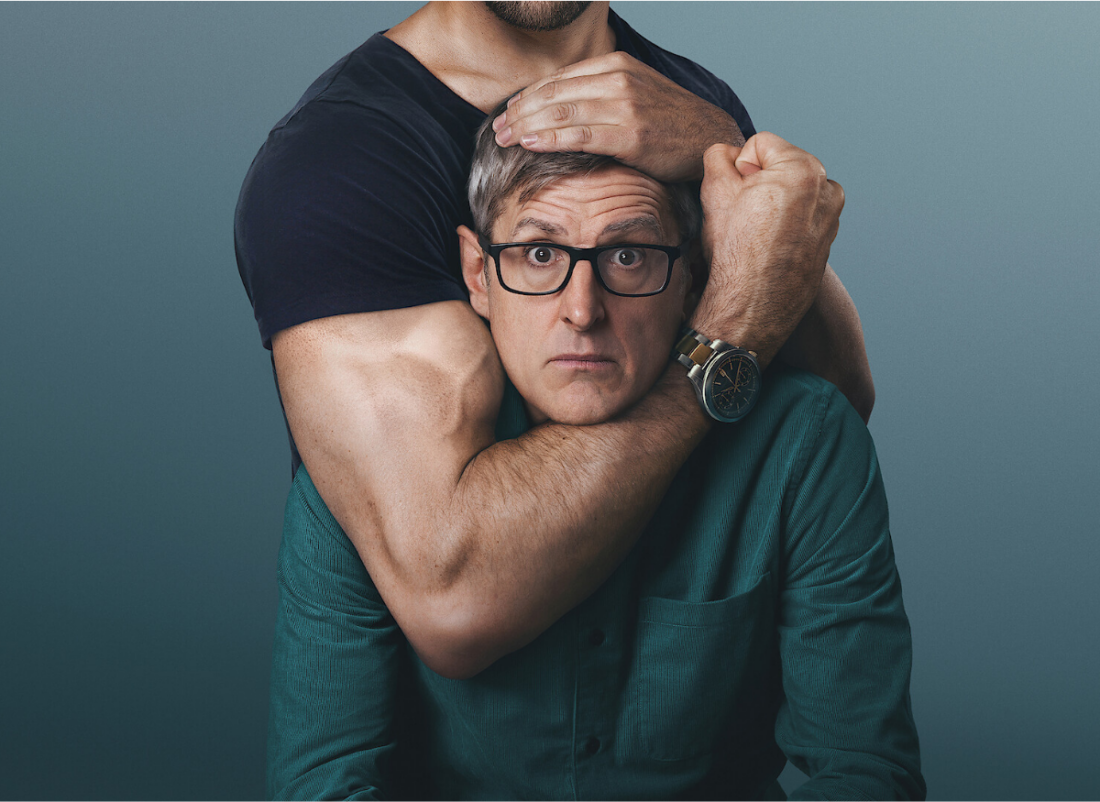
Louis Theroux, looksmaxxing and the red-pill pipeline
Louis Theroux: Inside the Manosphere feels like a glance into a world that everyone knows exists, but no one wants to step foot into.
The documentary is full of the familiar language about self-improvement, discipline and male confidence, but what it really captures is a bigger cultural shift: the way right-leaning gender politics, influencer culture and aesthetic obsession have taken hold of the attention economy.
The manosphere is not just a corner of the internet anymore. It’s part of the wider style of online life, where politics gets packaged as lifestyle and misogyny is often sold as common sense.
What makes the subject so difficult to pin down is that the content rarely begins as extremism. Much of the ecosystem operates through gradual escalation rather than outright provocation. A viewer might start with fitness advice or self-discipline content, then move toward dating strategies, then toward broader claims about how men and women “really” behave.
That’s the golden formula of the red-pill pipeline. Normalizing increasingly rigid ideas about gender while keeping the tone laid-back enough to feel unassuming. By the time overt misogyny appears, it’s already been wrapped in the appealing language of optimization, self-discipline and “truth” for its audience.
Figures like UK streamer Harrison Sullivan — also known as HSTikkyTokky — who appear in the documentary, illustrate how this works in real time. They don’t necessarily present themselves as extremists; instead, they position themselves as guides, offering young men advice on how to navigate relationships, build confidence or improve their status. Their tone is often calm, convincing or even conversational. That’s part of the appeal.
The ideas being presented don’t feel fringe when they’re delivered in the same format as any other lifestyle content. They don’t sound deranged when they’re talking to you like your friend offering sage advice.
A lot of this content is built around optimization. Trends like looksmaxxing reduce self-improvement to a set of measurable traits, encouraging men to refine everything from body composition to posture to facial structure.
Theroux’s documentary highlights how these ideas are often framed as a response rather than an initiation. Influencers position themselves as reacting to a culture they see as confusing or unstable. They present their content as a way to restore balance, offering rules where there are none and certainty where there’s doubt.
Whether or not that framing is accurate matters less than how effective it is. For viewers who already feel uncertain, the appeal of clear answers can outweigh the need for nuance.
The documentary touches on how visual presentation plays a central role in shaping these identities. From carefully curated social media profiles to the emphasis on physical traits associated with attractiveness and dominance, appearance becomes both a goal and a signal.
Trends like looksmaxxing or hyper-specific fitness ideals aren’t just about self-improvement. They’re about aligning with a recognizable standard, one that can be easily displayed and evaluated online.
The emphasis on details like jawlines or the so-called “Clavicular” aesthetic turns appearance into something that can be engineered, evaluated and compared. On its own, that might read as another branch of internet fitness culture, but within the manosphere, it becomes tied to a broader belief system where value is ranked and reinforced through visibility.
The fantasy is that masculinity can be engineered through enough discipline, enough grooming and enough ruthless self-awareness.
The bigger story here isn’t just vanity. It is the unbidden return of a harder, more conservative script for gender. Online masculinity now often leans toward hierarchy, control and clearly defined roles. Women are described less as partners than as proof of male rank. Relationships are framed as transactions. Emotional openness gets recast as weakness.
The shift toward more rigid ideas about masculinity becomes objectively noticeable — even to the most obtuse observers — when it comes to the language used across these spaces, and how it tends to frame relationships in transactional terms.
Concepts like the “sexual marketplace” or “high-value men” create a simplified model where attraction is reduced to status and strategy. Emotional complexity gets boiled down into something more predictable. Vulnerability is often dismissed outright, replaced by an emphasis on control, detachment and self-sufficiency.
What makes this framework effective is that it offers clarity. For audiences dealing with uncertainty, especially around dating or identity, a clear set of rules can feel reassuring. The problem is that those rules are often built on generalizations that reinforce resentment rather than resolve it.
Women, in particular, are frequently discussed as a monolithic group, with motivations and behaviours presented as fixed rather than varied. Over time, that kind of framing can shift from analysis into something closer to hostility and hatred.
The rise in misogyny within these spaces isn’t always overt. It can be embedded in the assumptions that structure the conversation. When relationships are framed primarily in terms of power, or when success is defined through dominance and access, it creates an environment where empathy becomes secondary. More explicit hostility often develops gradually, normalized through repetition rather than introduced all at once.
At the same time, the manosphere overlaps with a broader cultural movement that leans toward more conservative interpretations of gender roles. This isn’t always expressed through formal politics, but through a preference for hierarchy, stability and clearly defined expectations.
The idea that men should lead, provide and maintain control is presented not just as tradition, but as a corrective to what some see as the instability of modern dating and social norms.
The commercial side of this ecosystem plays a significant role as well. Many of the figures operating in this space monetize their audiences through courses, memberships or exclusive communities.
The advice they offer isn’t just content, it’s a product.
That creates an incentive to present problems as ongoing and solutions as something that requires continued investment. The more structured and prescriptive the worldview, the easier it is to package and sell.
What’s notable is how these ideas are spreading beyond the spaces where they originated. Elements of manosphere language and aesthetics are showing up in more mainstream content, often without the same level of explicit ideology. Fitness influencers, dating coaches and lifestyle creators may adopt similar frameworks without fully aligning themselves with the broader worldview. This makes the boundaries harder to define and the influence more diffuse.
The result is a cultural moment where certain assumptions about masculinity are becoming more visible and, in some cases, more accepted. The emphasis on self-optimization, the focus on status and the preference for clear hierarchies all reflect wider trends in digital culture. The manosphere doesn’t exist outside of those trends. It amplifies them in specific ways, particularly around gender.
What emerges from the documentary is less a sense of alarm and more a recognition of how integrated these ideas have become.
Young men are navigating a landscape where identity is increasingly shaped by online content, where guidance comes from influencers rather than institutions and where visibility often determines value. The manosphere offers one version of how to interpret that landscape. It’s structured, consistent and easy to understand, which helps explain its reach even as its assumptions remain contested.
The manosphere isn’t confined to isolated corners of the internet. Its language, aesthetics and assumptions are filtering into mainstream platforms, often in diluted or less explicit forms. Fitness content, dating advice and self-improvement media increasingly overlap with these frameworks, even when they don’t fully adopt them.
Theroux avoids drawing firm conclusions, but the documentary points toward a broader question about where these trends are heading.
If masculinity continues to be shaped by metrics, algorithms and market logic, what gets lost in the process? The emphasis on clarity and structure can be appealing, but it often comes at the expense of flexibility and complexity.
The broader question isn’t just why these ideas are gaining traction, but what alternatives are available. If the appeal lies in clarity and direction, then any response that ignores those needs risks being overlooked.
The growth of the manosphere suggests that the demand for guidance around masculinity hasn’t disappeared. It’s simply being met in ways that are highly visible, highly marketable and increasingly difficult to separate from the wider culture they’re part of.

Leave a Reply