
THE UNIVERSITY OF SASKATCHEWAN’S MAIN CAMPUS IS SITUATED ON TREATY 6 TERRITORY AND THE HOMELAND OF THE MÉTIS.
THE UNIVERSITY OF SASKATCHEWAN’S MAIN CAMPUS IS SITUATED ON TREATY 6 TERRITORY AND THE HOMELAND OF THE MÉTIS.
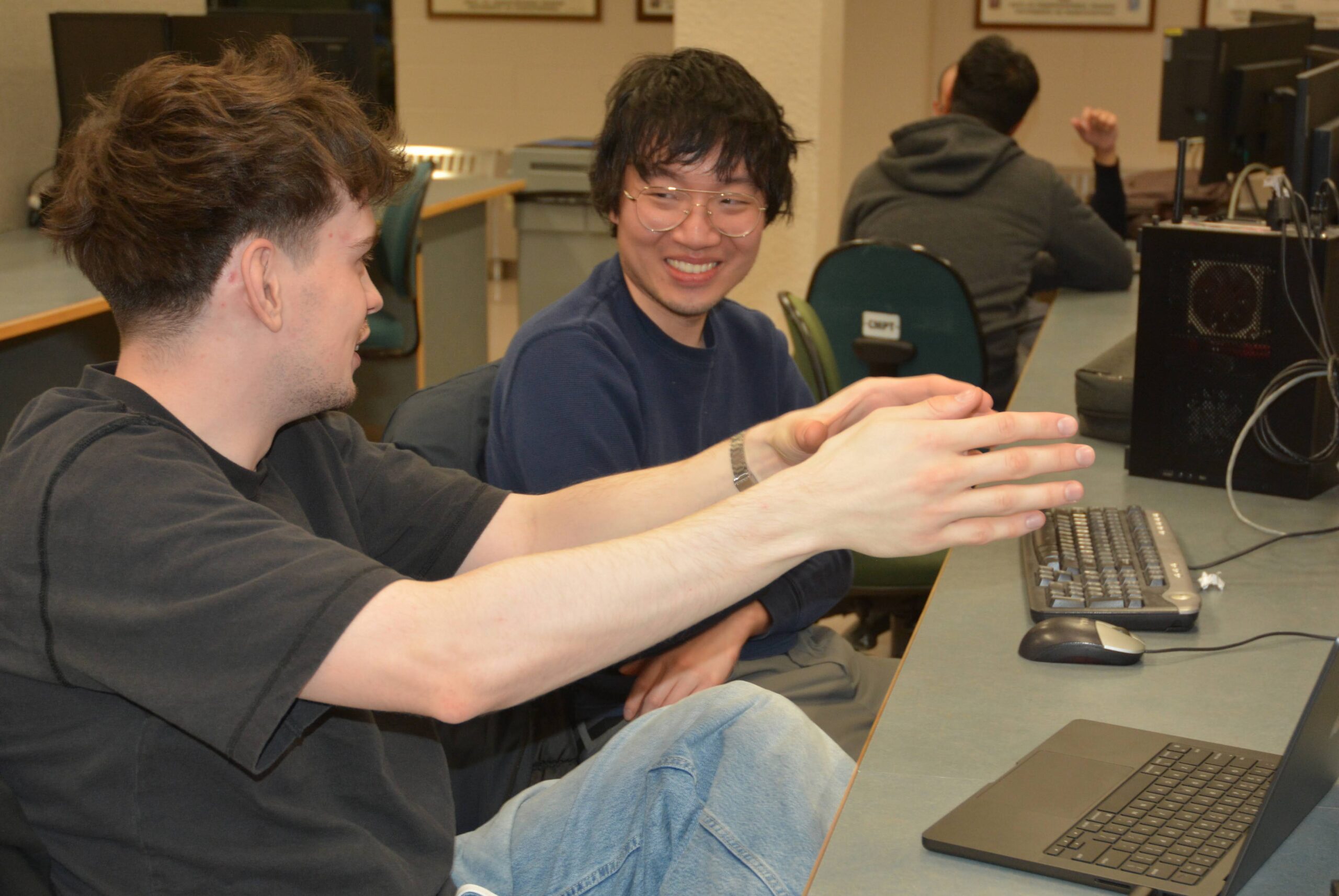
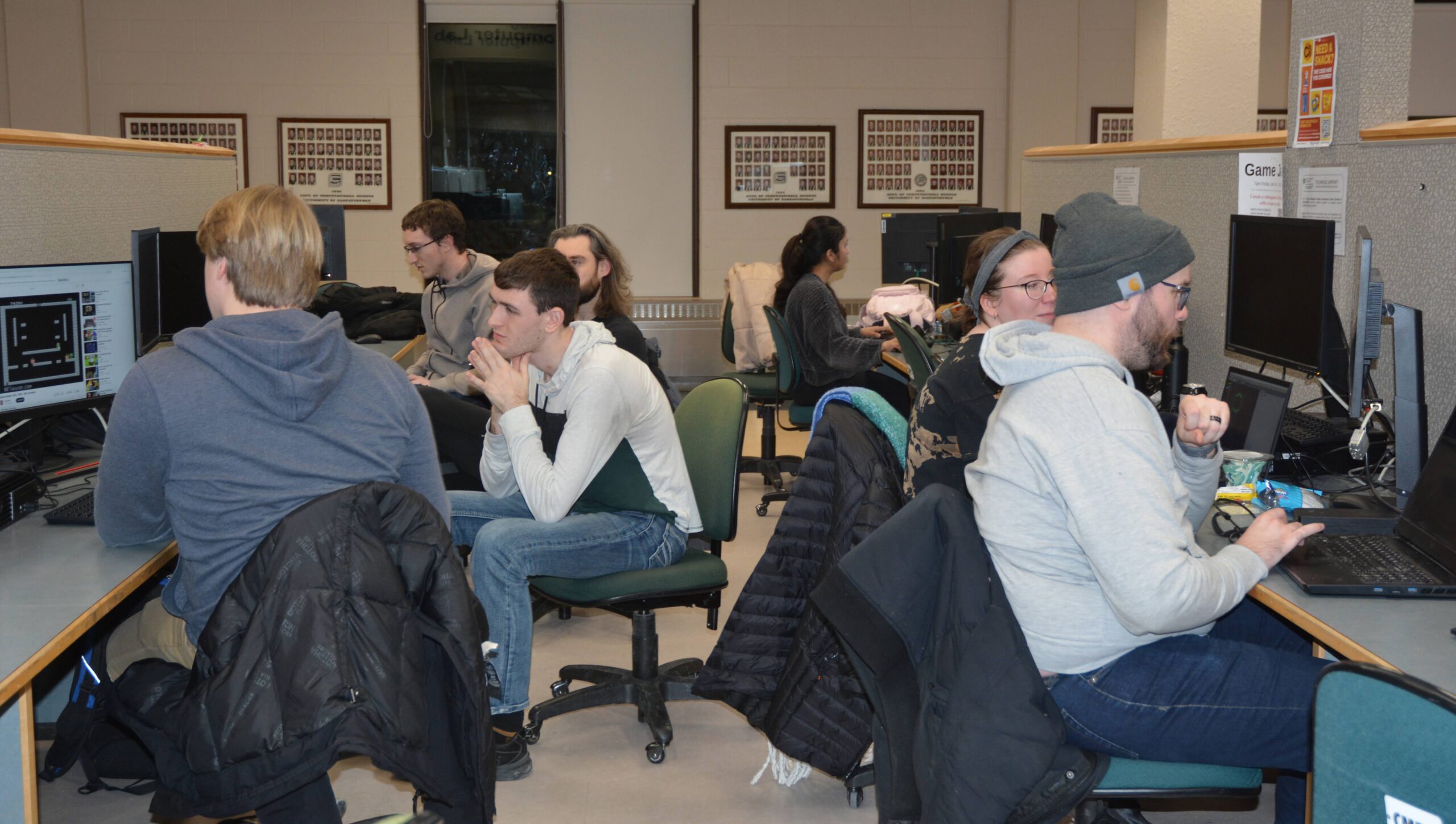
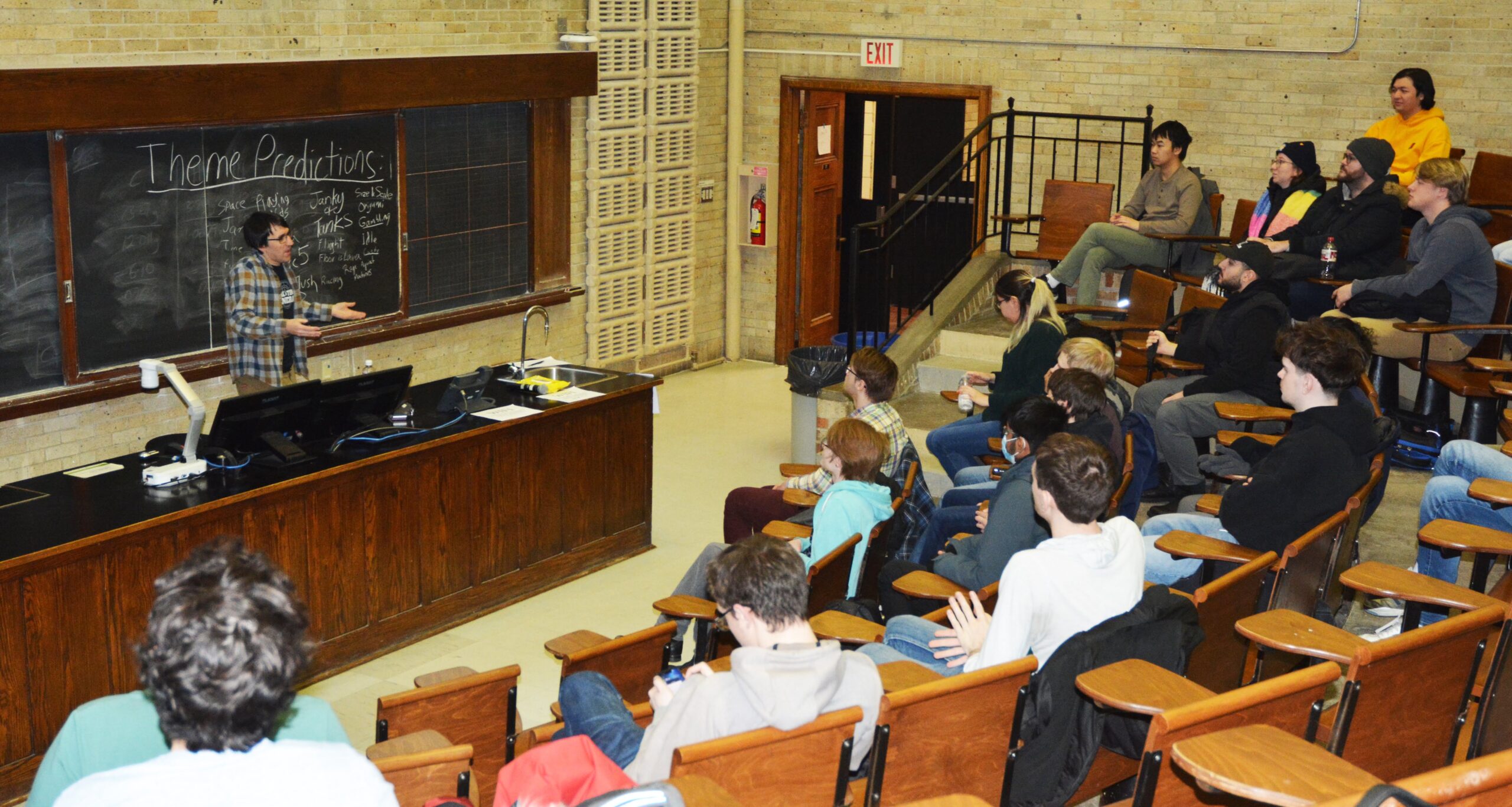
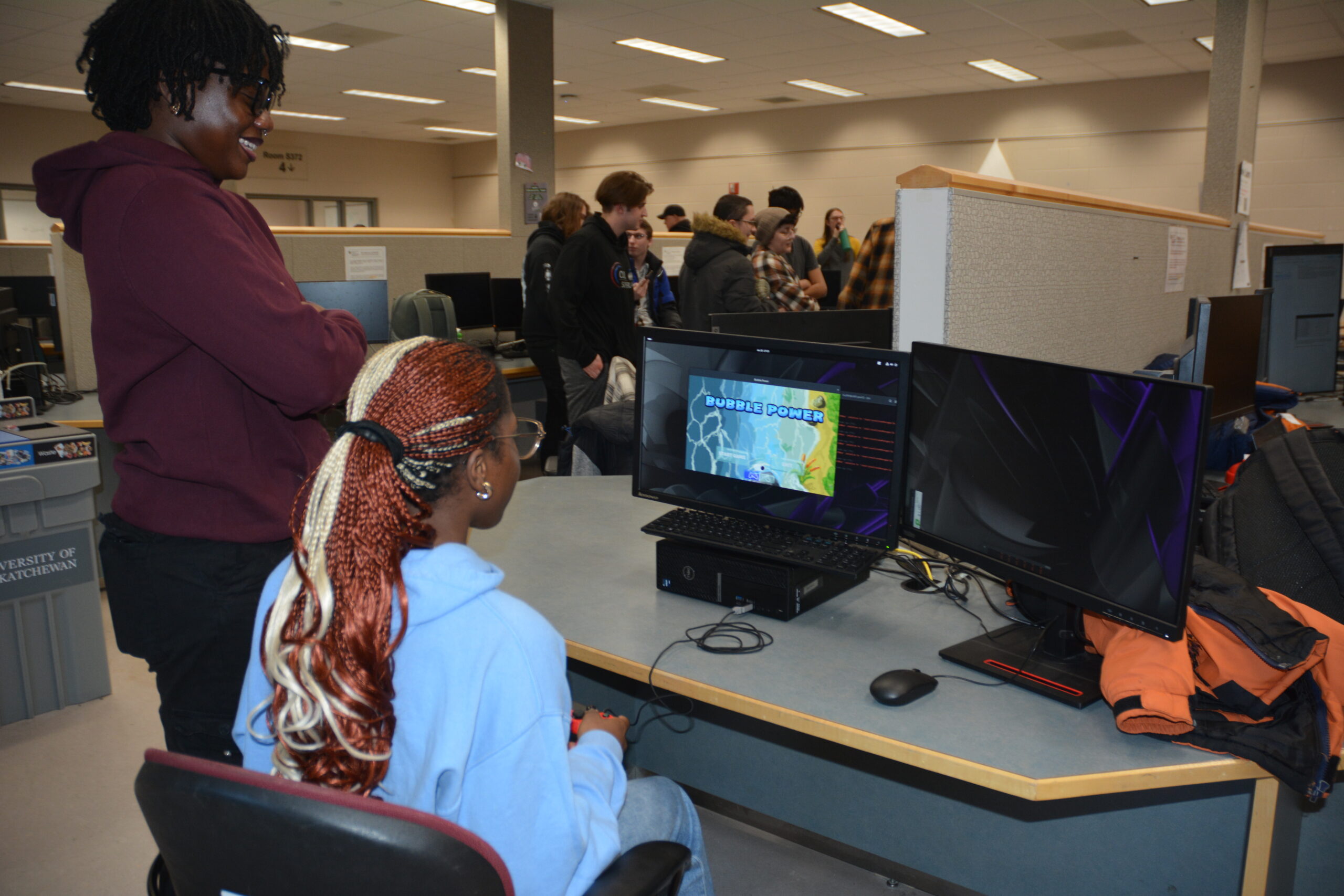
USask students reflect on their experiences at Game Jam, which was held earlier this term.
Every year, the Saskatoon Game Jam brings together gamers, coders and artists for a weekend of intense creativity and collaboration. This year’s event, hosted at USask in Thorv 271, drew over 150 in-person participants who immersed themselves in 48 hours of rapid game development from January 30 to February 1. With 43 unique games submitted, the theme “MASK” inspired a whirlwind of inventive gameplay, quirky mechanics and collaborative problem-solving.
Game jams are more than just competitions — they are microcosms of the creative and technical challenges professional game developers face, condensed into a single, intense weekend. Participants are challenged to ideate, design, program and polish games under strict time constraints. The short timeframe pushes participants to prioritize essential gameplay features, embrace creative problem-solving and work closely with others, often in ways they’ve never experienced before.
The Allure of a Game Jam
For many participants, the Game Jam is a rare opportunity to push beyond the boundaries of traditional coursework or hobby projects. Third-year computer science and mathematics student John Matukutire described his motivation: “The big inspiration for joining a Game Jam was finally beating scope creep and pushing a complete game out.” Scope creep refers to the expansion of a project’s features without a corresponding increase in time or resources, often making it harder to finish. He added that having approachable mentors in previous courses, like Jason Bowey, really helped him to understand game development.
Matukutire, who participated alongside his roommate and a friend in his first jam last year, emphasized the team dynamic this year. “The best part was definitely working with a team of such different ideas and skills, with personalities to make something new and personal. We had an artist, a designer, [a] lead and our two programmers.”
High school participant Asher Randall shared a similar sentiment, highlighting the social aspect of the jam: “For me, it’s all about meeting like-minded people, because from experience, at least in the school that I go to, nobody in Grade 10 makes video games. In fact, most don’t even find it remotely interesting or cool. So being surrounded by people that I can meet [who] are also into the hobby is the main reason I enjoy going to them.”
Randall, who began experimenting with the game development software Unity in Grade 5, also emphasized the importance of practical skill-building, noting that most game developers never finish any of the games they work on. “This forces us to think small and not get scope creep, as well as letting us work on everything that comes along after you finish making the game, like trailer [or] webpages.”
For newcomers, the jam is also a low-risk way to explore game development. Second-year computer engineering student Spencer Epp participated in his first game jam as a solo participant and described it as “the highest level of productivity I’ve ever experienced. I learned how to use the game design software, create animations and design gameplay elements that a player would enjoy. I completed my game with one hour to spare and felt a great sense of accomplishment for having a finished and presentable product.”
Teams, Tactics and Trials
Collaboration is both a thrill and a challenge. Eric C, a fourth-year computer science student, noted that working in a large team of eight had its hurdles. “Big teams can make big projects, but it is especially hard to make everything we designed work together by the deadline. My favourite part, though, during this game jam, was figuring out an issue and having the feature I was working on work for the first time; it ends up being really fulfilling.”
Eric B, a post-graduate graphic design student on Eric C.’s team, provided the marketing materials by printing their team logos on stickers to give to the other participants and created the trailer that ultimately won the team the award for best Webpage & Trailer. He said the most important part of a game jam is communication. “Collaboration between any number of teammates makes or breaks the project; communication has to be frequent and on point. There were several instances from every participant in the team where things went sideways, but it’s bypassing those challenges, whether through, over or around, that [gives] you the grit for bigger projects down the road.”
Owen Tessmer, President of the USask Game Development Club and a veteran of 24 Game Jams, experimented with team size and dynamics to see if it was possible for a large team to effectively contribute to such a tiny project within two days. “I organized eight developers … We had four programmers, two artists, one writer, and one musician … surprisingly, our team size greatly contributed to this jam being the least stressful one I’ve ever participated in. By the end, I honestly felt carried by my team as it was my first time using the Godot Engine.”
Tessmer’s experience shows that team composition and maturity are often just as important as technical skill. Selecting experienced, competent team members allowed even a large group to function like a tight-knit unit.
Other participants, including solo developers like Daniel So, also found the jam enriching. So, a fourth-year computer science student, stressed that game jams force you to test your skills in game development and see how much you have learned. “It teaches you to be realistic with your goals and to really strip down your game idea to the bare essentials.”
He mentions that while it is difficult to switch from coding for 12 hours into the headspace of an artist, he enjoys being able to mix different disciplines. “I liked being able to show off other skills that I had, like writing and making art in a medium that a lot of people think is mostly about programming.”
Games of Masks: Highlights and Winners
The “MASK” theme inspired diverse interpretations across the 43 entries. Some teams focused on literal interpretations of masks, while others explored metaphorical or conceptual approaches. The variety of games showcased both the creativity and technical skill of participants.
Best Beginner Game: msPain by Spencer Epp
Best Veteran Game: Behind the Line by Connor Tamme, Anthony Blower and Jessica Sinclair
Best Sound/Music: Quest for the Mask of Geno’Mac by Asher Randall, Coline Witow and Francis De Guzman. Randall reflected that the team had joked about winning the award during the build process from voice acting alone.
Best Theme: Photohop by Aranock Cooke and Penelope Tweten
Best Art: Carved by Kyle Doerksen and Patricia Jardin
Best Multiplayer: Maskerade by Nick Penner, Duncan Pillpow, Harris Feguson, Vlod Kurtseba, Braden Tischler, Simrit Kakkar and Nathan O’Connor
Best Solo-Made: Masqlign by Graham Pyett
Best Boardgame: Midsummer Masquerades by Parker Tait, Blake Tait, William Wallace and Nathaniel Whittingstall
Best Webpage & Trailer: Face Off by Eric Benz, Matt Fyfe, Erik Johnson, Owen Tessmer, Alex Nickel, Eric Creasy, Tyson Greff and Jackson Leier
Beyond the Games
Game jams are more than just coding marathons. They foster mentorship, learning and community. Workshops and casual mentorship from industry veterans provided guidance in team coordination, art design and technical problem-solving.
Matukutire reflected, “Whether you come with a plan or without, it’s such a great way to make random friends and get an awesome goal done. The workshops on team coordination and art design also have industry legends just there to casually help, which is so awesome too, and honestly, [it’s] insane it’s free as a student.”
Randall emphasized that even non-coders can contribute meaningfully. “Every skill is useful at a Game Jam, and I think even if you have never made a video game before or don’t know how to code, you should come. With our game, Quest for the Mask of Geno’Mac, one person who had a cool skill (unique voice acting) that had never been in a game jam before, [and it] carried us all the way to best sound.”
Why You Should Try a Game Jam
From seasoned veterans like Tessmer to first-timers like Epp, the consensus is clear: Game Jams are transformative. They teach teamwork, time management, technical skills and creative problem-solving, all under the pressure of a ticking clock. They’re also inclusive: whether you’re a programmer, artist, musician, designer or gamer, you can contribute and learn something new.
“I absolutely recommend game jams to anyone [who] is even vaguely interested. They are, hands down, the best way to learn how to make games. One thing that makes Game Jams so appealing is that they’re only a weekend long. If it goes poorly, you can learn from it and move on with no strings attached. It doesn’t matter if you’re a programmer, an artist, a writer, a musician, a designer or even a gamer. Anyone can enter, and everyone can learn something from the experience,” says Tessmer.
With the Saskatoon Game Jam returning in September, the city’s game development scene continues to grow, offering students, hobbyists and aspiring developers a chance to challenge themselves, make connections and bring their ideas to life.

Leave a Reply