
THE UNIVERSITY OF SASKATCHEWAN’S MAIN CAMPUS IS SITUATED ON TREATY 6 TERRITORY AND THE HOMELAND OF THE MÉTIS.
THE UNIVERSITY OF SASKATCHEWAN’S MAIN CAMPUS IS SITUATED ON TREATY 6 TERRITORY AND THE HOMELAND OF THE MÉTIS.
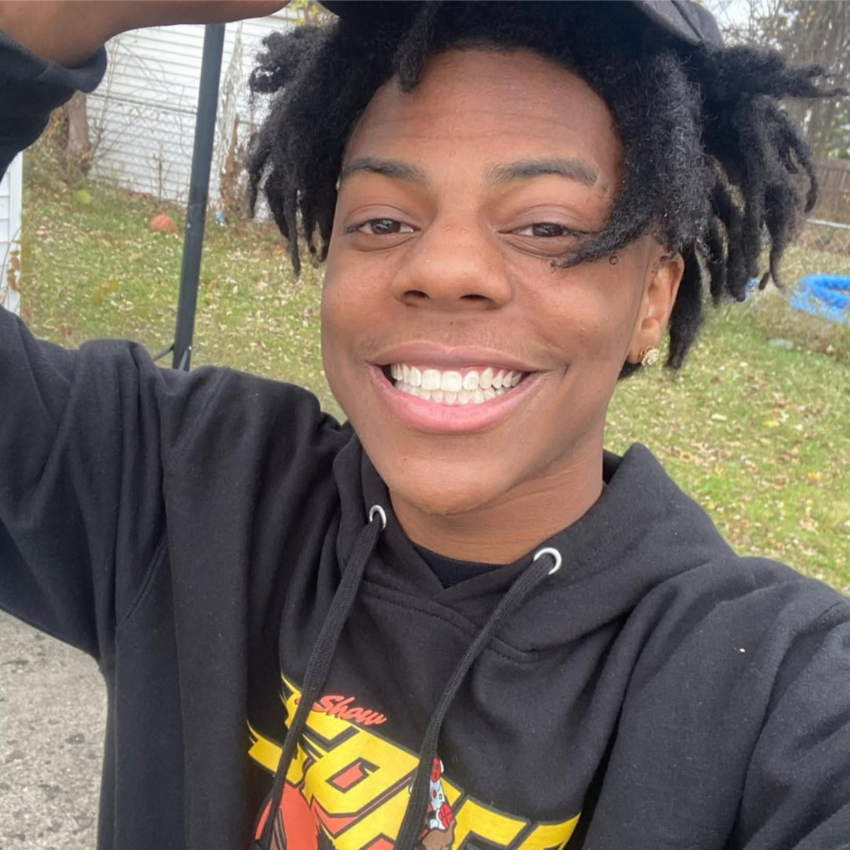
The gap between perception and reality is shrinking, live on YouTube.
There is something unexpectedly revealing about watching infamous online personality Darren Watkins Jr — better known as IShowSpeed — sprint through markets and down crowded streets all around the world, phone in hand, reacting in real time to the world around him. No script, no carefully designed political narrative, just a YouTube stream that keeps going and a boy that never seems to stop, either.
While his work may seem abrasive and obnoxious to some at first glance, the longer you watch, the harder it becomes to designate what he does as senseless noise. You’re forced to look harder and think about what that noise is actually doing.
Over the past year, Speed’s travel streams, particularly his marathon tours across parts of Africa, China and Europe, have pulled millions of viewers into places they might otherwise only encounter through headlines, documentaries or not at all. In one stretch, he visited around 20 African countries in under a month, livestreaming almost continuously. It sounds excessive, and it is. But it’s also, in its own strange way, the kind of documentation that’s closest to how people actually experience the world, as opposed to most polished travel content.
The part of his streams that stands out isn’t just where he is, but what he’s doing in those places and how the world around him shows up on screen. Crowds forming instantly, people laughing, shouting, guiding him, correcting him, welcoming him. Moments of confusion and culture shock. Moments of connection despite language barriers. Long stretches where nothing particularly dramatic happens at all. Everyday life, across the world, unfolding on screen without a filter.
For many viewers, especially younger ones, these streams aren’t just entertainment. They are a primary point of contact with places they have never been and may never visit. And for a long time, those points of contact were shaped by something very different.
Global perception has historically been filtered and mediated through formal institutions. State media, major broadcasters, legacy newsrooms. These sources aren’t inherently unreliable, but they are heavily structured. They tend to filter out things they deem unnecessary or counteractive to their agendas before presenting information to their audiences. They select, frame and condense. They decide what’s newsworthy. This can result in entire regions becoming defined by a narrow set of narratives pushed by foreign media.
Conflict. Poverty. Crisis. Political tension. These elements exist, but they aren’t the totality of any place, despite what the media might try to tell you.
Speed’s streams cut through all of the unnecessary framing. When he walks through a city, the camera doesn’t turn off when nothing “important” is happening. It lingers. It captures how people talk, how they joke, how they respond to him. It captures all of the natural human environments and interactions that don’t fit neatly into pre-existing narratives.
During his Africa tour, much of the response, both online and in reporting, focused on how audiences were reacting to seeing cities and communities that didn’t match the stereotypes they had internalized. Viewers saw modern infrastructure, busy streets, ordinary routines. They saw people who weren’t passive subjects of a story, but active participants in it. At the same time, commentary from African viewers pointed out that while the exposure was welcome, it also risked simplifying diverse cultures into a single experience. Both reactions can be true.
That tension is part of what makes these streams significant. They’re less definitive portraits of a country, and more fragmented insights into the diversity of the human experience. But these fragments aren’t just trivial little moments. These are clips that reach millions of people around the world and complicate everyday assumptions that might otherwise go unchallenged.
A similar dynamic played out during Speed’s streams in China. Western coverage of China often emphasizes geopolitics, surveillance and state control. Those issues are real and important, but they aren’t what dominates a live interaction with people on the street. In Speed’s streams, what viewers saw instead were spontaneous conversations, humour, curiosity and a level of everyday normalcy that does not often make it into international reporting.
Some analysts described the streams as a form of soft power, arguing that they presented a favourable image of China without explicitly trying to. Others noted that the lack of overt commentary made the content feel more authentic, even if it was still shaped by what could and could not be shown. On platforms like Reddit, discussions ranged from genuine appreciation for the glimpse into daily life to skepticism about how representative those moments were.
What matters is not that the streams provided a complete or perfectly balanced view. They did not. What matters is that they introduced a different kind of visibility. One that is less about explaining a place and more about experiencing it, however briefly, alongside someone else.
There is an argument to be made that this kind of content risks flattening complexity. Speed is not a journalist. He is not offering historical context or political analysis. His understanding of the places he visits is limited, and sometimes that shows. There are moments where the streams feel surface-level, where deeper issues go unaddressed.
But that critique assumes that the value of exposure lies primarily in depth. For many viewers, especially those who have had little prior engagement with a place, the first step is not analysis. It is recognition. Seeing people who look, speak and live in ways that feel familiar, even across significant cultural differences. Realizing that the distance between “here” and “there” is not as vast as it might have seemed.
Speed’s approach is not unique in the sense that he is the first to travel with a camera. But the scale and immediacy of livestreaming change the dynamic. The audience is not watching something that has already been processed and edited. They are watching something unfold. They are reacting in real time, alongside the person on screen. That creates a different kind of engagement, one that feels less like being told about a place and more like being there, even if only virtually.
It also shifts where authority comes from. In traditional media, authority is tied to expertise, to institutions, to editorial processes. In this space, authority is often tied to perceived authenticity. To the sense that what you are seeing has not been overly shaped or filtered. That does not make it more accurate, but it does make it more immediate, and for many viewers, more trustworthy.
This is particularly true for younger audiences, who have grown up with constant access to user-generated content. They are used to navigating a landscape where information comes from a wide range of sources, each with its own perspective and limitations. They are also more likely to question centralized narratives, not necessarily out of cynicism, but because they have access to a diverse array of alternatives.
Speed’s streams fit into that landscape. They aren’t positioned as definitive accounts. They are one perspective among many. But they are a perspective that feels direct, unscripted and, at times, disarmingly honest.
There is a precedent for this kind of work, however, even if it took a very different form. Long before livestreaming, Anthony Bourdain built a career on showing audiences parts of the world they might never otherwise encounter. Through shows like Parts Unknown, he moved across countries that were often totally ignored or reduced in Western media, to political conflict or instability. But instead of centring those narratives, he sat down at tables. He ate. He listened. He let conversations unfold.
What Bourdain understood was that geopolitics can flatten people. Entire nations can become shorthand for a single issue. But when you watch someone share a meal, joke, argue or tell a story, that flattening becomes harder to sustain. Food became his entry point, but the real focus was always the people behind it, the ordinary realities that exist alongside, and often despite, the headlines.
Bourdain’s work was built on the idea that food and conversation could bridge cultural divides, that spending time with people in their own environments could challenge preconceived notions. Speed’s streams operate on a different wavelength, faster, less reflective in the moment, but they tap into a similar instinct. Show the place, show the people and let the audience decide for themselves.
Speed is not operating with that same level of reflection or intent as Bourdain. His streams are louder, faster, less curated. The media environment he exists within is more fragmented and audience-participation heavy. His audience is not just watching. They are commenting, reacting, shaping the experience as it unfolds. That does not always lead to thoughtful engagement, but it does mean that the line between observer and participant is less clear than it’s ever been before.
Despite this, he taps into a dynamic similar to Bourdain’s. Instead of connecting over a meal, it might be a pickup soccer game, an impromptu race, a street performance, a spontaneous conversation with someone who recognized him. Instead of a carefully framed interview, it is a chaotic exchange that sometimes barely holds together. But the effect can be similar. Viewers aren’t just hearing about a place. They are watching people live in it.
And that matters because the media environment has changed. Younger audiences are less likely to rely solely on large institutions to tell them what the world looks like. They are used to assembling their own understanding from a range of sources, many of which are unfiltered, immediate and participatory. They are skeptical of narratives that feel too polished, too complete.
In that context, Speed’s lack of polish becomes part of the appeal. The streams feel unscripted because they are. They feel unpredictable because they are. That does not make them more accurate, but it does make them harder to dismiss as purely constructed to push ulterior narratives.
What emerges from all of this, the live stream marathons and reliance on social media for information, is not a replacement for traditional forms of reporting or storytelling. Living in a world where misinformation can be spread like wildfire at the click of a button, and anyone can say whatever they’d like, makes many hesitant to trust just anyone for credible news and information. Traditional forms of news reporting still have a crucial role in people’s perceptions of the world, especially when it comes to context, accountability and depth.
But there has been a distinct shift in how people encounter and interact with the world, one that favours the voice of the average person more than it ever has before.
There’s also something to be said for the way Speed himself moves through these spaces. He isn’t detached. He reacts loudly, sometimes awkwardly, often impulsively. He mispronounces things. He gets things wrong. But he’s also open. He engages with people without much hesitation, and that openness is usually met with a similar energy in return.
That exchange, however imperfect, is part of what viewers are responding to. It isn’t just the location that matters, but the humanity at the heart of the interaction. The sense that connection is possible without a shared language or background. That curiosity is universal.
Where Bourdain often slowed things down, giving his audience space for reflection, Speed — a testament to his name — makes everything go much faster. Both approaches, in different ways, push against the tendency of traditional media to reduce the world to simplified narratives. Bourdain did it by lingering on things that would otherwise be ignored. Speed does it by showing everything all at once.
Neither approach is complete. Neither replaces the need for deeper reporting, for context, for analysis. But both create entry points. They make distant places feel closer, less abstract, less alien, less defined by secondhand descriptions.
Speed’s streams are messy, inconsistent and at times superficial. But they’re also reaching audiences at a scale that few other forms of international coverage can match, scales that are almost unprecedented. Within that reach, his streams are introducing viewers to places and people in ways that feel both immediate and human.
There’s an irrevocable value in Speed’s streams. Not because they solve the problem of misrepresentation or eliminate bias altogether, but because they make the stereotypes proposed by traditional media harder to sustain unchallenged. When millions of people can see something for themselves, even for just a brief moment, it becomes difficult to reduce entire regions to a single story.
There’s no guarantee that viewers will come away with a deeper understanding. A large portion of them won’t. But others will notice small things. The way people joke. The way they welcome a stranger who doesn’t speak their language, let alone understand their customs. The way everyday life looks in a place they had only heard about in abstract terms. Those details will linger.
In a media landscape that has often relied on distance and summarizing entire cultures into digestible narratives for audiences that read headlines and scroll past, even that kind of exposure is a shift.
Speed is not setting out to be a cultural ambassador. He is not presenting himself as an expert or a guide. But in moving through the world as he does, camera on, reactions unfiltered, he is opening a window that did not exist in the same way before.
The window doesn’t give its audience the perfect view. It never will. But it gives them a view that is wide enough and immediate enough to make them look a little closer. For a generation already inclined to question and criticize what it is told, rather than accepting facts at face value, that might be enough to start seeing things differently.
Leave a Reply