
THE UNIVERSITY OF SASKATCHEWAN’S MAIN CAMPUS IS SITUATED ON TREATY 6 TERRITORY AND THE HOMELAND OF THE MÉTIS.
THE UNIVERSITY OF SASKATCHEWAN’S MAIN CAMPUS IS SITUATED ON TREATY 6 TERRITORY AND THE HOMELAND OF THE MÉTIS.
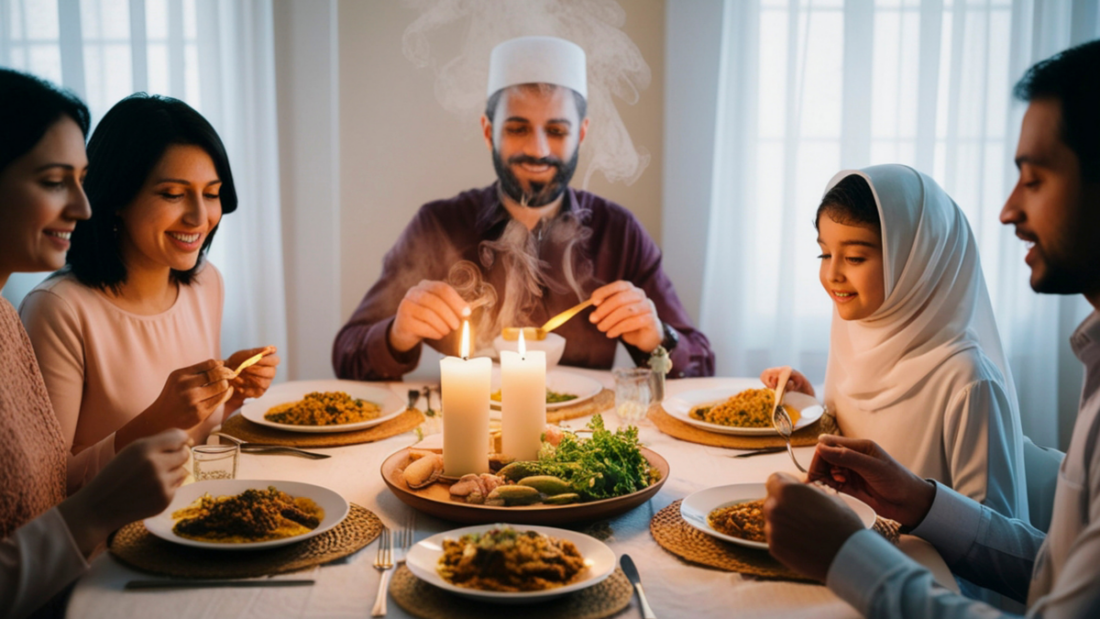
Suhoor, Self-reflection and Self-improvement
Ramadan, the ninth month of the Islamic calendar, is considered to be the holiest time of the year. It marks the period when the first verses of the Qur’an were revealed to the Prophet Muhammad.
Because the Islamic calendar follows the cycles of the moon, Ramadan moves earlier each year in the Gregorian calendar. But wherever it falls — winter, summer, spring or fall –– the feeling is always the same. It’s a yearly reminder to pause, reflect on your place in the world and try to become a better version of yourself.
For many Muslims, Ramadan also feels like something of a reset. In following the religious guidelines of fasting, you become more aware of yourself, your actions and how you move through the world while maintaining your fast. You pay more attention to even the smallest, most innocuous habits in an attempt to better yourself for the future.
The most integral part of Ramadan — and the feature most non-Muslims are familiar with — is fasting from dawn until sunset. During the day, Muslims don’t eat or drink anything at all. They also try to avoid negative behaviours like arguing, gossiping or losing their temper. For their fasting to be accepted, they have to complete all five of the daily prayers.
At first glance, you might think that fasting is a mostly physical ordeal, with the restrictions on food and drink seeming to be insurmountable. But ask anyone who has ever fasted for Ramadan, and they’ll tell you that hunger and thirst actually force you to slow down and think about what you’re doing throughout the day — something that can be just as difficult as abstaining from a cold glass of water or a protein bar.
You become more aware of what you say, how you treat people and the mindset you carry throughout the day, in a way you’d never consider any other month of the year. In that sense, the practice of fasting is less about food and more about practicing discipline and conscientiousness.
The purpose of fasting in Islam is to build taqwa, which is commonly translated as mindfulness of God. But it can also be understood as a greater awareness of your actions and intentions. Ramadan acts as a reminder to pay attention to the small things: how you speak to people, how patient you are when you’re frustrated and whether you are acting with kindness or selfishness.
When you’re fasting, the smallest moments become so much more noticeable. Something like holding back an angry response or choosing patience over irritation becomes a conscious decision that you have to make.
One of the things that makes Ramadan powerful is that it changes the rhythm of everyday life. The day usually starts before sunrise with a small meal known as suhoor or sehri, followed by the morning prayer, fajr. After that, the fast continues throughout the day until sunset, when it is broken with the evening meal called iftar.
That first sip of water or first bite of food after a long day can feel surprisingly meaningful, the flavours and feelings associated totally enhanced. It reminds you how easily basic things are taken for granted on a daily basis.
Breaking the fast is also rarely a solitary moment for most Muslims. Families gather together at dinner tables, friends meet at local restaurants and communities organize meals together on a nightly basis. Mosques often host large iftars where people from different backgrounds sit together, complete their evening prayers and share food.
There’s something really special about knowing that millions of people around the world are following the same customs and routines at the same time. Even though the practice of fasting is personal, it fosters a strong sense of community amongst all Muslims during Ramadan.
Despite our many differences — race, nationality, ethnicity, language — we all gather to break our fasts when the sun sets and give thanks for the blessings we’ve been given, every night.
Another important aspect of Ramadan is charity. Giving is encouraged throughout the year in Islam, but during this month it becomes even more central and rewarded. Muslims give zakat, one of the five pillars of Islam and a mandatory obligation in which they donate a portion of their wealth to those in need. The act is meant to symbolize purification and encourage people to act selflessly and support those around them.
Charity during Ramadan isn’t just about formal donations, however. People often cook extra food to share with neighbours, invite others to join them for iftar or privately donate to people who need help. Communities organize food drives, fundraisers and meal programs so that no one has to break their fast alone.
Ramadan also encourages people to put their worldly habits to rest and reconnect with their spiritual lives. Many Muslims spend more time reading the Qur’an and praying during the holy month, hoping to reconnect with their faith in a way that feels different from the rest of the year. For some people, Ramadan is one of the few times in the year when they are able to put their other responsibilities to the side and really reflect on faith and personal growth.
But even beyond prayer, Ramadan invites everyone who practices a deeper kind of personal reflection. It asks them to think honestly about who they are and how they interact with the world around them. Are you patient with others? Are you generous? Do you treat people with respect?
The month becomes an opportunity to check in with yourself and notice the habits you’ve developed. Sometimes that reflection is uncomfortable, but it’s also what makes the experience meaningful.
Toward the end of the month, many people become even more focused on reflection and prayer. One of the most important nights of Ramadan is Laylat al-Qadr, also known as the Night of Power. It commemorates the moment when the first revelation of the Qur’an occurred. It’s considered to be an especially auspicious night, where faithful prayers will be accepted. Many Muslims spend this night praying and reflecting, hoping to reconnect with their purpose and ask for forgiveness and guidance.
Eventually, Ramadan ends with the celebration of Eid al-Fitr. After a month of fasting, Muslims around the world join together to celebrate and bask in the joy of the holy month. People gather for prayers, share meals and spend time with family and friends.
Before the celebration begins, Muslims give a special charity called zakat al-fitr, which helps ensure that everyone, including those who may be struggling financially, can participate in the festivities.
In the end, Ramadan is not really about enduring hunger for thirty days. It’s not about the huge iftar feasts posted all over TikTok or the fact that people are abstaining from all food and beverage — yes, even water. It’s about awareness. It reminds people to be more conscious of their behaviour, their intentions and their impact on others. It encourages patience, generosity and humility, and most importantly, it creates space to reflect on how you want to live the rest of the year.
For many Muslims, the hope is that the lessons of Ramadan don’t disappear once the month ends. The patience practiced during fasting, the generosity shown through charity and the reflection encouraged through prayer are meant to continue afterward.
Ramadan reminds us that improving ourselves is an ongoing process, and that even small changes in how we treat others can have a meaningful impact on the world around us.
Ramadan Mubarak to all that observe!
Leave a Reply