
THE UNIVERSITY OF SASKATCHEWAN’S MAIN CAMPUS IS SITUATED ON TREATY 6 TERRITORY AND THE HOMELAND OF THE MÉTIS.
THE UNIVERSITY OF SASKATCHEWAN’S MAIN CAMPUS IS SITUATED ON TREATY 6 TERRITORY AND THE HOMELAND OF THE MÉTIS.
The first part of Wicked was monumental. Seeing Elphaba Being Labeled as the Wicked Witch reminded me of the struggle, oppression and discrimination Black women have faced for centuries.
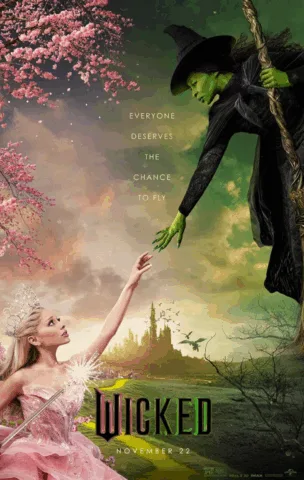
Warning: Wicked spoilers. But come on now—you should have watched the movie already.
Wicked 2: For Good is finally coming out soon. Ever since part 1, I have been hooked on the franchise, as it altered my brain chemistry completely.
I have always loved musicals, from Broadway hits like plays Hamilton and Hadestown to televised productions like Matilda and West Side Story. Music makes me feel alive, and musicals speak directly to my soul. Wicked, in particular, was empowering a young Black woman who continues to learn about the injustice done to her people and experience racism and prejudice in spaces she would have never expected. As a neurodivergent person, it also reminded me to love and embrace myself, and not to shy away from being different.
Here are moments in Wicked that reminded me of racialized groups, especially Black people. These scenes captured the unfair standards placed on those who don’t conform to society’s expectations—a concept I find wild to begin with.
“Good News, The Witch—She’s Dead”
Hearing children celebrate Elphaba’s death reminded me of how racism and discrimination are passed down through generations. Despite Elphaba’s acts of kindness, like saving the baby lion, the citizens of Oz saw her as wicked because of her green skin.
Just as society often paints Black people as aggressive or threatening, especially when they stand up for themselves, Elphaba’s appearance defined how others perceived her. Racism is often a learned behaviour, inherited from parents and perpetuated by communities.
“Are people born wicked, or do they have wickedness thrust upon them?”
When Glinda questions the origins of wickedness, particularly Elphaba’s ‘wickedness’, I interpret it as: “Are people born the ‘wrong’ color, or do they have the discrimination of the ‘wrong color’ thrust upon them?” Elphaba’s father’s rejection at her birth echoes the rejection Black children often experience in a world that devalues their existence.
The bear who comforted Elphaba remembered what her father did not—she was just a baby, deserving of love. Regardless of skin color, every child should feel that unconditional acceptance.
“Because he loves Emeralds, even though they’re green.”
Elphaba’s internalized belief that green is ugly reflects how racialized people sometimes internalize societal rejection. The comments from the students at Shiz University, such as, “Where did you come from?” and “Everyone can smell her” mirror the painful bullying a lot of Black children face.
When Elphaba fights back, her father’s immediate blame reminds me of how Black people are often labeled as the aggressors, even when they’re defending themselves.
“What, what are you staring at?” “You’re…green.”
Stepping into Shiz, Elphaba’s skin and braids make her a spectacle. I’ve felt that same isolation—being the only Black woman in a workplace, at conferences or in leadership positions. Even in inclusive spaces, the pressure to represent an entire race is exhausting.
The concept of the “token Black girl” haunts many of us. I’ve overheard a group of Black people say comments like, “I guess they already had their token Black girl,” with casual acceptance of exclusion.
“We’ll find someplace to hide you– I mean, house you”
This reminded me of how Black people are often hidden in the shadows. Despite Elphaba’s enthralment with Shiz, her father did not initially enroll her.
Even after slavery was outlawed, there was still segregation in higher education and reduced access to college for Black people until the Civil Rights Act of 1964. There are stark parallels between Elphaba’s segregation at Shiz and the historical exclusion of Black people from education.
Another brilliant parallel is the fear people had when they thought Elphaba did magic, contrasted with the admiration Madame Morrible received for her own magic. Black people’s inventions have been stolen and credited to others, as society often devalues their contributions.
“But of course I’ll care for Nessa.”
Elphaba’s worth to her father lay in her role as a caretaker. In contrast, Glinda was encouraged to rise above circumstances. This disparity reflects how Black women are often expected to shoulder responsibilities without recognition.
“I just wish there was something I could do. Because… because no one should be scorned, or laughed, or looked down upon, or told to stop jabbering–and keep quiet!” – Elphie.
Elphaba’s Dance
No scene moved me more than Elphaba’s dance. The moment she stepped onto the floor, I felt her excitement, her yearning to be accepted. When the crowd began to point and laugh, my heart broke with hers.
As someone who has experienced bullying, I know the crushing weight of public humiliation. But Elphaba’s resilience—choosing to dance anyway—was a moment of defiance. It reminded me of the strength Black people carry. Despite rejection, we dance. We celebrate ourselves. We exist unapologetically.
“I’ll say this much, she doesn’t give a twig what anyone thinks.”
“Of course she does, she just pretends not to.”
“ I am not that girl.”
“She who’s winsome, she wins him. Gold hair with a gentle curl. That’s the girl he chose. And heaven knows, I’m not that girl.”
Elphaba sings about her not being the one for Prince Fiyero, even though he could be the one for her. Her belief that she wasn’t “that girl” reflected a familiar self-denial.
Black people, and in particular Black women, often experience feeling undesirable or unworthy of love. Messages from encounters like “you’d be prettier if you weren’t so dark” seep into our subconscious. Even when we desire happiness, we convince ourselves it’s not meant for us.
Closing Thoughts
I could go on and on about the pivotal moments in Wicked. I could speak about the moment Elphaba arrived at the Emerald City and marveled at how beautiful green was, or the movie’s climax when she realized that fitting into the boxes people have put her in would never bring true satisfaction. Her cry of liberation reminded me of what freedom feels like.
Her struggle to find acceptance, her journey to self-love, and her refusal to conform resonate deeply with me.
Wicked: For Good comes out November 21, and I am excited to see how Elphaba’s story continues. You’ll definitely find me in the front row once it hits theatres.
Leave a Reply