
THE UNIVERSITY OF SASKATCHEWAN’S MAIN CAMPUS IS SITUATED ON TREATY 6 TERRITORY AND THE HOMELAND OF THE MÉTIS.
THE UNIVERSITY OF SASKATCHEWAN’S MAIN CAMPUS IS SITUATED ON TREATY 6 TERRITORY AND THE HOMELAND OF THE MÉTIS.
MICHAEL MACLEOD
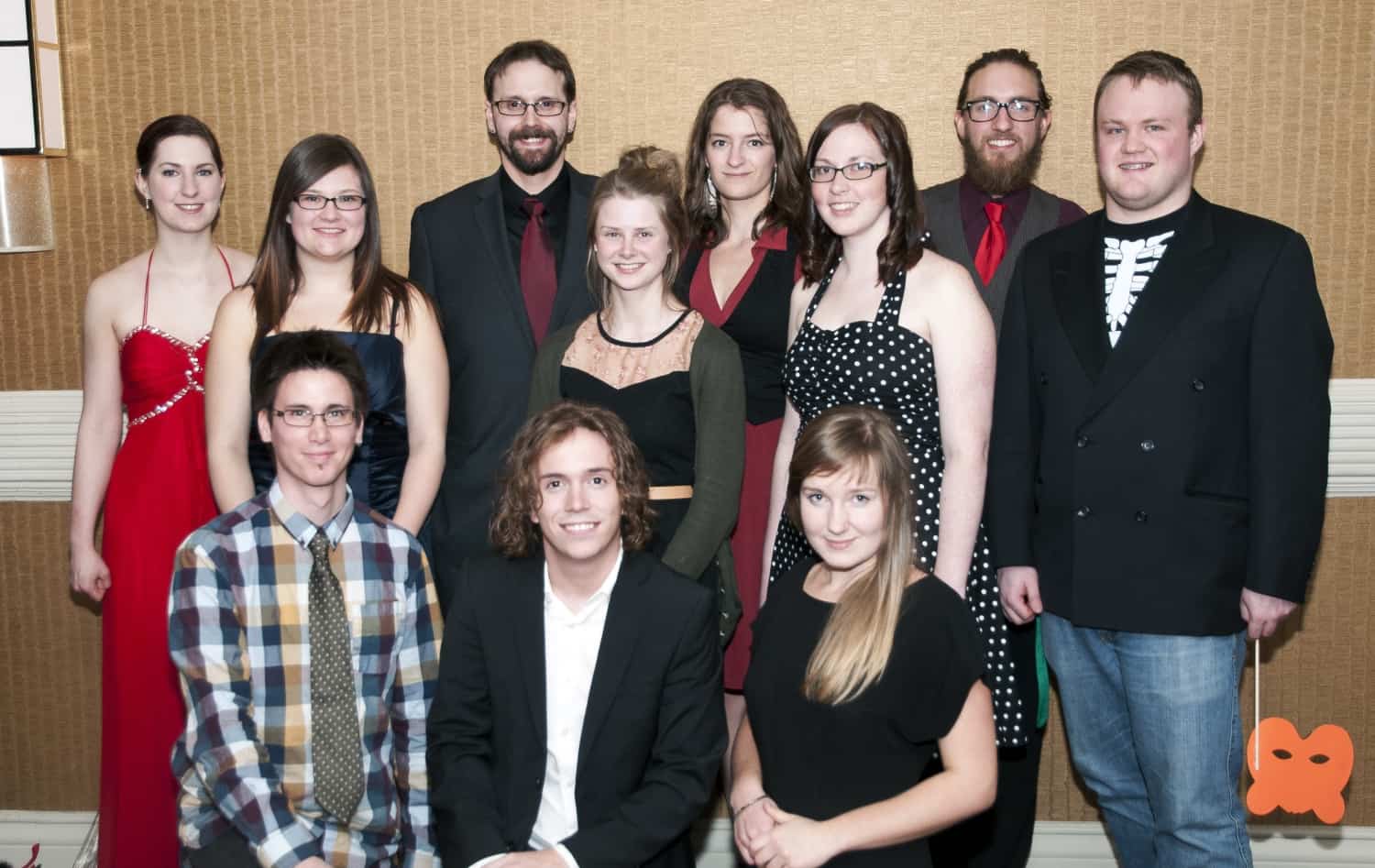
Executive members of the U of S Biology Club gather for a photo at the first annual Kenderdine Commemorative Gala that was held at the Radisson Hotel on March 15.
On Feb. 5, four Saskatchewan citizens came together to form Keep Kenderdine — a group devoted to the upkeep and continuation of the closed Emma Lake Kenderdine Campus. A month later, a gala was held to celebrate the storied past of the campus.
The Emma Lake Kenderdine campus opened in 1935 to house summer art programs taught by Augustus Kenderdine, then head of the University of Saskatchewan’s art department. Thirty years later, the biology department began offering zoology, ecology, limnology and botany courses at the campus.
The satellite campus operated for 77 years before university administrators decided to close the facility in November 2012 due to high operating costs along with needed repairs and maintenance totalling at least $3 million. The closure is slated to last until 2016, when the university will reassess the feasibility of the campus.
Keep Kenderdine founding member Marsha Day wrote to the Sheaf that the group formed after a petition to stop the closure received over 2,000 signatures.
“Building on this upswell,” Day wrote, “Writers, musicians, visual artists, scientists, teachers, environmentalists, students, alumni, and people from all walks of life are now joining Keep Kenderdine.”
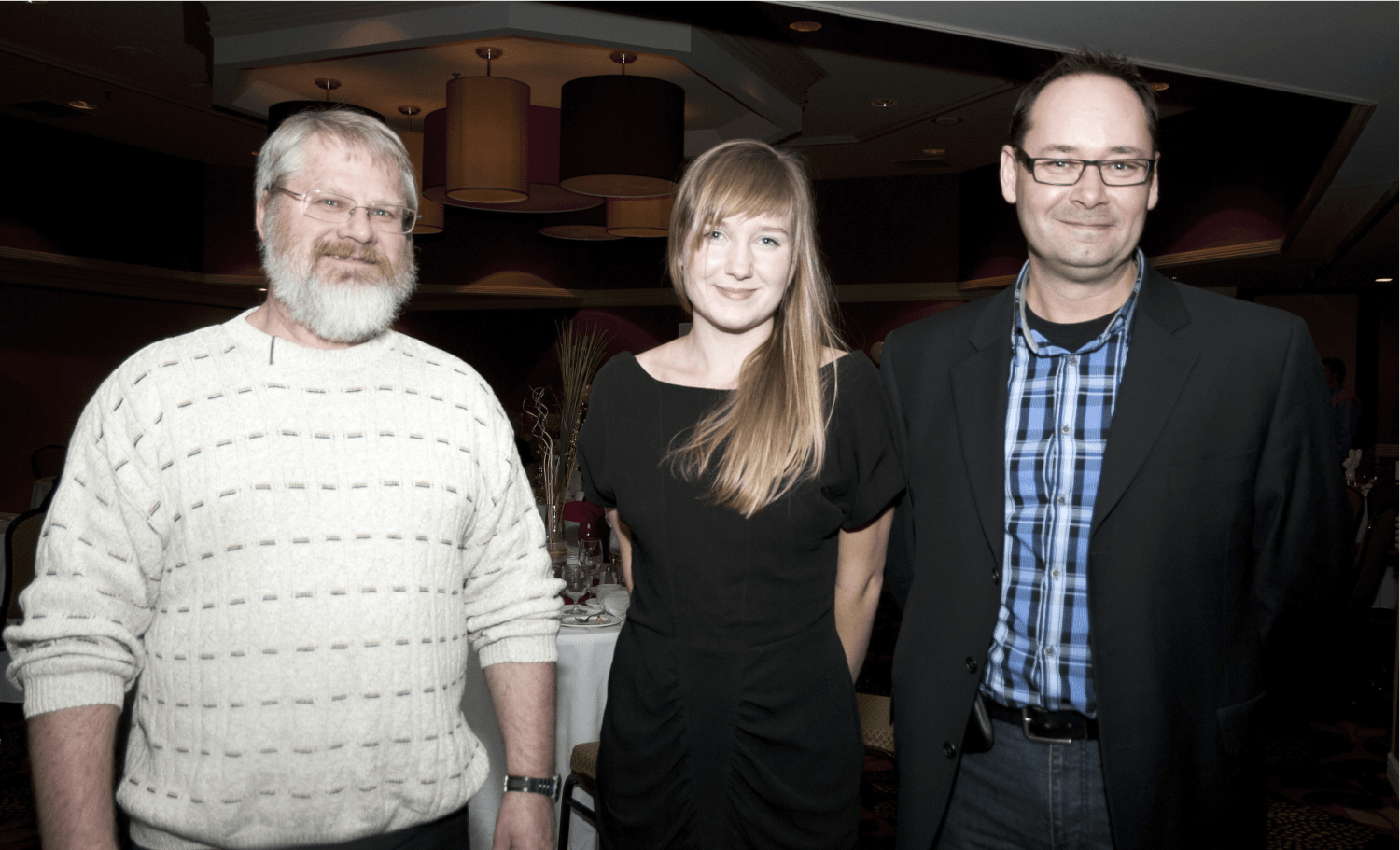
Keynote speakers Ric Driediger (left) and Paul Trottier (right) with U of S Biology Club President Kasia Majewski at the Kenderdine Commemorative Gala March 15 at the Radisson Hotel in Saskatoon.
Despite the petition, the campus remains closed. The group is now focused on keeping the campus operable during its closure by mitigating problems an abandoned lakefront site may face, such as water and snow damage, looting, vandalism and fire.
In hopes of shortening the closure, Keep Kenderdine has been fundraising with a goal of $500,000 — the campus’s projected deficit.
Keep Kenderdine intends on generating open dialogue with the public and the U of S to keep the public aware of the campus’s cultural importance and history.
The spirit of the Emma Lake, Kenderdine Campus lived on during the first annual Kenderdine Commemorative Gala, hosted by the U of S Biology Club on March 15.
The gala was held at the Radisson Hotel and was attended by community members who have supported the campus and are concerned by its closing.
The black-tie gala consisted of a dinner and silent auction, with funds going to support students impacted by the shuttering. Live speakers discussed the importance of the Emma Lake Kenderdine campus for biology programs.
Graduate student Kenton Lysak emceed the event, sharing how much his time at the campus meant to him and regaling the audience with anecdotes from the field course he attended there.
“There will definitely be a loss in the quality of education biology students will receive,” Lysak said when asked about the future of the biology program without the Kenderdine campus.
Lysak said that without field experience, research will only occur at the “students’ own initiative and through the private sector.”
With the loss of the campus, the university is one of the few major Canadian universities without a permanent facility for biology field courses.
Meredith Doyle, a fourth-year biology student, said the field course gives students valuable experience that cannot be replicated in a classroom setting.
“You need to get out there and experience it, not just learn about it in the classroom,” Doyle said.
The campus’s director Scott Halpin, who has roughly 30 years of experience working in the Emma Lake region, was in disbelief when he was informed of the closure. Halpin says he should have been notified at least two years before the facility’s closure date.
Since the closure, he has been tasked with finding a new area with an equal range of biodiversity, lab space and suitable accommodations to host the biology field course in time for this year’s summer class.
Halpin said he did not foresee the university closing the campus because he did not think the campus’s financials were problematic.
“I thought we were doing so well, increasing the number of credit courses at the campus and making more money,” Halpin said.
Dennis Lehmkuhl, a professor of aquatic ecology who has taught at the Kenderdine campus, was dismayed by the facility’s closure.
“The small amount of savings is not worth the loss of knowledge and experience,” Lehmkuhl said. “I just don’t understand.”
Fourth-year biology student Tracy Hunt feels she will miss out on the rich history previous students have been a part of by taking classes at the Emma Lake Kenderdine campus.
“You might get the experience [with other field courses] but you miss out on being a part of the history that Kenderdine represents,” Hunt said.
—
Photo: Supplied, Raisa Pezderic/Photo Editor

Leave a Reply