
THE UNIVERSITY OF SASKATCHEWAN’S MAIN CAMPUS IS SITUATED ON TREATY 6 TERRITORY AND THE HOMELAND OF THE MÉTIS.
THE UNIVERSITY OF SASKATCHEWAN’S MAIN CAMPUS IS SITUATED ON TREATY 6 TERRITORY AND THE HOMELAND OF THE MÉTIS.
GREG REESE
Arts Editor
Janice Weber has been playing rock’n’roll in Saskatoon for many years. She currently plays bass in Friends’ Electric and writes power pop music with her husband Kalon Beaudry for their band Foggy Notions.
In addition to writing and playing finely crafted rock songs, Weber is finishing a bachelor’s degree in fine arts. Her BFA show will be at the Gordon Snelgrove gallery Nov. 30 to Dec. 4.
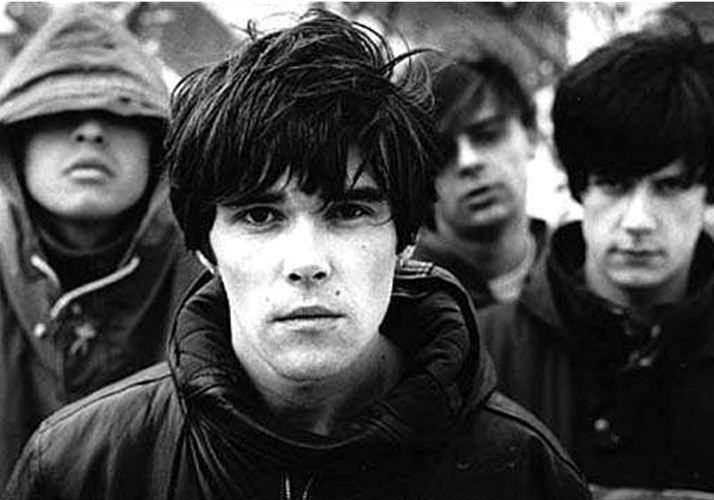
Weber talked to the Sheaf about the relationship between music and visual art and the sensational British ’90s band, the Stone Roses.
The Sheaf: Why do you like the Stone Roses so much?
Janice Weber: They have swagger. They have a really particular British swagger, which I think in North America is considered too close to arrogance. We like people to be humble. They would simply say, “We are the best.” It’s a swagger combined with a hopefulness in their music. It is really joyful and celebratory. Like when I was younger listening to it, it made me feel I wasn’t alone and made me have hope for something in the future and gave me enough swagger to get by in the mean time. Also, it’s just beautiful pop music.
Sheaf: You’ve been in a number of bands. Which one has had the most Stone Roses influence?
Weber: I think of being influenced by a band as in having music on in another room, as in, you hear it, but not exactly what’s going on. It’s just always in the back of your head. It gets into what you do, but maybe not consciously.
When you write a song, everything you like goes into it. Sometimes you can get directly inspired but sometimes it’s just a mix. What (my husband) Kalon and I are doing in our band Foggy Notions is more influenced by the Stone Roses because it is a little more poppy and focused on songs.
Sheaf: Where did you first hear these guys?
Weber: I was in early high school. I was obsessed with Oasis. You’d read about bands in magazines and they would mention other bands and then you would look into them — like the Internet now. In the ’90s, there was this British music magazine craze. It was the heyday for those publications. There was a lot for British music in those days. Oasis mentioned the Stone Roses and people used to say that Oasis was the new Stone Roses, which was probably only true in attitude.
Anyway, it was a really hot day and I went into Saskatoon with my mom. I picked up The Complete Stone Roses at Vinyl Exchange. Not a whole album — and kind of a mediocre compilation — but I was listening to song two, “She Bangs the Drums,” and I was in ecstasy. I couldn’t believe this stuff was out there. It was one of those times when you feel like you are not alone and this is the perfect music for me.
Sheaf: They had a short-lived career. Why was that?
Weber: There was a really long break after their first album and they had a bad record deal with Silvertone. I think kind of what it came down to was some scruffy kids who came into money — kind of a cliché story of too much drugs and not enough music. So if you say you are a Stone Roses fan you usually mean the first album.
The thing about the first album is that it’s completely magic; it’s like a person could take a picture of a (computer) keyboard and it’s just a keyboard, but sometimes people can take a picture and it’s more than a keyboard. It’s like you flip a switch and it’s magic. The second album isn’t magic.
Sheaf: They get described as punk, Goth, dance, ’60s psychedelic — what’s the deal?
Weber: Well, their early stuff got labelled as Goth before the Stone Roses album actually came out; I don’t know why that was. I think that was lazy labelling. And they were only punk in the loosest sense of the word. But the ’60s psychedelic thing kind of makes sense. I think it has some of the same spirit as the ’60s psychedelic stuff. People throw around the word psychedelic — I do that too — but they were true to the spirit of that. But at the same time it isn’t really retro or rehashed; it’s just good songs and interesting songs. Some backwards guitar makes it sound psychedelic but it’s really just pop music.
Sheaf: What was the “Madchester” scene?
Weber: Manchester was a hub for a kind of music that was a cross between poppy guitar songs and dance — the acid house scene and all the rave stuff that was going on like the Happy Mondays and lots of bands from around there, northern bands. Manchester must have been pretty fun.
It also had a lot to do with raves in fields — kind of a word of mouth thing. Thousands of people would gather in fields and have a rave. So the Stone Roses took some of that dancey thing.
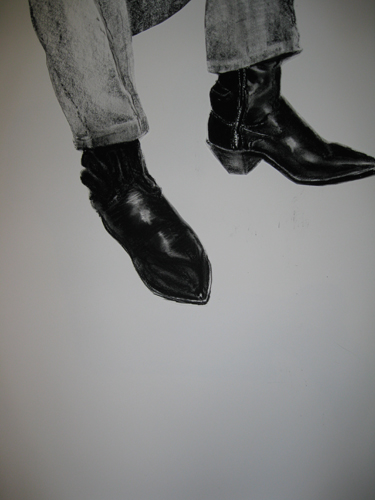
Sheaf: I saw a drum set that you made from paper. Is your visual art influenced by rock music, too?
Weber: Yeah, music is huge; it is pretty much what feeds what I do with art.
I had a prof in my third year of drawing, and I was fumbling, not knowing what I wanted to do with art. He said to go with your obsessions. So I started making stuff about music. It’s not literally about music, but rather sounds and textures and colours of music. One of the things in my show is some photographic prints of stuff around the city right now — textures and old things. Maybe each picture is a song. I was collecting the music the city makes.
And then there is stuff more literally to do with music, like I have made more instruments. But for me drawing is kind of a good medium for being influenced by music because it’s very human, you try to make something perfect but it has that wobble. And music has that quality too. The imperfection makes it beautiful.
I’ve learned a lot about how to go about making art from having an education in fine arts. I think that there are a lot of approaches, or things to think about, that you can apply to music that people should think more about. It’s taught me how to approach things in music. The way bands are set up, they could use a little bit more questioning sometimes but the same goes the other way — because you can get caught up in art too academically and using musical thinking helps that too.
Janice Weber’s BFA show, entitled Magpie Eyes will be at the Gordon Snelgrove gallery Nov. 30 to Dec. 4.

Leave a Reply