THE UNIVERSITY OF SASKATCHEWAN’S MAIN CAMPUS IS SITUATED ON TREATY 6 TERRITORY AND THE HOMELAND OF THE MÉTIS.
THE UNIVERSITY OF SASKATCHEWAN’S MAIN CAMPUS IS SITUATED ON TREATY 6 TERRITORY AND THE HOMELAND OF THE MÉTIS.
The university’s nearly 11-year-old policy and the students it affects
“The University of Saskatchewan is committed to providing and maintaining a safe and positive environment in which any form of sexual assault and sexual misconduct is unacceptable and will not be tolerated.”
That is a central principle of the University of Saskatchewan’s Sexual Assault Prevention Policy. Reading through the policy, the sentiment is reiterated again and again: USask cares.
The policy, according to the university, strives to create “a safe and respectful space for working, studying, or living within its community.” In bullet points, the university states its commitments with reassuring verbs such as “fostering,” “providing,” “ensuring” and “facilitating.” The policy promises readily available reporting processes, prompt action and support for those affected by sexual assault or misconduct.
In a 2020 interview with Global News, Patti McDougall, then vice-provost of teaching, learning and student experience, described USask’s sexual violence prevention policies and training programs as “robust.” McDougall said one indication that the university was “doing a better job” was that more people were coming forward to report sexual violence. In 2026, three lines at the top of the policy paint a different picture.
“Last Revision Date: Dec 14, 2015
Effective Date: Dec 14, 2015
Next Review Date: TBD”
Sexual violence is not an issue unique to the University of Saskatchewan. It is a pervasive concern across Canadian post-secondary institutions. A 2019 Statistics Canada survey found that 71 per cent of students “witnessed or experienced unwanted sexualized behaviours” in a post-secondary setting. Among students who had experienced sexual assault, fellow students were most often identified as perpetrators, rather than professors or others in positions of authority.
USask’s current public sexual violence page still cites campus figures from 2019. More than 13 per cent of students reported being sexually touched without consent, while more than six per cent reported attempted penetration or penetration without consent.
Now approaching 11 years without a revision, the Sexual Assault Prevention Policy still lists its next review date as “TBD.” The Sheaf reached out to the university about the policy, and in an email response, the university said it would like “to present the updated policy to the Board of Governors for approval this academic year.”
The planned revision is welcome, but a nearly 11-year gap between revisions raises a question: how well can a policy written in 2015 reflect the realities students are navigating in 2026?
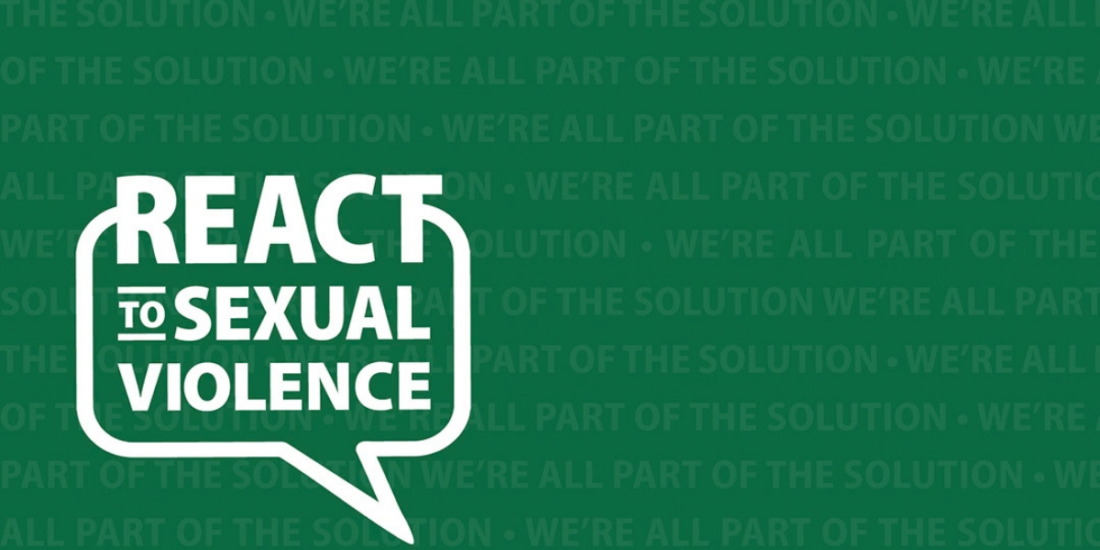
The policy came into effect before some of the cultural shifts that transformed public conversations about sexual violence. #MeToo went viral globally in 2017, and Time’s Up followed a year later. The university’s React to Sexual Assault campaign was launched in 2016 to promote awareness on campus. The campaign included posters encouraging members of the community to “React to Sexual Violence,” and emphasized that victims needed to “tell someone.”
The 14-page procedures document that accompanies this policy outlines the university’s process for responding to reports of sexual assault or sexual misconduct. In an official university news release, McDougall “acknowledged that policy and procedure documents are formal and detailed which, for some, may be daunting to read because of the length and language used.”
When someone discloses an instance of sexual violence, Section 1 of the procedures states that the university “will take every step available to support the person who has made this disclosure.” The document includes an extensive list of contacts, including the Saskatoon Sexual Assault and Information Centre (SSAIC), hospitals in Saskatoon and Student Health Services, among others.
Section 1 also states that members of the university community who receive a disclosure must offer assistance connecting the discloser with the Student Affairs Case Manager if they do not wish to remain anonymous. Section 1 also commits to a prompt response to any reports of sexual assault or misconduct made to the university.
Alongside the policy, a voluntary online Sexual Violence Prevention and Response course was launched through Canvas in 2020, with the goal of promoting a more informed student body. In an email response, the university stated that “the Sexual Violence Prevention Canvas course is currently under review as part of the broader update to the University’s Sexual Violence Prevention policy and procedures.” The university did not comment on whether it plans to make the course mandatory for students.
In a 2023 systematic review and meta-analysis of sexual assault prevention programs in the United States, researchers found that the programs had a stronger effect on students’ attitudes and knowledge than on sexual violence itself. While the resources and materials connected to the policy are foundations that help build a clear “line in the sand,” as McDougall stated, some parts of the policy are noticeably outdated or do not appear to match what is currently available to the public.
In the Sexual Assault Procedures document, Section 2 states that the university will publicize incidents of sexual assault or misconduct that are reported to Protective Services. According to the document, the incidents will be logged and posted on the Protective Services website, with regular updates to the log. The procedures outline that entries should include, wherever possible, the nature and context of the reported misconduct, the dates of the incident and report and whether the incident was reported to Saskatoon police. However, The Sheaf could not locate such a log on the current Protective Services website.
When asked about the incident log, the university stated in an email, “Protective Services has moved away from publishing a public log of criminal activity. Instead, real-time alerts through the USAFE app inform anyone who has downloaded the app of threats to public safety on campus. The procedures document will be revised to reflect these changes.”
Other universities have adopted more transparent reporting methods regarding the number and nature of sexual violence reports they receive and how those reports are handled. In Ontario, the University of Toronto offers annual reports on activity under its sexual-violence policy. Its 2024-25 reporting included the number of disclosures and reports and information about how cases moved through university processes.
The University of British Columbia also publishes annual reports through its Investigations Office and Sexual Violence Prevention and Response Office. Those reports include statistics on the services the offices provide. Université de Montréal’s Bureau du respect de la personne publishes annual reports containing statistics on the requests and cases it handles, including matters involving sexual violence. These institutions do not all define, categorize or process sexual-violence reports in the same way, meaning their numbers cannot be compared directly. However, they show that detailed and recurring public reporting is possible.
Logging incident data is not the only way USask’s policy has shown its age. After disclosing an incident of sexual violence or misconduct, the university states that it will respond “promptly” but does not provide students with deadlines or timelines regarding when they can expect the overall process to be completed.
When referencing a similar policy from the University of Toronto, which has been reviewed as recently as 2025, timelines are much more explicit. Its Sexual Violence and Sexual Harrassment Policy states that the university will strive to conclude a process, including decision-making where applicable, within no more than 12 months from the date a completed report is received. While some cases may take longer, USask’s Sexual Assault Prevention Policy and Procedures document do not set out a comparable overall timeline.
The University of Toronto has also updated its policy to explicitly address technology-facilitated sexual violence. The policy clearly states that anyone “[k]nowlingly creating, publishing, distributing, transmitting, selling, making available, or advertising an intimate image, [which is] a visual recording of a person or their likeness made by any means, including real, AI-generated, or digitally altered photographs or video,” would be held accountable through the policy.
While USask has brief mentions of technological sexual harassment in both the policy and procedures document, they only account for e-mails, text messages and photographs as evidence of harassment, and there is no strict code for online conduct and what constitutes a violation of it.
UN Women, the UN organization focused on gender equality, recognizes the danger of AI in cases of online sexual abuse and its potential to intensify harassment and abuse against women. With over half of the student population identifying as women according to 2025 enrolment demographics, USask should look into implementing policies which ensure students are adequately protected from technological abuses.
Alongside modernizing the Sexual Assault Prevention Policy, there is also a question of what evidence may exist when a student comes forward, and what happens when there is little physical evidence. According to the procedures, individuals wishing to file a report “should not shower, bathe, change or throw away clothes, disturb the area of occurrence, brush teeth, or comb hair.” The procedures also recommend preserving other potential evidence such as “electronic communications (e.g., e-mails and text messages), photographs, and bedding.”
While these recommendations align with Saskatoon Police Service guidelines, this advice is naturally suited to incidents where physical or documentary evidence may exist, and does not take into account the more ambiguous nature of sexual harassment. What occurs when the harassment is reported as the brushing of hands, standing too close or small comments that walk the line between appropriate and not?
A student who went through the university’s reporting process spoke with The Sheaf about their experience. The Sheaf’s editor-in-chief granted anonymity because publicly identifying the student in connection with a sensitive report could compromise the privacy of those involved, expose them to unwanted attention and risk causing further distress. The details presented are based solely on the account of the student and have not been adjudicated through a criminal court or university process.
The student recounted an incident that occurred in 2025 during their time at USask. The interviewee described conduct from another student that made them uncomfortable and chose to report it to the university. The student detailed being initially hesitant to come forward, as they were unsure if anything other than explicit assault warranted university intervention. They, alongside other students, were directed to email university staff after they expressed concern regarding the person’s behaviour.
They received a prompt reply from the university. “I think the initial response time was pretty good, because it was like, ‘We need to speak instantly about this.’” According to the interviewee, a meeting was booked with Student Affairs and Outreach within a week to discuss the incident and the next steps.
“I was very jittery about it because … I didn’t know this [person], and I knew that I had to say what was going on, and I was very nervous too,” the student said.
During the meeting, the student described an uncomfortable atmosphere. “I didn’t feel like I was getting comforted … It wasn’t like, ‘Okay, you’re reasonable to feel like this was too close,’ or stuff like that … And then, the other interview didn’t happen.”
At the end of their meeting with Student Affairs and Outreach, the student said they were informed about how the university would proceed. However, the student understood that the process could only move forward if they were willing to file a formal complaint and put their name on the record.
The student said, “I was willing to put my name on it. If none of us did, then it [would’ve been] dropped right at that moment. So I said, ‘No, I’ll put my name on it.’”
Afterward, the interviewee was told that they would have another meeting with university officials; however, that interview never happened.
“I should have reached out, and I know I should have. But at that moment, I was just annoyed with it because it was dragging on for a long time,” the student stated.
The student said the lack of closure left them questioning their perception of the situation.
“I was thinking, ‘Am I just being overdramatic or not?’ So, I was trying to be fine with it.”
As communication with the university stopped, the uncertainty surrounding their case became more immediate when the student they had raised allegations against walked into the interviewee’s class the following year.
“I felt like my heart sunk, because it was like, I didn’t know how far they went with it. If my name was tied to it, was he aware that I was a part of this [group] that was reporting? So I was just like, is he gonna confront me about this, is he gonna talk to me about this, or is he just gonna stare at me like, ’you did something?’”
One student’s experience cannot speak for every person who has gone through USask’s reporting process. However, the uncertainty at the centre of this account — wondering whether what happened was serious enough to report, not knowing where they were in the process, questioning whether they should have followed up sooner and having to encounter the same person they had reported — is a testimony to the gaps present in the university’s safety net.
In the procedures document accompanying the policy, the university states that “it is the responsibility of the Vice Provost Teaching and Learning and the Associate Vice President Human Resources to ensure that these procedures are monitored, reviewed and periodically updated.”
Nearly 11 years later, these roles have been changed. When asked which university offices are responsible for the process, USask responded that “The offices of the Vice Provost Student and Learning and the Associate Vice-President, People and Chief Human Resources Officer continue to be responsible for oversight of the Sexual Violence Prevention policy and procedures, including the policy’s ongoing review and maintenance.”
The university clarified, “Student Wellness Centre, Student Affairs and Outreach, and Protective Services continue to be the primary points where members of the USask community can disclose incidents of sexual violence and access support.”
Yet the policy those procedures are meant to implement still carries a 2015 revision date, and accompanies a website containing broken links and inconsistencies. For a policy once heralded as “formal and detailed,” the names and numbers of crucial contacts to file reports are missing or outdated.
While other Canadian universities have updated their policies, expanded public reporting and begun addressing newer forms of sexual violence, USask students are still directed to a policy written before many of those developments existed.
USask’s Sexual Assault Prevention Policy has blind spots. It gives students options for disclosing, reporting and pursuing complaints, but does not provide a clear timeline for how long those processes should take or how frequently a student should expect updates.
The university’s planned revision is welcome, but it is overdue if the policy is to fully reflect the realities facing students who come forward today.
At the top of the policy, the first three lines are concerning, and for a policy that promises prompt action, “TBD” has been sitting there for a long time.