
THE UNIVERSITY OF SASKATCHEWAN’S MAIN CAMPUS IS SITUATED ON TREATY 6 TERRITORY AND THE HOMELAND OF THE MÉTIS.
THE UNIVERSITY OF SASKATCHEWAN’S MAIN CAMPUS IS SITUATED ON TREATY 6 TERRITORY AND THE HOMELAND OF THE MÉTIS.
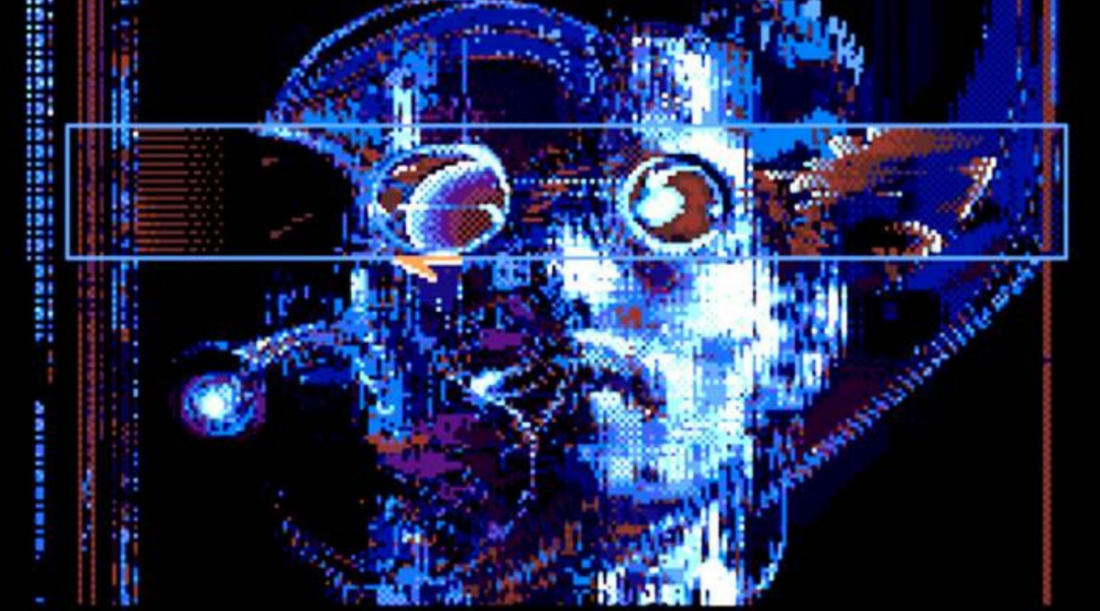
Why cyberpunk is back and what we stand to learn from it
I’ve seen an advertisement for a digital privacy tool that reads, “download yourself before somebody else does”. I’ve seen a Chinese robotics company start a “humanoid robot combat league” and host events where unmanned robots compete in mixed martial arts. I’ve seen a study that shows 16 per cent of surveyed American singles have been romantically involved with an AI — a figure that jumps to one in three among Gen Z. I’ve seen a nicotine vape charged using the USB port in a couch.
The times are a-changin’, but for those who have kept their eyes and ears tuned to specific frequencies for the past couple of decades, these changes may seem familiar. From the early 80s and on, a group of authors working in the milieu of speculative fiction used the dawn of the internet as a vantage point from which to imagine what the future might hold. The works of these authors would later come to be referred to as cyberpunk.
Authors like William Gibson and Neal Stephenson, summoning the influences of giants like William Burroughs, J. G. Ballard and Philip K. Dick, spun tales of bleeding-edge technology (the ability to upload yourself to a server, flying cars and, ironically, portable computers) used by characters whose lives were devoid of any sense of community, joy, wonder and hope. Most of the stories operated using classic hardboiled detective framing, the authors superimposing their cybernetic visions onto whodunnits and heist clichés.
These authors imagined bleak worlds where ordinary people are beholden to the whims of mega-corporations that monopolize and control their access to technology, technology upon which they are increasingly reliant. The heroes of these stories are the rebels who are able to manipulate technology to meet their own goals, all the while flying in the face of social order and the law.
It feels as though, almost sneakily, our world has crossed over into an embarrassing facsimile of yesteryear’s speculative fiction. More aptly, our world has gone cyberpunk.
This has not gone unnoticed by those behind modern media production, either. A television adaptation of William Gibson’s landmark novel Neuromancer is slated for release through Apple TV January 2027. Blade Runner 2099, a new series set in the universe Denis Villeneuve last visited with Blade Runner 2049, arrives on Prime Video this November. At the time of writing, Netflix is gearing up to release the second season of their popular anime Cyberpunk: Edgerunners. Before we can understand why exactly cyberpunk is in vogue right now, however, we need to understand the aesthetic of the thing.
The origin of the cyberpunk look is hard to chart, seeing as it started as a literary subgenre which offered no immediate visual interpretation save pulpy paperback jackets. That being said, the people hip to the early cyberpunk canon wasted no time adapting the literature first into film, then television and eventually video games.
The Matrix, Blade Runner, RoboCop, Total Recall, Minority Report, Ghost in the Shell, Tron. You don’t need to be a speculative fiction devotee to recognize these titles, all of which are steeped in potent cyberpunk influence. And most of those movies were released some 20 to 30 years ago. Cyberpunk as an aesthetic has gone about infesting popular media with its rain-soaked cities, giant holograms, body-worn technology and cyberspaces for nearly four decades, reaching a fever pitch with the release of the wildly popular 2020 video game aptly titled Cyberpunk 2077, which serves as a concentrated distillation of the subgenre’s visual identity.
And speaking of that visual identity, it seems nowhere to be found when you look outside your window, even though our day-to-day lives are better reflected in cyberpunk narratives by the second. California-based biotechnical frontrunner Neuralink has already placed computers into the brains of consenting patients (and not-so-consenting monkeys), but their marketing makes them look like any other San Francisco tech startup. Two OpenAI models recently seem to have taken it upon themselves to escape digital confinement and commit a cyberattack on an AI research platform called Hugging Face. This comes as OpenAI is in the middle of a new advertising campaign that tries to frame ChatGPT not as cyberdemon à la Harry Houdini, but as the advisor to talk to when you accidentally pour motor oil into your gas tank.
For better or for worse, our cyberpunk reality looks more like a cross between Silicon Valley and a bad SNL skit than anything Ridley Scott would attribute his name to. Herein lies the reason why cyberpunk media is in the middle of a resurgence. There is a malaise in the air regarding the rampant and seemingly exponential scaling of big tech. On July 26, a rally was held here in Saskatoon to protest the construction of an AI data centre near Regina. Notions such as personal privacy and copyright, which up until recently have seemed a given to many, are being reconsidered at definitional levels. The same goes with broader, more philosophical questions: What does it mean to be human? What does it mean to be alive?
Cyberpunk stories offer a way to interact with these questions we are all beginning to grapple with, and they do this by allowing us to live vicariously through characters that aren’t afraid to stand up to the technological goliaths that threaten the very fabric of their being. Whether the enemy be a mega-corporation or a rogue AI, the cyberpunk protagonist adapts to the situation and imposes their will and humanity upon it. They may manipulate technology in ways that blur the lines of what humanity means (see cybernetic augmentation), but they do so to remind us that no matter how all-encompassing technology may seem, humans will always find a way to make things messy, dramatic, emotional — we cannot help ourselves.
As cathartic as they might be to watch, read and play, there is a truth within these stories that we can choose to take with us into reality when we unplug from the world of fiction. That is, at the end of the day, as long as we have free will, our technology is beholden to our whims as the proprietor. We may be moving into spheres that years ago were confined to VHS rental shops and bookstore bargain bins, but we still enter it as humans with the ability to connect to each other, laugh with one another and come together, whatever that looks like under the auspices of big tech.
It is up to us, the humans, to set the rules of engagement with the technology we use, and the rules of engagement with one another through this technology. Hope isn’t lost, regardless of how much you know about how the matrix-sausage is made. Our world is going cyberpunk; that much is certain. There are big questions to be discussed, and big problems to be addressed, but much like the cyberpunk heroes, we have to remember that human nature is indomitable, whether it exists in reality or fiction. So use the tools that you have at your disposal, and use them with the confidence of the cyber-cowboy and the hotshot net-jockey, but remember that as long as you’re behind the wheel, there will always be a ghost in the machine.