
THE UNIVERSITY OF SASKATCHEWAN’S MAIN CAMPUS IS SITUATED ON TREATY 6 TERRITORY AND THE HOMELAND OF THE MÉTIS.
THE UNIVERSITY OF SASKATCHEWAN’S MAIN CAMPUS IS SITUATED ON TREATY 6 TERRITORY AND THE HOMELAND OF THE MÉTIS.
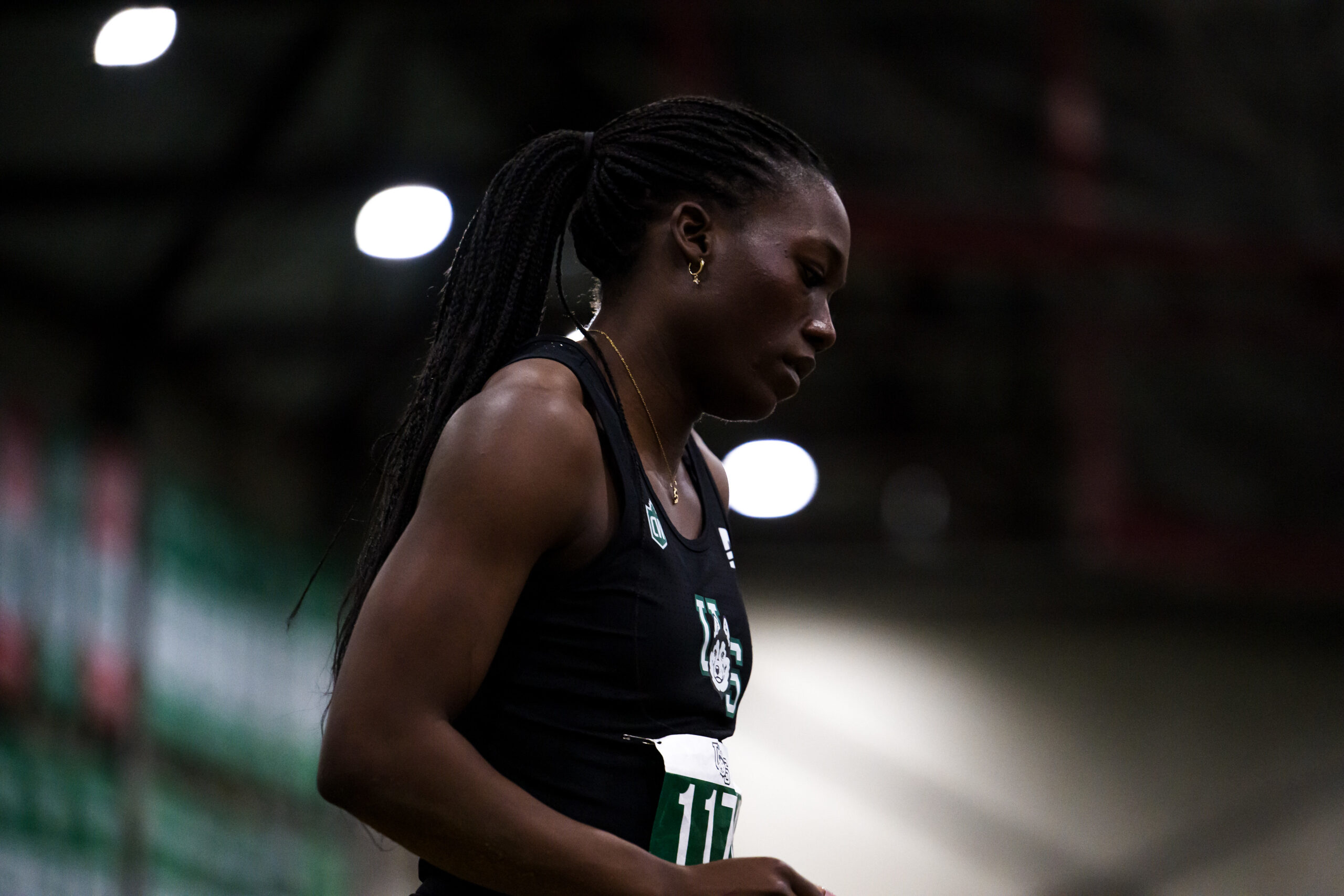
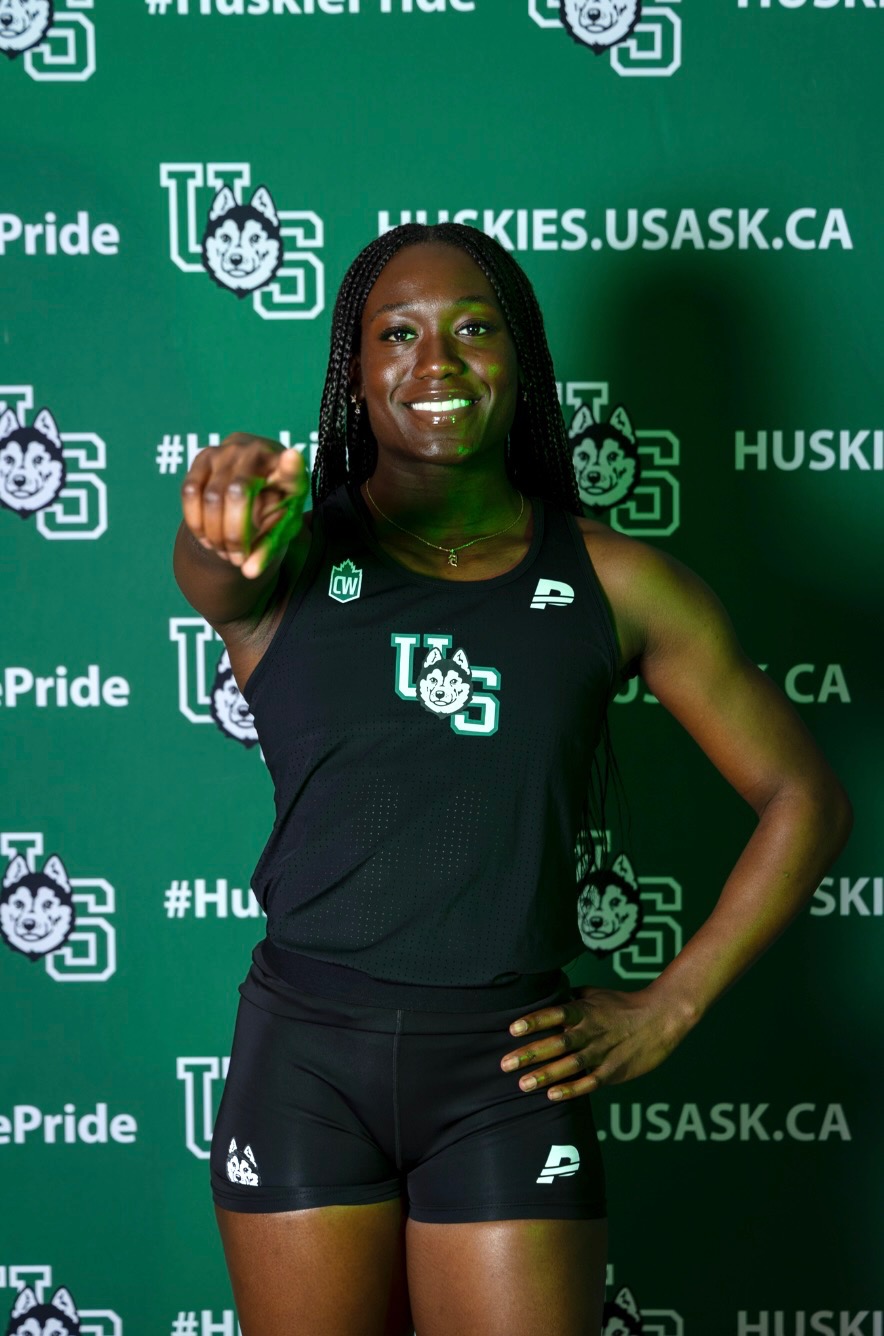
The Huskie star reflects on representation, resilience and the community that carried her to U Sports gold.
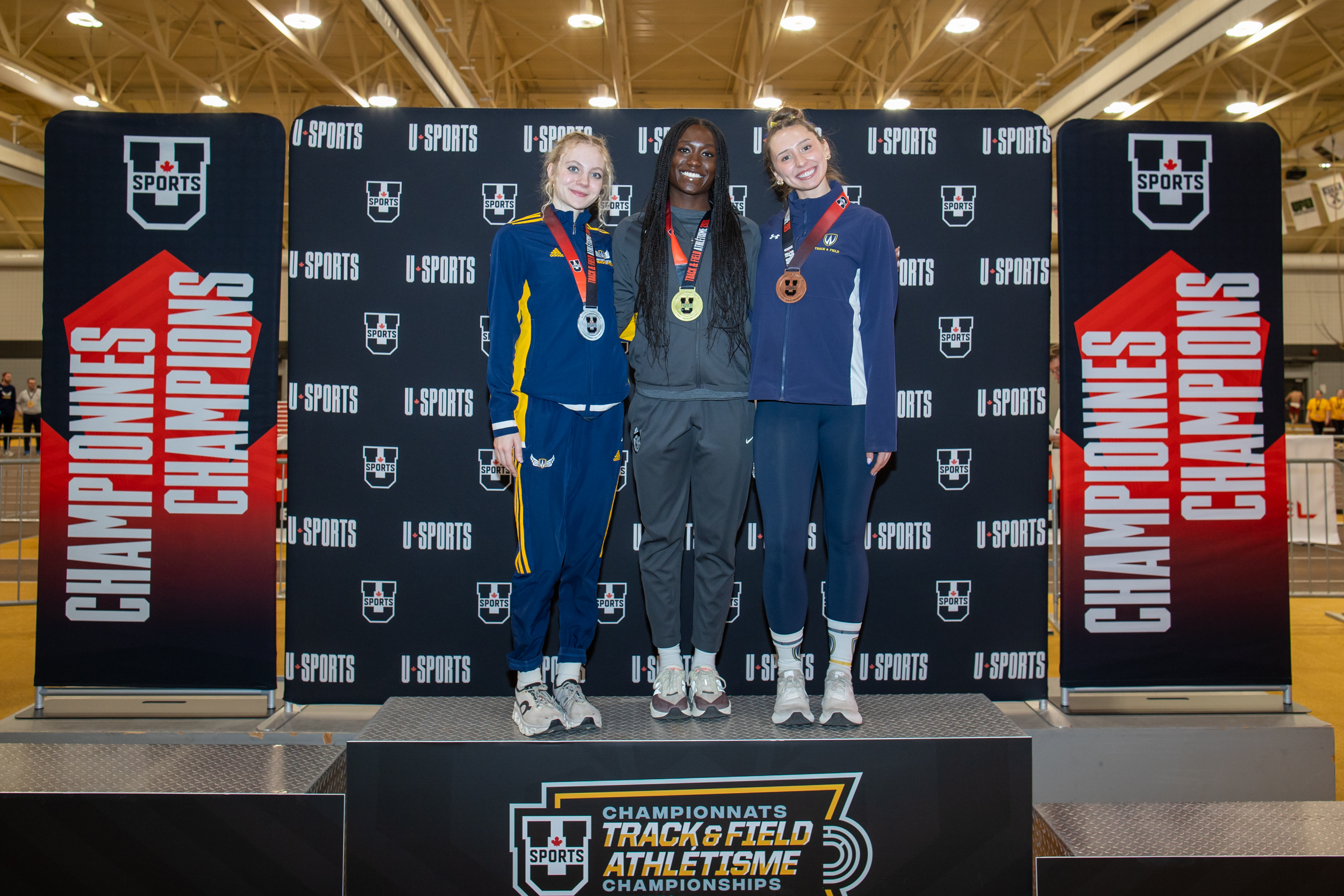
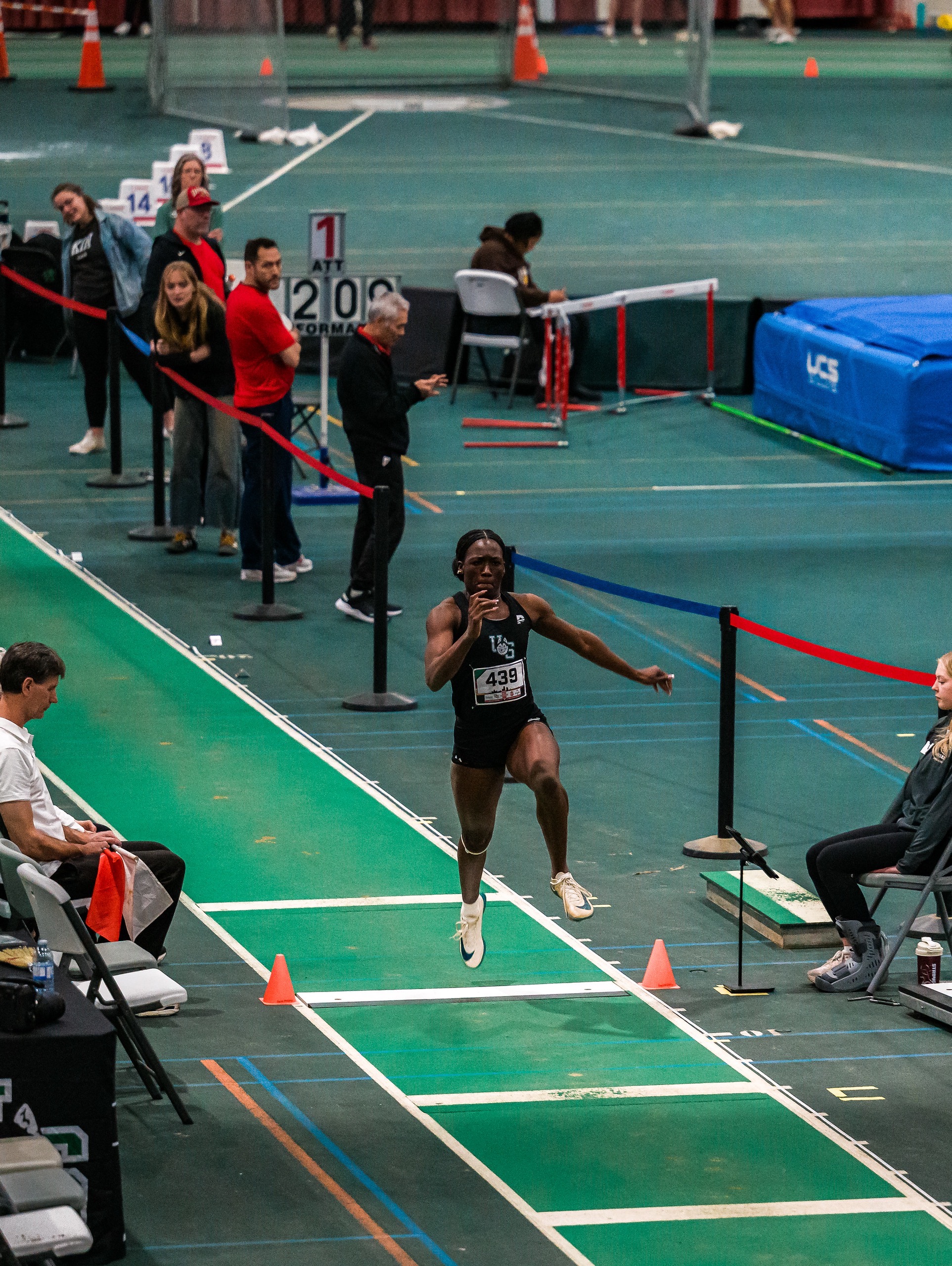
This March, Olamide Olaloku made history, topping off her Huskie triple jump career with a U Sports gold medal, a program record and the performance she’d been chasing for years.
The final-year sociology and psychology major came into the competition confident and in strong form.
“I was excited going into the competition seeded number one. I wanted to have fun, do this for the last time and enjoy myself.”
Arriving in Winnipeg four days before the competition, Olaloku felt relaxed. But when the day came, she suddenly found herself anxious and unexpectedly ill — something she had never experienced before.
“I took some Gravol and then ibuprofen, but the combination of those things made me so drowsy … I was just super weak, tired and off my game, so the competition was by no means easy.”
Her muscles felt heavy, and she relied on caffeine just to stay awake. When it came time to jump, the physical strain and mental fog made everything feel even more difficult.
“I was still a bit overwhelmed with feeling ill and trying to overcome that mentally. There was a moment where I thought, ‘I guess I can go home with second, that’s fine.’ Then I caught myself — no, you came here to win.”
With the support of her teammates and coaches, and drawing on years of perseverance, Olaloku managed to flip the switch.
On her penultimate attempt, she broke her own Huskie record, surpassing the 12.73m distance she set at the Canada West Championship, earning gold with a leap of 12.88m.
“Having that determination of wanting to win and my teammates encouraging me between jumps really helped me. Winning was such a beautiful moment, getting to celebrate with my teammates and coaches.”
To her, the victory means much more than just a medal.
“I feel like I’m on top of the world. It means so much for this to happen in my last year. I’ve been setting goals for so long, and I checked off nearly everything on my list. I wanted to break my record so many times, and I did. It’s the process that got me there.”
Throughout her time at the University of Saskatchewan, Olaloku has built an impressive résumé: U Sports triple jump gold medallist (2026), U Sports triple jump bronze medallist (2024), three-time Canada West triple jump gold medallist (2022, 2024, 2026), Canada West long jump bronze medallist (2022), Canadian national outdoor U20 triple jump silver medallist (2022), seven-time Huskie triple jump record holder, Canada West triple jump record holder and a member of five Canada West women’s team championship titles and three U Sports women’s team podium finishes.
But the journey hasn’t always been easy, with Olaloku facing her fair share of setbacks and challenges along the way.
Track and field teams face a different reality due to the roster size and nature of the sport. They don’t have a team room, some athletes pay out of pocket and assistant coaches juggle full-time jobs in addition to coaching — a stark contrast to the situation many other teams face on campus.
“The older you get, it can go one way or another — [it] can make you frustrated or more appreciative of the people who are there. Our [assistant] coaches are volunteers [who] get an honorarium. This is something they do in their own time, and the way they invest in us is huge. I think this just makes our success that much more impressive. We might not have as much funding that backs us, but the support from the people who show up means so much.”
There has been growing support for the team in recent years through the Huskie Women of Influence Breakfast fundraiser, private donations and their own vertical fundraising. Olaloku hopes that momentum continues for a program now onto its eighth consecutive Canada West championship.
That support and having the right people in your corner becomes even more crucial in a sport where your body is constantly evaluated.
“It can be overwhelming when it comes to the body piece, because your physique is so important in track. It’s overwhelming thinking about all the different things you have to pay attention to. I’m thankful for the coaching staff’s care and the team around me so I don’t have to carry all that alone.”
Furthermore, competing is deeply individual. You’re essentially up against yourself, chasing centimetres or milliseconds.
“In track, you have to be a little bit delusional. In my first year, I said I wanted to jump 13 meters — a full meter ahead of what I was already jumping, which is so unrealistic. But being a little delusional and saying, ‘It’s going to be me, it’s going to happen,’ kept me going. I definitely went through periods where I thought, ‘I need to quit, this sucks, I hate it,’ but having that hope that it could happen, and sticking with it, made the difference.”
The isolation of the sport hit her hardest in her first year.
“I’m so jealous of team sports. I wish I could have that bond — the way you interact, the closeness you have because you depend on each other and go through losses and wins together … I definitely struggled with that a lot in my first year … I was so lonely.”
With time, Olaloku found empowerment in the independence.
“That was difficult: figuring out my place, who I wanted to be, where I wanted to fit in. But I’m still very grateful that I am in an individual sport, and how that’s helped me develop my character and be more accountable to myself — not just in track, but in life, in my relationships, in school — kind of holding myself to a different standard, because I know no one else is gonna pick up the slack for me, except me.”
Olaloku has also found a support system in other Black athletes. Black representation within Huskie Athletics is limited — especially for women — and that absence is felt. On the track and field team, where the presence is strongest, being surrounded by teammates who share her identity has made a world of difference.
“It’s just so hard to put into words. Feeling seen and understood has just made the biggest difference, having people who know where I come from … They understand the expectations that are on me as a Black woman. They understand the struggles and the difficulties, but also the dreams that you have and the things that you want to achieve.”
She also wants to be someone who encourages young Black girls and women of colour to get into sport in general. Just this year, Olaloku was part of a group that established the USask Black Student-Athlete Association.
“I’m kind of upset it took us this long. We’re always talking about how well we do when we support each other, when we understand each other, when we can see people who look like us … It’s a good start to create community and build unity among Black student-athletes, to support and encourage one another, to show up for one another, because we know the difference it makes … Fisayo Moibi, Kyle Conteh, Timi Adelugba and I were part of the founding group, and Darnell Wyke and Caitrin Hodson were super helpful in bringing us together to do so.”
Although graduating this year, she hopes to leave a legacy with the association, supporting Black Huskie athletes for years to come.
When she looks back on what carried her through her own journey, the answer is clear. For Olaloku, success has never been something she achieved alone. Her faith, family and coaches form the foundation she returns to.
“Knowing that I have a greater purpose in this life — to help others, to be like Christ, to love others — made track seem less important in the fact that I have this gift and I can do amazing things, but I can also just be the person that I am, and God’s still gonna love me.”
Her mother, in particular, has been a constant source of strength and direction.
“My mom — just learning from the example that she is in her life, and how resilient she is, how strong she is, how she’s always encouraged me to do my best and put my best foot forward, and always use every opportunity that I’m given to do things well.”
She’s also quick to mention the coaches and support who helped shape her into the athlete she is today.
“A huge shout out to Ryan Bilanski, Jayden Wiebe, Kevin Cumming, Frantz-Kwame Smith and Mavis Dzaka from earlier in my years … they also shaped how I saw things. I would say that’s what I reflect on most — the people.”
Olaloku plans to continue training and competing after graduation — something she didn’t think she would do, but after how well the season went, she very much looks forward to it.
“I’m just excited. I feel like the world is my oyster … there are just so many opportunities that are out there. I’m very excited to see what the future holds.”
Congratulations on an incredible Huskie career, Olamide!

Leave a Reply