
THE UNIVERSITY OF SASKATCHEWAN’S MAIN CAMPUS IS SITUATED ON TREATY 6 TERRITORY AND THE HOMELAND OF THE MÉTIS.
THE UNIVERSITY OF SASKATCHEWAN’S MAIN CAMPUS IS SITUATED ON TREATY 6 TERRITORY AND THE HOMELAND OF THE MÉTIS.
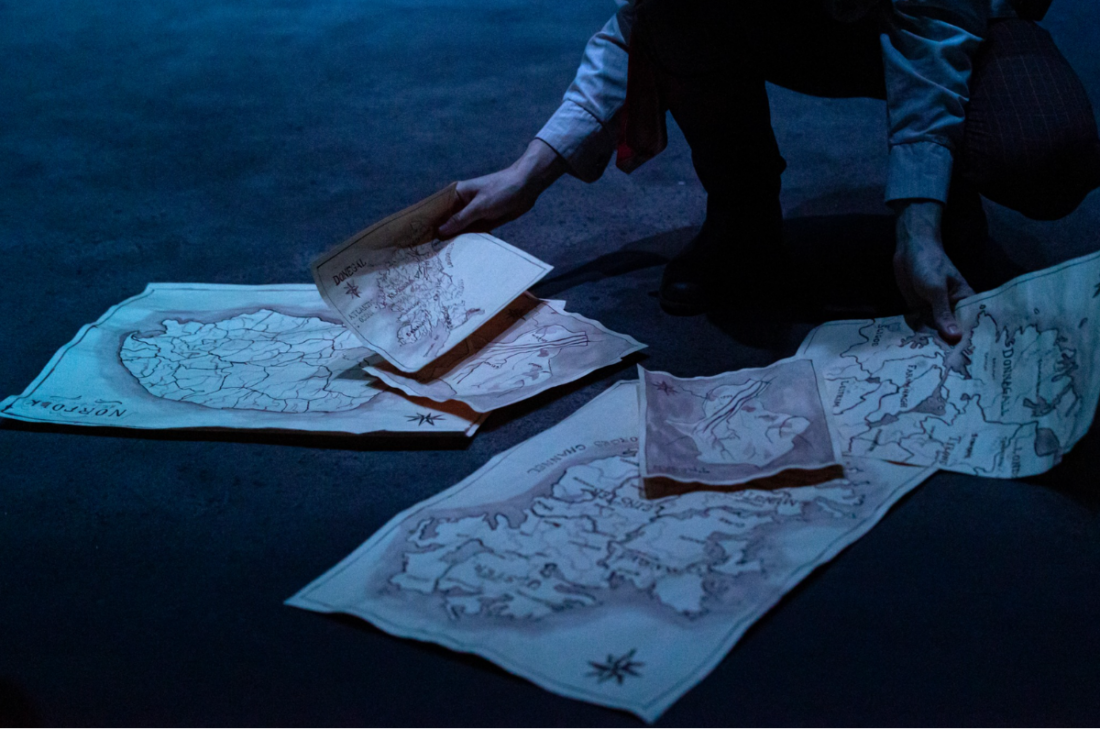
USask students produce a play exploring cultural erasure and how language shapes identity.
Few plays capture the quiet violence of cultural change as powerfully as Translations by Brian Friel. Set in 1833 in the fictional village of Baile Beag (Ballybeg), the play dramatizes the British Ordnance Survey’s mapping of Ireland, an ostensibly administrative task that becomes an act of linguistic and cultural conquest.
In this recent production, put on by University of Saskatchewan students in first and second-year drama classes, the emotional and political tensions embedded in Friel’s script felt both intimate and unsettlingly contemporary.
As Cassidy Boldt, the assistant stage manager for this production, put it, “it is really important to recognize when a culture has been taken away, and to appreciate what you have” which feels like the perfect way to describe the message of Translations.
In Canada, as well as all over the world, cultures have been colonized for centuries and had their histories erased. While Friel focuses on Ireland in 1833, this story draws attention to colonization and the effects that it has on individuals, communities, cultures and the world as a whole.
At the heart of Translations is the hedge school run by Shan O’Donnell (originally Hugh in the play but changed for this production), played by Carol Tebay, where Latin and Greek are prized, but English is scarce.
When British soldiers arrive to anglicize Irish place names, language becomes the battlefield. The transformation of “Baile Beag” into “Ballybeg” is not merely phonetic; it signals erasure.
O’Donnell’s son, Owen, played by Auckland Nickolayou, returns to the village as a translator for the British officers, Captain Lancey and Lieutenant Yolland, played by Erik Robertson and Nicholas Warner.
Owen acts as an intermediary between the English-speaking soldiers and the Irish-speaking locals. At first, he treats the renaming process as harmless modernization, smoothing over Lancey’s blunt warnings and softening translations to avoid conflict.
However, he gradually realizes that this linguistic “translation” of names is actually an act of cultural replacement.
Meanwhile, a romantic subplot develops between Maire, played by Skye Miller, a local woman eager to learn English, and Lieutenant Yolland, who becomes enamoured with Ireland and its culture.
Despite not sharing a common language, Maire and Yolland form a deep emotional connection. Their relationship symbolizes both the possibility of understanding across cultural divides and the tragic limits of that understanding.
Doalty, played by Johnny Cross, is a student at the school who provides a bit of comedic relief as he speaks of messing with the Red Coats nearby and moving their things. He seems to enjoy being a trickster and delaying their work even though he doesn’t seem to wish any true harm comes to them.
Jimmy Jack Cassie, played by Hadleigh Vickers, is a Homer lover in his sixties who often reads his books aloud in Latin and Ancient Greek. He is often lost in his literature and fantasies of fictional worlds until closer to the end of the play, when he is finally forced to look at the state of the town around him and realize how dire everything has truly become.
Bridget, played by Emerson Zuk, is also a student at the hedge school. She’s intelligent, cunning and a little vain, but still remains a good-natured character within the play. She often fears a “sweet smell”, which foreshadows the impending potato famine.
Another key figure is Sarah Johnny, played by Ellie Hartley, a shy young woman with a speech impediment.
With encouragement from Manus, played by Vex Muldoon, O’Donnell’s other son and the school’s assistant teacher, Sarah slowly learns to speak her own name aloud.
Manus has unrequited feelings for Maire, and after seeing her and Lieutenant Yolland together, he becomes enraged.
When Yolland mysteriously disappears under unknown circumstances, Manus flees to avoid suspicion. In response, Captain Lancey threatens violent reprisals against the village if Yolland is not returned. Fear spreads, and the community fractures under pressure.
By the end of the play, the hedge school’s future is uncertain, relationships have unravelled, and the anglicized names remain. Sarah, who had begun to speak, falls back into silence.
Shan reflects on memory, language and change, acknowledging that cultures survive not only through preservation but through adaptation.
The production leaned into the tension of the play with subtlety rather than spectacle. The set was a modest, weathered classroom framed by rough wooden beams, with some of them being removed during the course of the play, evoking a community rooted in tradition yet vulnerable to intrusion.
The sound and lighting design was beautifully crafted to complement the set design, with lights streaming in through the boards and sound effects changing as the world changed around the characters.
One of the stage managers, Kylee Leier’s, favourite moments in the show is right at the beginning when you can hear waves and cow bells, a beautiful and peaceful moment that sets the scene for a serene community, before the viewer is sucked into the challenges the characters are about to face.
She also emphasized the use of rain closer to the end of the show, signalling this sharp change in the emotions of the show and of the community.
One of the most quietly devastating performances of the evening was the portrayal of Sarah Johnny by Ellie Hartley. Often overlooked amid the larger political tensions of the play, Sarah embodies the most personal dimension of linguistic oppression. Struggling with a speech impediment, she begins the play nearly voiceless, coaxed gently by Manus into articulating her own name.
Her early attempts to speak were handled with extraordinary sensitivity. Each syllable felt like an act of courage. In a play about translation and erasure, Sarah’s tentative voice becomes symbolic of cultural survival itself.
By the final act, when Sarah regresses into silence after the disappearance of Yolland and the mounting threat of violence, the emotional weight is profound. Her silence is no longer simply a personal struggle; it becomes a communal one.
Nickolayou, the actor portraying Owen, O’Donnell’s son and translator for the British, delivered a particularly nuanced performance.
Owen’s initial pragmatism in his belief that translation is harmless slowly curdles into moral discomfort. His arc provided the emotional spine of the evening, illustrating how complicity often begins with good intentions.
Equally compelling was Miller’s portrayal of Maire, whose longing to learn English represents both aspiration and tragic irony. Her romance with Lieutenant Yolland, conducted in mutual incomprehension yet deep emotional understanding, was staged with aching tenderness. Their scenes underscored one of Friel’s most brilliant paradoxes: genuine connection can transcend language, yet language still shapes ourselves and our communities.
All the actors were students in first and second-year drama classes, coming from many different degrees and backgrounds.
During an interview with Hadleigh Vickers, he mentioned that this was his first show — if he hadn’t told me, I would have never been able to tell. He and all of the other students in the cast were very skilled and told the stories of these characters with great expertise.
Fraser Stevens, the director of this production and a drama professor, did an excellent job with the creation of this production and guiding these actors to handle these topics with care and purpose. Telling these stories to the audience in a time where sharing stories about colonization is so important, not only in Canada, but around the world.
Ultimately, Translations explores themes of language, identity, colonization, communication and loss.
Though the characters speak English on stage, the audience is meant to understand that Irish is their native tongue, a theatrical device that underscores the play’s central idea: translation is never neutral, and something is always lost in the process.
In the end, the audience left not with awe and excitement, but with a quiet sense of mourning, and a sharpened awareness of the fragile ties between language, culture and belonging.

Leave a Reply