
THE UNIVERSITY OF SASKATCHEWAN’S MAIN CAMPUS IS SITUATED ON TREATY 6 TERRITORY AND THE HOMELAND OF THE MÉTIS.
THE UNIVERSITY OF SASKATCHEWAN’S MAIN CAMPUS IS SITUATED ON TREATY 6 TERRITORY AND THE HOMELAND OF THE MÉTIS.
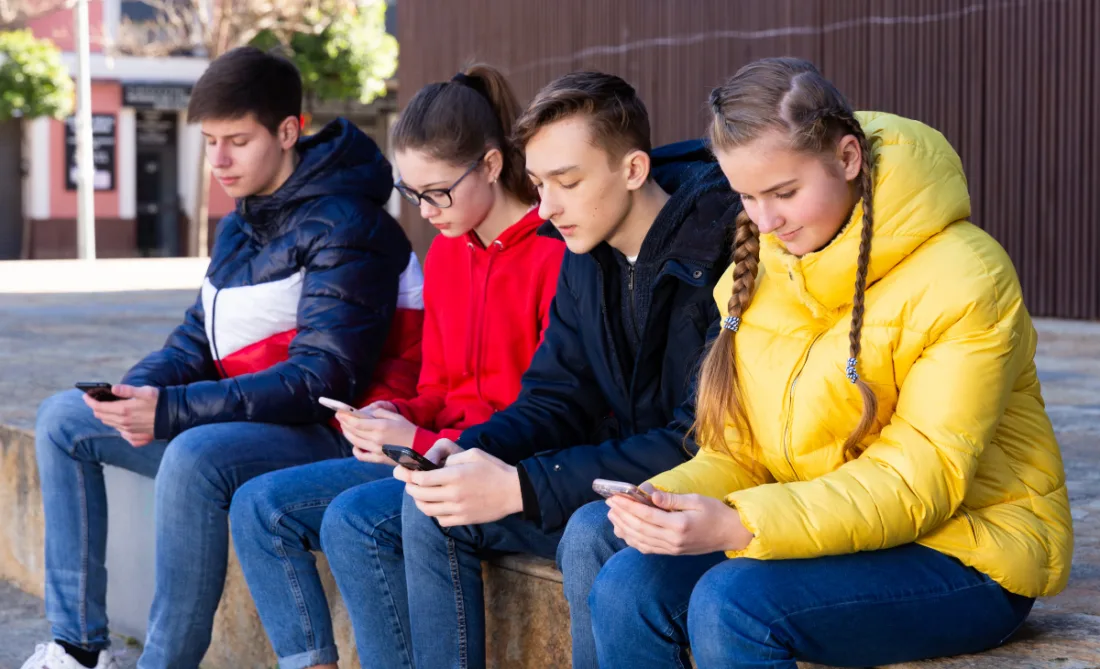
Learning how to log off and look up
While you are commuting to classes, you will see a lot of people on campus with earbuds in, eyes down, thumbs moving. In the Murray Library line, outside the Arts Building, even in the hallways between classes where people used to stop and talk are now mostly drifting past each other like quiet planets with their own little orbits.
It’s not that people here don’t want friends either. It’s not that we’ve all suddenly become anti-social or cold. If anything, most of us are craving connection more than ever. The weird part is that we’re more connected online than any generation before us … and yet it can still feel surprisingly lonely. So, are we too online to be social anymore?
Maybe the better question is: have we accidentally replaced being social with looking social?
USask is a campus built for the community. It’s not a commuter-only vibe. People spend long stretches here with classes, labs, studying, eating, waiting out the cold and killing time between lectures. There are so many natural moments for social life to happen, and sometimes it does.
You’ll still hear laughter spilling out of the bowl on a warm day, or see a group packed into a corner table in Place Riel. You’ll still find people staying late in the PAC or running into friends in the tunnels like it’s a little underground village. But the default campus setting now often feels quieter than it should.
A big part of that is simple: phones fill the empty spaces. Waiting for class to start? Scroll. Sitting alone at lunch? Scroll. Walking back from the library? Scroll. That little “in-between” time used to be where you made acquaintances. You would chat with the person next to you. You’d make a joke in class. You’d complain about the wind and somehow end up talking for ten minutes.
Now, even if you want to talk, it’s harder to tell if someone else does because everyone looks busy. The most universal “do not disturb” sign on campus is a screen. So let’s be fair, being online isn’t the villain. It’s actually how a lot of students survive university.
Group chats keep you afloat when you miss a lecture or don’t understand a lab instruction. Discord servers turn intimidating classes into shared problem-solving. Instagram and TikTok can make you feel like you belong somewhere, especially if you’re new to Saskatoon, new to USask or just trying to find people who get you.
For some students, online spaces are the safest social spaces. If you’re shy, anxious, neurodivergent or just exhausted, it can be easier to start a friendship in DMs than in person. There’s time to think. There’s less pressure. You can leave the conversation without feeling awkward.
But sometimes online life quietly stops being a tool and starts becoming a main event. The campus becomes a place you attend physically while your real social life happens somewhere else, on TikTok, on private stories, in comments, in streaks and notifications that never end, and that’s where things start to get strange. An online connection is not the same as being known.
There’s a specific kind of awkwardness that feels more common now, and that’s wanting to talk to someone, but not knowing how to enter their bubble. If you message someone, you can test the waters. You can send a meme. You can reply to a story. You can keep it casual.
In person, it feels riskier. There’s fear of interrupting. The fear they’ll think you’re weird, the fear of saying the wrong thing, and it’ll linger in your memory for three months like an unskippable cutscene. So we don’t take the risk. Instead, we choose the safer option of waiting for someone else to break the ice, and if no one else does, we scroll.
That’s not a character flaw. It’s a learned behaviour. Being online trains us to curate ourselves. To present a version of our personality that’s edited and filtered and timed correctly. In real life, there’s no draft button. Real life includes pauses, stumbles and moments where you realize halfway through a sentence that you don’t actually know what you meant. That can be scary, especially in an environment so high-pressure as university, where so many students already feel like they are failing in at least one area of life at any given time.
There’s also a subtle shift happening where sometimes it feels like we’ve focused more on documenting our lives than living them. You go to a Huskies game, and half the crowd is on their phone. You hang out with friends, and there’s a moment where everyone goes quiet, not because you’re out of things to say, but because everyone is checking something. You go out for coffee, and the table looks like a small electronics store. It’s not evil, it’s a habit and a reflex.
But presence is a kind of generosity toward other people and towards yourself. And when you’re always half present, social life becomes thinner. Conversations stay surface-level. Moments don’t stretch out.
If you’re a USask student, you already know their schedule struggles. People are juggling work, classes, labs, studying, family stuff and sometimes just trying to keep themselves emotionally upright. When life is that packed, phones become the easiest form of downtime. Scrolling is “rest” that requires zero planning and zero vulnerability. It’s comfortable with no chance of rejection.
So … are we too online? Sometimes yes, not because the internet is ruining us, but because constant connectivity can crowd out the awkward, slow, slightly uncomfortable moments that real social life needs to grow.
But here’s the hopeful part: this isn’t permanent. It’s not a doomed generation thing. Social skills are not “gone,” they’re just out of practice.
And USask is honestly a great place to practice, because there are built-in opportunities everywhere. If we treat them like opportunities instead of background noise. Being “less online” doesn’t have to mean deleting everything or becoming a person who journals in a cabin and makes sourdough (Although a select few of us would adore that idea, given the right circumstances).
It can be small, almost unremarkable choices like saying hi to the person you sit beside twice a week, even if it feels awkward the first time. Staying an extra five minutes after class to chat instead of speed walking out with your head down. Even putting your phone face down on the table when you’re with someone you actually like.
None of these guarantees aren’t best friends. But it increases the odds of connection, and connection is often just odds plus courage.
We’re not too online because we don’t care, we are too online because it’s easy. Because it’s everywhere, and because real connection asks something of us: attention, vulnerability and a willingness to be a little cringe in public.
University is one of the last places in life where you’re surrounded by potential friends your age, all in the same space, all going through similar stress, all trying to become their best selves.
So maybe the question is whether we’re too online to be social anymore. Maybe it’s whether we’re willing to choose real life on purpose often enough that it starts to feel natural again.
And maybe that starts at USask with something simple. Look up. Smile. Say hi. Someone else has been waiting for that, too.

Leave a Reply