
THE UNIVERSITY OF SASKATCHEWAN’S MAIN CAMPUS IS SITUATED ON TREATY 6 TERRITORY AND THE HOMELAND OF THE MÉTIS.
THE UNIVERSITY OF SASKATCHEWAN’S MAIN CAMPUS IS SITUATED ON TREATY 6 TERRITORY AND THE HOMELAND OF THE MÉTIS.
Huskie coach Jerson Barandica-Hamilton and alumna Jade Houmphanh share their experience at the inaugural 2025 FIFA Women’s Futsal World Cup.
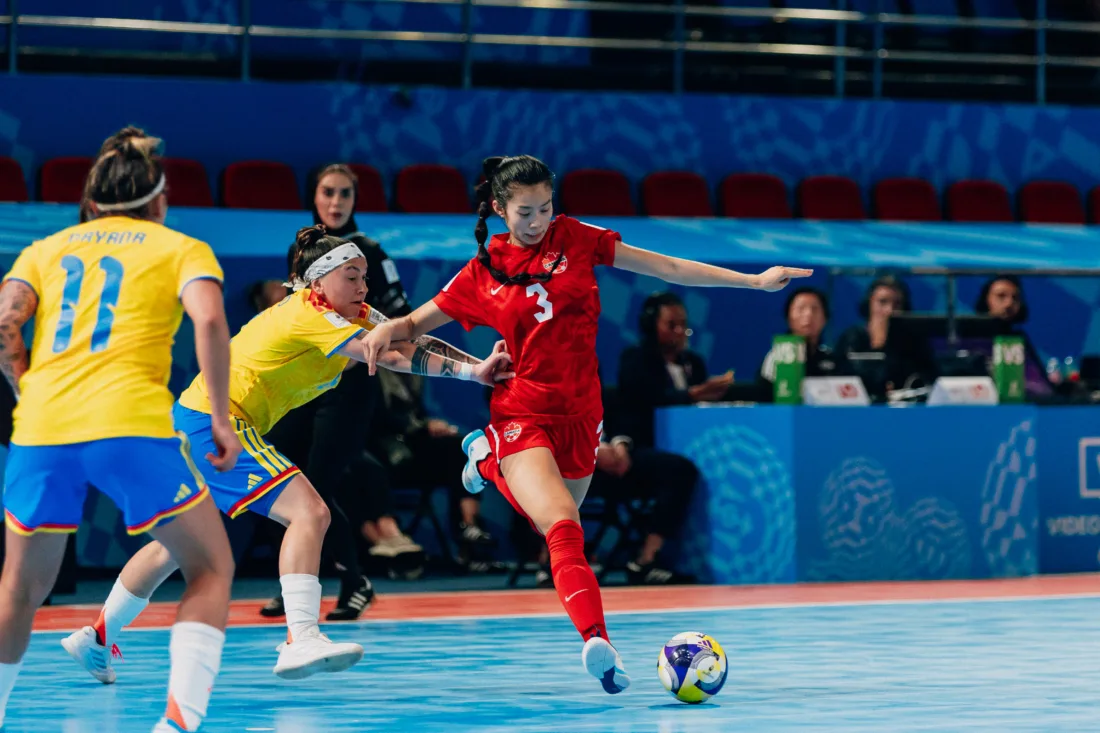
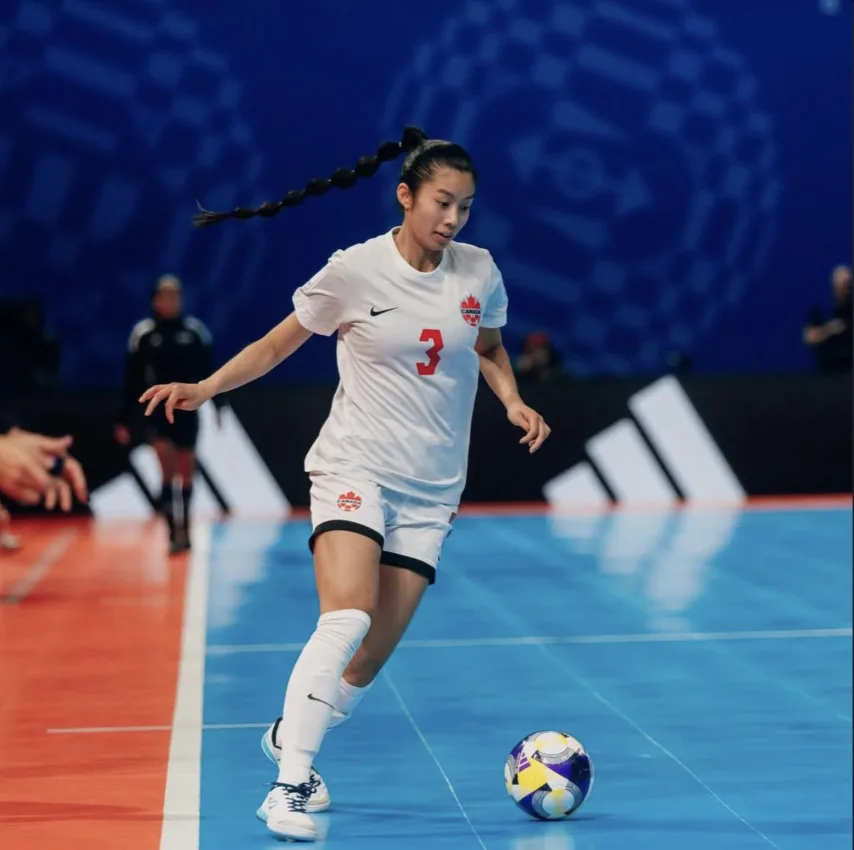
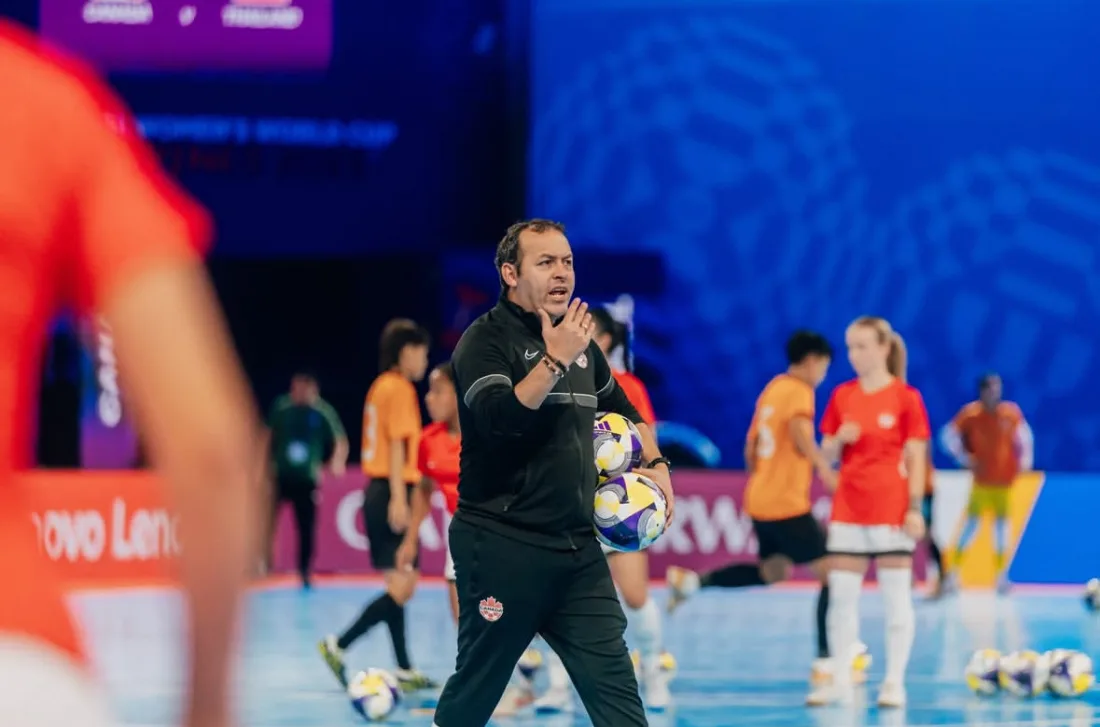
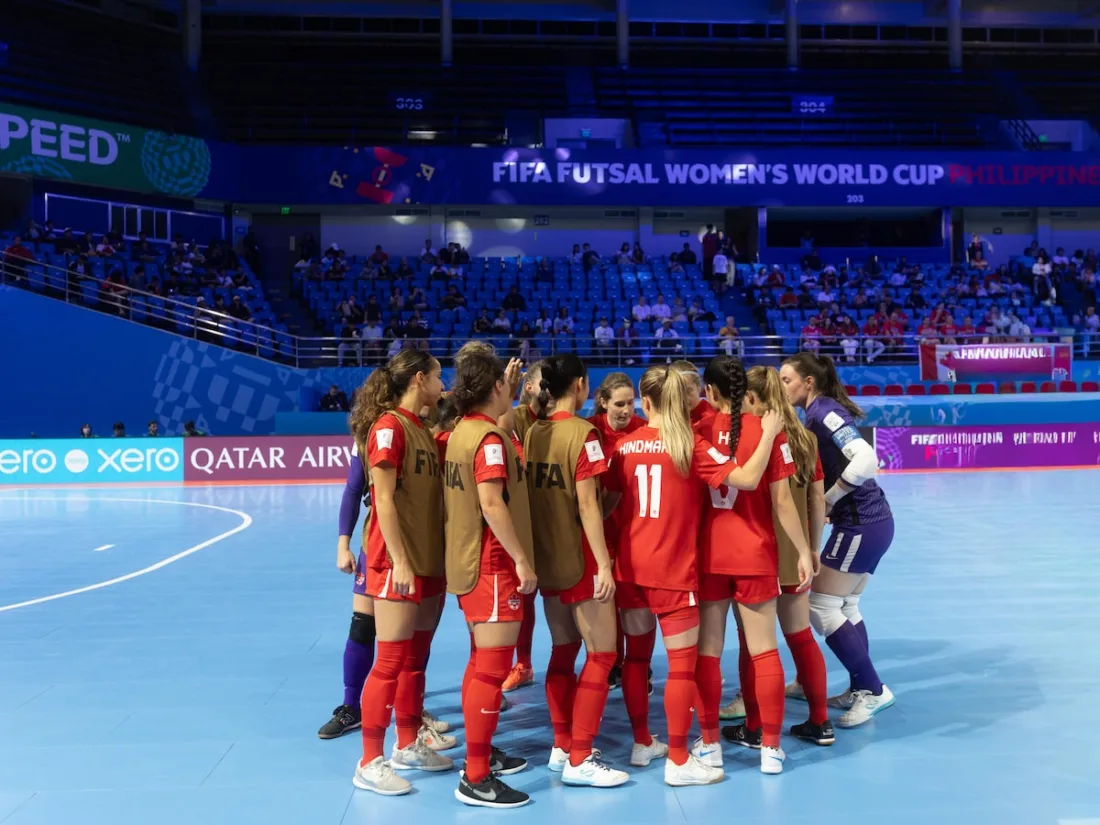
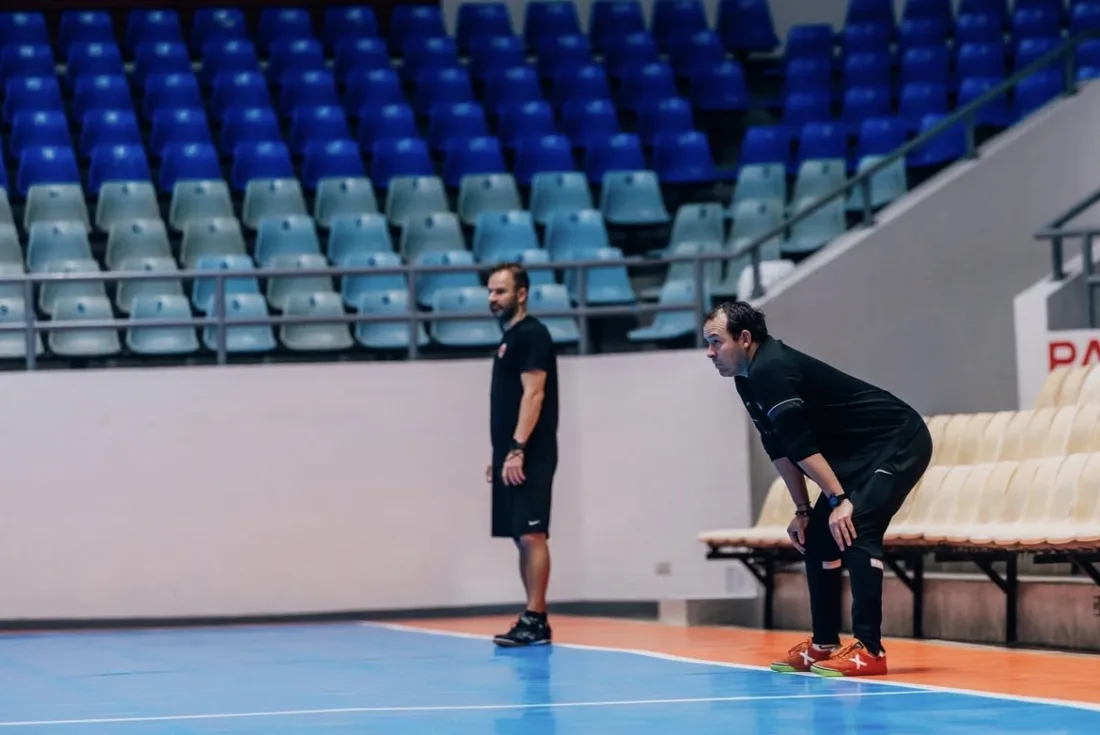
Last December, Canada competed in the first-ever FIFA Women’s Futsal World Cup in the Philippines. The roster included three Huskie Women’s Soccer alumni — Jade Houmphanh, Erica Hindmarsh and Jadyn Steinhauer — along with Huskie women’s soccer head coach Jerson Barandica-Hamilton.
The Sheaf spoke with Houmphanh, a recent College of Nursing graduate who wrapped up her Huskie career last spring, and with Barandica‑Hamilton about their journey to this historic event.
Barandica-Hamilton grew up playing futsal on the streets of his hometown, Isla Mujeres, Mexico.
For those unfamiliar, futsal is a fast-paced, five-a-side version of soccer played on a hard court that emphasizes technical skill, quick passing and creativity.
“I would play every day at school, recess, unstructured, and then a lot of times after school … we would play [for] hours and hours, and I learned to love the game from playing.”
When he took the helm of the Huskie Women’s Soccer team, he saw an opportunity to implement the sport into their training.
“The weather, accessibility to facilities and the style of play that I wanted to implement suited what we wanted to do. So we started to incorporate it with our university program as an extension of the winter phase.”
Houmphanh remembers being introduced to futsal by Barandica-Hamilton when she was 13.
“I remember vividly [that] it was outside at the Education tennis courts. We played a couple of games, and I really liked it. It suited my playing style, and it was a lot of fun dribbling and scoring goals.”
Over the past decade, futsal has surged in Saskatchewan, culminating in back-to-back national titles for women’s teams heavily composed of current and past Huskies. Houmphanh played on both championship squads — Saskatoon Green & White in 2024 and SK Impact in 2025 — earning tournament MVP both years. This success is especially notable given the presence of provinces like Quebec and Ontario, which have far more established futsal leagues.
In early 2025, Barandica-Hamilton received the call to join the first-ever Canadian Women’s Futsal Team’s coaching staff. He believes Saskatchewan’s recent futsal success, along with being located in Western Canada, while the rest of the staff from the East, played a key role in his selection.
Alongside scouting players, he served as the team’s lead set-piece specialist — a crucial role in a sport defined by frequent stoppages.
Houmphanh, Hindmarsh and Steinhauer impressed at club nationals and at the first-ever national identification camp, held in Saskatoon. They were later invited to Montreal for additional camps and ultimately earned spots on the team.
Houmphanh recalls the moment she received the good news.
“I had come off my third day shift while I was in nursing school, so I was exhausted … [the head coach] told me ‘I’m really happy to offer you a spot’ and I thanked him for the opportunity. Then I went upstairs and jumped up and down with my family.”
The team went on to compete at the CONCACAF Championship in Guatemala last May. Entering as unknowns, they stunned tournament favourites the U.S. and Mexico to win the tournament and qualify for the World Cup. Their group draw, however, was daunting, featuring Spain, Thailand and Colombia — all ranked inside the global top 10.
Canada’s reality was stark — limited funding, players scattered across the country and many balancing full-time work, school or university competition. On top of that, players were expected to follow a rigorous running program and get regular futsal‑specific touches on the ball to stay sharp each week. The team also met frequently over video calls to review tactics and film, trying to make up for the lack of centralized training.
However, Barandica-Hamilton didn’t feel too much pressure going into the competition.
“Truth be told, we were the number 74-ranked team in the world in a 10‑month project, and we were competing against teams that have been 30 years in the making, so I didn’t feel a lot of pressure or expectations to win other than our own. It was more about representing ourselves the best way possible, establishing a good reputation for Canada and laying the foundation for future teams.”
Canada ultimately fell 0–2 to Colombia, 3–6 to Thailand and 0–7 to Spain. Still, the competitive performances in their first two matches showed that the team could hold their own on the world stage.
Barandica-Hamilton said the difference came down to details.
“The margins are so small, and you have to be close to perfect in your decision-making and your opportunities if you aspire to win.”
He admits that while their debut laid a strong foundation, Canada still has a long way to go. Still, both he and Houmphanh remain proud of the team’s performance.
“Given the resources we had and the lack of experience at the international level, I think we outperformed what our reality is … even though we didn’t win, we represented ourselves really well … It shows that if we truly invest, Canada can go up the ladder quickly,” said Barandica-Hamilton.
Houmphanh adds:
“I was proud of how we stuck as a group. We believed in each other … Even though it wasn’t the result we wanted, we were at the world stage representing Saskatchewan. Who would have thought girls from Saskatchewan would be on Team Canada and at the World Cup?”
Having people from the same province around her made a big difference, too:
“Seeing those familiar faces definitely helped me when I was doubting myself. We had very honest conversations with each other. Getting [an] outside perspective from someone that you know personally from back home was just super comforting, and then having Jerson on the bench brought me a sense of familiarity that I was able to still rely on him to give me positive, constructive criticism.”
Houmphanh describes the World Cup experience as unforgettable.
“It was a once‑in‑a‑lifetime experience. I don’t know if I could ever top that in my soccer or futsal career … In my mind, I was representing back home — everyone in Sask, the Huskies, my family and friends.”
Barandica-Hamilton adds:
“It’s the pinnacle of sport. The broadcast, the facilities, the logistics — everything is top-notch. But there’s also the routine and daily grind. It’s not a vacation … It was three weeks of being mentally so detailed, so focused, so sharp in terms of everything because it’s the highest stakes. Once it was done, it was emotionally, physically and mentally draining.”
Although exhausting, he highlights some of his favourite moments.
“The first training session in the World Cup venue was special because I was like, ‘okay, it’s the World Cup, it’s go time.’ All three games were special, singing the anthem, and you’re about to see if what you’ve practiced is going to work in terms of the game.”
Houmphanh echoes the special pre-game feeling:
“You run out one at a time, [there’s] smoke, they announce your name and then you stand with your teammates and sing the national anthem. Seeing the crowd … I was emotional and trying not to cry.”
However, her favourite moment of the World Cup was her assist against Thailand:
“It was a move that I always do and just the fact that it went in and then celebrating with my team … the classic hands up, jumping up and down [in a] circle.”
Houmphanh’s parents also travelled to the Philippines to support her.
“Seeing them there, on the big screen, rocking their custom Canada shirts with my name on the back … my dad seeing me in the Team Canada Jersey playing the world stage, he got to live his dream through me … they put in a lot of work to help support me in my soccer journey, so it was super rewarding.”
Alongside her family, Houmphanh credits her soccer development — from her early clubs to her Huskie career — for helping her build confidence and lean into her strengths. Being a student‑athlete in nursing also shaped her discipline.
The future of Canada’s futsal national team is uncertain, but both believe their participation in the World Cup put Saskatchewan futsal on the map.
“It’s super exciting to see myself and two other incredible female athletes be early trailblazers and show young athletes from here that you can compete for the national team, as long as you have the drive and the commitment and are willing to work. It’s not going to be easy, but it’s definitely doable. I hope we opened the door and showed there is talent in Saskatchewan, and you just have to keep working for it,” said Houmphanh.
Barandica-Hamilton agrees.
“Typically, you don’t see Saskatchewan athletes represent our nation … We tend to be the forgotten province, the black hole of opportunities. I’m a big believer that it’s not because of talent — just exposure, opportunity and maybe respect. Having three athletes plus myself be part of the national team, win CONCACAF and go to the World Cup is unheard of. I really hope that it’s inspiring for the up-and-coming players in our province to see that there’s a pathway to achieve this.”
Houmphanh currently works as a maternal services nurse at the Jim Pattison Children’s Hospital and continues to play futsal for the club SK Unity alongside Hindmarsh, Steinhauer and other Huskie alumni.
Barandica-Hamilton remains head coach of the Huskies Women’s Soccer team and simultaneously leads Saskatoon Green & White, a club composed of current Huskies.
Both teams will face off at Provincials next month for a spot at Nationals — a fierce matchup sure to deliver excitement.
Barandica-Hamilton encourages USask students to take an interest in futsal and support the local league as well as the Huskie Women’s Soccer team when they compete again in the fall.
“I think the general fan would love futsal 10 times more than soccer. There’s so much more action. It’s fast-paced, and it’s such an exciting sport … and come and watch our university team, because you’ll see a lot of the futsal principles implemented in 11v11 games … We want players that are very dynamic, technical, can play collectively and are very good in transition because futsal teaches a lot of that.”
To anyone chasing a dream, Barandica-Hamilton offers this final advice:
“You just never know when opportunities are going to come to you … I never thought that there would be a women’s national futsal team. I never thought that we would win CONCACAF and qualify for [the] World Cup, and to do it with three alumni players … I’ve been so fortunate to live experiences that I never thought would ever be possible, coming from Saskatchewan, this small, little province in the middle of nowhere that no one really gives a lot of respect to … I always tell our university players: you can control a lot in your life. You’ve just got to be intentional, and you have to believe in yourself long enough.”
Houmphanh and Barandica-Hamilton’s journey to the Futsal World Cup stands as proof of what discipline, community and belief can achieve.
From the Prairies to the world stage, our four Huskies have made Saskatchewan proud!
Leave a Reply