
THE UNIVERSITY OF SASKATCHEWAN’S MAIN CAMPUS IS SITUATED ON TREATY 6 TERRITORY AND THE HOMELAND OF THE MÉTIS.
THE UNIVERSITY OF SASKATCHEWAN’S MAIN CAMPUS IS SITUATED ON TREATY 6 TERRITORY AND THE HOMELAND OF THE MÉTIS.
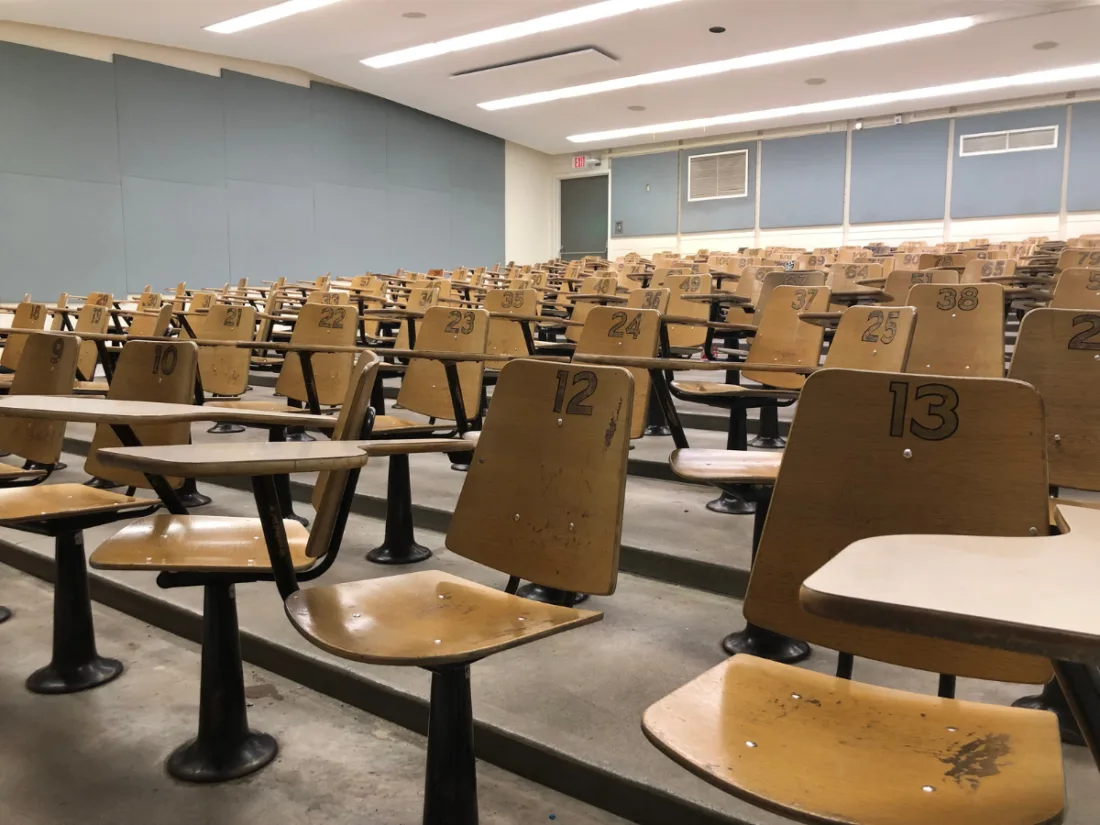
A critique of the university’s rhetoric around its economic output at the expense of students’ wellbeing and education, and what ought to be done about it
A few months ago, the Vice-President of University Relations sent out a university-wide email titled “USask social and economic report”. It tells of the university partnering with Research Triangle Institute (RTI) International, an independent scientific research institute that collected data to measure USask’s social and economic impact.
The email reads that, “RTI International’s analysis aimed to quantify the significant economic impact of USask’s operations, student and visitor spending, research activities, innovations and startup activity and alumni contributions.” It also identified the “outstanding social value that USask provides to its community, while showcasing the university’s leadership role in driving economic resilience, reconciliation, sustainability and innovation.”
The study notes that “every $1 invested in USask by the Saskatchewan government generates $3.64 of GDP and $1.99 in labour income.” It touts USask as an “economic engine for the province” and a “workforce generator.” The study also says that in the 2024/2025 year, USask generated $2 billion of Saskatchewan’s GDP.
This is seemingly all good and well. We’re constantly told that a rising GDP is a good thing. By and large, that’s how people measure the success of societies. This report is a nice, bulky chunk of data that confirms that your hard-earned cash is improving the economy of the province and country at large. Simultaneously, this fulfils our university’s duty of kissing the ground the provincial government walks on so it doesn’t cut funding.
However, isn’t it a little odd that we’re all being fed information about how USask benefits the economy and that it grows the province’s GDP, yet most of us can hardly afford to pay rent? Most of us also have to take out loans and are constantly forced to work menial service jobs to lessen the crushing debt that university puts us in. So doesn’t it sound a little tone deaf for the university to be bragging about how much of a good boy it’s been for the provincial government because it fulfills its mandated role of labour output, instead of focusing its time and energy on looking for solutions to make students’ lives better?
As the study goes on about how much its economic output is a boon for the provincial economy, it also says that “the average annual living expenditure for students was $16,860, including shelter, food, personal expenses, entertainment and transportation. Thus, total student spending was estimated to be $449.2 million.”
The university is proud of the fact that Saskatchewan’s GDP grows due to high student spending on basic needs of human life, such as food and shelter. It reads like a sick joke — the university is not proposing solutions for the tuition crisis or the worsening housing insecurity that students are faced with, instead it’s saying, “look at how much our students spend, and isn’t that great?”
The obvious reality is that this email is not meant for us. The university is primarily funded by the provincial government, accounting for about 40 per cent of USask’s total revenue of $1.34 billion in the 2025 fiscal year. The province wants a return on their investment — i.e. the training of labourers and workers that will stimulate the economy. So, here’s a report that shows the province, and all USask investors for that matter, that the university is going to improve the economy.
But this was a university-wide message sent to students — not a report made discreetly to the provincial government. I’d like to see a report about student well-being and quality of life. Or a report on the level of happiness our student body has about the cost of their tuition and fees paid to the university every term. Or a study on the quality and level of support given to students, and a plan to address gaps in the student support system offered by the university.
I don’t care about how much GDP is generated. This is not an effective measure of social progress, nor relevant for students who have bills to pay and are sacrificing a lot of time, money and energy in the pursuit of education. I want to know what the university is doing to improve the quality of life of its students and the practical steps it is taking to do so.
The other part of the study conducted by RTI was on USask’s social impacts. The university calls itself a “catalyst for change” and discusses its Indigenous student recruitment, its goal of reducing emissions and the amount of Huskie programming it offers, among other categories. This section does discuss the positive social policies put in place by the university, such as its requirement of ten percent of seats at the College of Medicine designated for Indigenous applications and its reduction of greenhouse gas emissions by 21 per cent between 2010 and 2024.
However, the entire section reads as just more corporate pandering. While some claims are valid and warrant praise, others either feel like a reach or remind one of corporate messaging claiming to be sustainable because they made the switch to paper straws.
One headline says that USask has “reduced food waste by 25-30 per cent per person by changing consumption behaviour,” but this was just because culinary services had “introduced smaller plates and removed trays from dining facilities” — which reads like penny pinching instead of a real commitment to environmental sustainability.
The university’s insistence that it has a positive work culture and that USask is rated “as one of Saskatchewan’s top employers in 2025” also overshadows many real concerns from faculty and staff about their workload, autonomy and low wages for positions like sessional lecturers. In an article for University Affairs, Christie Schultz and USask’s own Loleen Berdahl point out that academia leads to exhaustion and burnout from long hours, heavy workloads, stress and the emotional labour of caring for and mentoring students. Why isn’t the university conducting a study on that, which undoubtedly affects the quality of teaching students receive and the quality of life our professors have?
In the entire report, there rests a common theme: the propagation of the idea that everything is great and nothing is wrong with what the university is doing. Our economic impact is great. Our social impact is great. People are happy working here, and our students are happy giving up thousands of dollars to attend our institution. There is no plan of action to fix any problems — because, according to the rhetoric of this study, there are none.
So what am I proposing? I’d like to see an honest attempt by the university to engage in difficult topics and take a serious look in the mirror about what it should change. Students do not benefit from economic pandering. Faculty and staff do not benefit from being told their institution is one of Canada’s top employers. The university should work to find the gaps in what it’s doing, be honest with its students and look for ways to solve its problems.
Students, faculty and staff should work towards this aspiration by asking themselves whether they think their university is meeting their needs. They should be critical of the fact that tuition and fees have risen exponentially in the past couple of decades. They should ask themselves why the president of the University of Saskatchewan is paid over half a million dollars annually — and if this ought to be the case. They should ask themselves whether or not they feel satisfied with the quality of education and support they receive during their time at university. Most importantly, they should act on these questions. Look for ways to hold the university accountable, instead of accepting university-wide emails that tell us that USask is an “economic engine” and a “catalyst for change.”
Beginning a conversation with other students, faculty and staff on these topics is a good way to start. Critique things like the university bragging about its economic impact, and think about how campus can refocus attention on the important issues that ought to be addressed. Students ought to have a larger say in what direction the university goes in. At the end of the day, a university is nothing without its students. Don’t let them forget that.

Leave a Reply