
THE UNIVERSITY OF SASKATCHEWAN’S MAIN CAMPUS IS SITUATED ON TREATY 6 TERRITORY AND THE HOMELAND OF THE MÉTIS.
THE UNIVERSITY OF SASKATCHEWAN’S MAIN CAMPUS IS SITUATED ON TREATY 6 TERRITORY AND THE HOMELAND OF THE MÉTIS.
Anti-Black racism advocacy does not end after February. It is a year-round commitment.
At the University of Saskatchewan, Black student organizations like the Pan-African Students Association (PASA) have been busy investing in the Black community and pushing for institutional change year-round. This Black History Month, PASA programming also includes the Black History Month Gala, which is a cultural celebration that highlights Black History, heritage and community through arts, dialogue and shared cultural experiences. This year, PASA’s Black History Month Gala, Love in Colour, will take place on Feb. 21 featuring a “Two Cultures, One Love” experience that celebrates unity across Pan-African traditions, with ticket information available via PASA’s Instagram @pasa.usask.
While the institutional recognition of Black History Month has created essential spaces for dialogue and visibility, what happens after the posters come down? Universities have an opportunity and a responsibility to turn recognition into sustained, measurable change that improves Black students’ experiences throughout the academic year.
For years, Black student organizations (BSOs) have been forced to plan around a predictable cycle. February arrives, attention increases and clubs are expected to deliver major programming with limited resources, often while carrying the emotional labour of educating their peers and transactional collaboration. It’s done because our communities deserve to be seen and supported. But too often, the month ends and so does the institutional support.
That lack of continuity is not just disappointing; it is damaging. Access to resources, institutional knowledge, decision-making pathways and consistent relationships with those in power are not issues that can be solved in four weeks. When institutional support is time-limited, Black students’ needs become easier to ignore, and the same barriers return year after year.
This is not a problem unique to one campus. Across the nation, Black undergraduate students face the same structural challenges and the same cycle of temporary attention. That is why the PASA joined the Black Undergraduate Coalition (BUC). The BUC is a national, student-led network bringing together BSO’s and equivalent organizations to strengthen leadership, share resources and coordinate advocacy across institutions. Where campuses often treat these issues as isolated, the BUC treats them as connected, because they are.
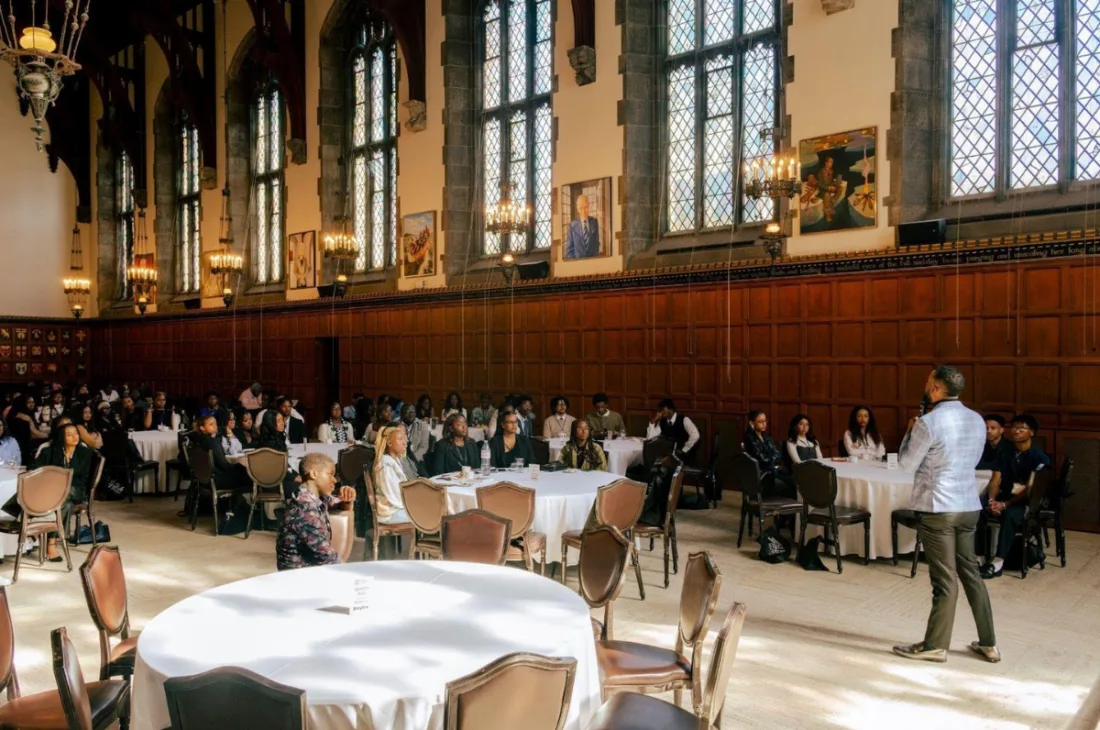
This March, PASA will join 350 students representing a nationwide coalition of over 30 BSOs at the Convergence Convention, hosted at the Kaneef Centre, University of Toronto Mississauga campus. Organized by the BUC, Convergence is a national gathering designed to move beyond conversation and toward coordinated action. It is a space where student leaders build relationships across campuses, exchange strategies that work and shape national discourse so progress does not depend on the changing priorities of university administrations.
Last year’s inaugural Convergence brought together more than 120 Black student leaders from 13 universities across Ontario to tackle these issues directly. Students participated in high-impact discussions and received practical guidance on advocacy, leadership and building sustainable club operations. One of the featured speakers was Nicholas Marcus Thompson, President and CEO of the Black Class Action Secretariat (BCAS), a litigation and advocacy organization addressing systemic discrimination within the Canadian government. He emphasized the importance of Black students leading their own change.
“Black students organizing across Canada to challenge the negative outcomes they face is historic. BCAS is working alongside this effort, because better classrooms must lead to better workplaces, and ultimately to a stronger Canada,” said Nicholas.
This year, PASA is proud to be part of the biggest growing national movement of Black undergraduate students, ensuring that the concerns and experiences of Black students here at USask are represented at a nationwide scale. Historically, compared to BSOs in Ontario, efforts made tend to be in isolation. However, now, joining the BUC means we are not alone. It means our campus advocacy is strengthened by shared tools, knowledge and standards for what Black students should be able to expect from their institutions. It also means our university’s commitments, including those made under the Scarborough Charter, cannot remain symbolic.
The Scarborough Charter, formally known as the Scarborough Charter on Anti-Black Racism and Black Inclusion in Canadian Higher Education, is a national framework that the University of Saskatchewan and more than 50 postsecondary institutions across Canada have signed. Launched in 2021 by Universities Canada, the Charter outlines guiding principles and action areas that institutions have committed to in order to address anti-Black racism in teaching, research, student support and campus culture. By signing the Scarborough Charter, universities have publicly acknowledged that anti-Black racism is truly embedded within higher education systems and requires intentional and long-term strategies to dismantle it. The Charter has already made huge strides in data collection, transparent reporting and community consultation, helping to sustain more than just one-off programming. But in truth, signing the Charter is only the beginning. It is now time for clear timelines, measurable outcomes and mechanisms for accountability that student groups like the PASA can rely on.
Black History Month can’t be the only time Black progress and excellence are acknowledged, and it cannot be the only time institutions show up. Black students are organizing year-round because our lives, our education and our futures do not pause on March 1. Across the country, Black student leaders are building networks that outlast any one event and any one administration.
We move further and faster when we move together.
Leave a Reply