
THE UNIVERSITY OF SASKATCHEWAN’S MAIN CAMPUS IS SITUATED ON TREATY 6 TERRITORY AND THE HOMELAND OF THE MÉTIS.
THE UNIVERSITY OF SASKATCHEWAN’S MAIN CAMPUS IS SITUATED ON TREATY 6 TERRITORY AND THE HOMELAND OF THE MÉTIS.
A look into the Department of History’s “7 Nights” Series, with interviews from faculty members Jim Clifford and Hannah Wood
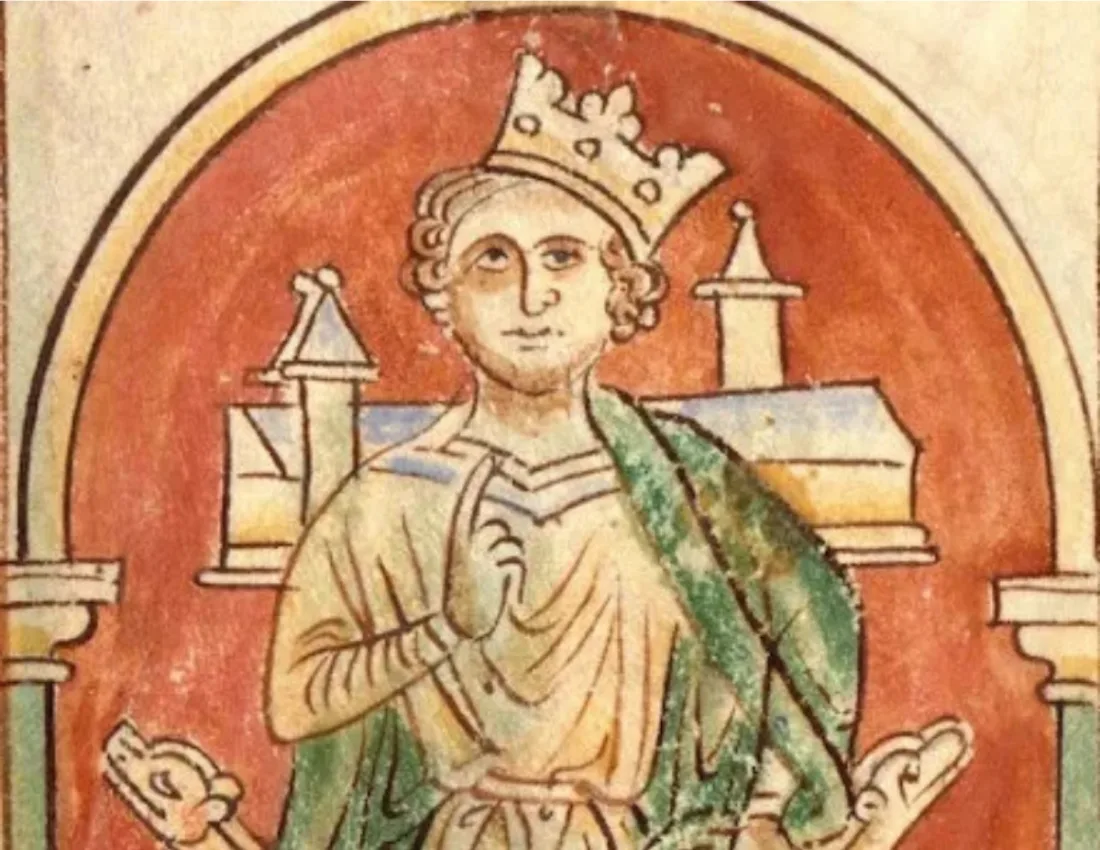
The 7 Nights of History lecture series is put on by the Department of History each month that features faculty and PhD student speakers. A theme is chosen each year by the organizers, and this year’s theme is “7 Terrible Leaders in History.”
This year’s organizer is Jim Clifford, an Associate Professor in the Department of History. Clifford explains that “the audience is normally a mix of people from the community and people from the university … it’s a way for faculty to create an opportunity to connect with the public here in Saskatoon.”
The talks are hosted at Better Brother Brewing, and Clifford says that “these events are not just an undergraduate lecture, so the goal is to make it engaging and interesting for the audience. It’s also just in a fun location. They have the best root beer in town … so it’s a fun way to connect with faculty at the university in a very different setting than watching us at the front of a big lecture room.”
Clifford says that “the basic goal [is] being out there in the community, making those kinds of connections and sharing history. All of us in the department believe that history matters and that we can learn from the past, and that the past helps us think about the present and where we might want to go into the future. And so we do that through a variety of ways … a lot of us are involved in community engaged research, where we work directly with community organizations. But this is just another way to go out into the community, and in this case, in a more social and fun way, share some ideas.”
“[The talks] are going to still be different from a purely commercial YouTube history channel,” he continues. “It still is university professors. We’re going to have some kind of a thesis and an idea that we want to convey. We’re just going to try and do it in an engaging way, but hopefully people who come do leave thinking about the world in a slightly different way.”
Hannah Wood, a faculty member in the Department of History, is delivering a talk on Jan. 28 entitled “King John, the First and Only: How to Lose Friends and Alienate People.” Wood is a historian of late medieval England, from about the 14th to the 16th centuries. She explains that “as a late English medievalist, I get to talk about one of the more infamous of the English kings, who is known to have this very deserved bad reputation.”
Wood says that when choosing the topic for her lecture, King John was the first person who came to mind. “People are aware of King John, especially if they’ve ever engaged with some of the popular media around him, like Robin Hood … So if you’ve ever watched anything that’s medieval themed, you might know of him. And like I said, he has this really bad reputation. Some of the leaders we’ve talked about [in the lecture series] aren’t so terrible when we parse what they did, but he’s pretty bad. There’s a lot of king Henrys, there’s a lot of Edwards, [but] there’s only one King John. And there’s a reason that there’s only one King John.”
Wood’s talk will feature how King John’s story eventually led to the creation of the Magna Carta, which “came out of a major prolonged dispute between King John and his barons.”
“But there’s also some interesting things about John that just make him quite unlikable. He tended to hit on the wives of his nobles, which wasn’t a popular move. He married a very young girl — and even in the Middle Ages, where we tend to think of younger marriages as more de facto, they weren’t really to that extent, and so people were grossed out by the fact that he married this very young girl … he [also] screwed over his closest ally, one of his best friends, alienated his brother … he made a mess of things.”
“It’s always fun to craft a narrative and have a bit of story time, but we always want to think a little bit about the political factors at the time. What was the religious and political environment that he was operating within? Why did he feel pushed or compelled to make these certain decisions? So it’s not all a question of a bad personality. It is a lot of bad decisions that were, in some ways, the result of tricky political circumstances. [So] I definitely want to take what people know about John and give him that background information as to what made him into this kind of king in the first place.”
When asked about the community aspect of the lecture series, Wood says, “I think academia is trying to reinvent itself so that it’s not viewed as this ivory tower or insular practice, especially now that subjects like history and English literature are under threat at a lot of universities. It’s a boon to us to be able to communicate to the public why these things matter and to incite interest in these particular subjects.”
“I think moving it outside of a university and bringing it into the public so that it doesn’t feel so stuffy [and] inaccessible [also] invites a lot of people to come and participate and listen who might feel like they’ve been aged out of the university environment, or they’re not undergrads. The really cool thing about being at a chill brewery [is that] people come from all different areas, with different interests, even if they just have a marginal interest in history or if they’re really big history buffs, it’s a fun environment, and it’s a welcoming environment for them.”
“It’s [also] a reciprocal thing. It allows us to reach the public, get them excited about history, prove why the humanities and the social sciences are so important, while also giving back and allowing people who might feel cut off from the university environment a taste of the sort of things that we do here.”
Wood also says that the talks feature a lot of variety. “You hear about everything from colonial Latin America to modern Saskatchewan to queer rights and struggles. And then there’s me with the medieval stuff. So there’s something for everyone.”
When asked about what she hopes people take away from her talk, Wood says that “I would want people to take away the fact that history isn’t necessarily dry and boring and static. Something we really try to teach is that you can’t access history through one textbook. It’s not a set-in-stone sort of thing, and it’s so subject to interpretation. It is the construction of human beings looking back and taking their own ideas about what happened. This is my idea about one particular leader, but someone else might look at the sort of things he did and have more sympathy … And so I think the discussions after are really helpful in that sense, because we do get that pushback and we can get those sorts of questions. I want people to understand that history is really an interactive process. It doesn’t have to be a cut-and-dry, boring narrative. It’s lively and open to interpretation, and even if you’re not a historian, you’re still able to ask questions and point out loose ends.”
Dr. Wood’s talk will be hosted at 6:30 p.m. on Jan. 28 at Better Brother Brewing Tap Room, at 536 2nd Avenue North #150. Students interested in learning more about future events are encouraged to visit the Department of History’s page under the Arts & Science tab.

Leave a Reply