
THE UNIVERSITY OF SASKATCHEWAN’S MAIN CAMPUS IS SITUATED ON TREATY 6 TERRITORY AND THE HOMELAND OF THE MÉTIS.
THE UNIVERSITY OF SASKATCHEWAN’S MAIN CAMPUS IS SITUATED ON TREATY 6 TERRITORY AND THE HOMELAND OF THE MÉTIS.
An in-depth look into Saskatchewan’s public transit operations by a Regional and Urban Planning student.
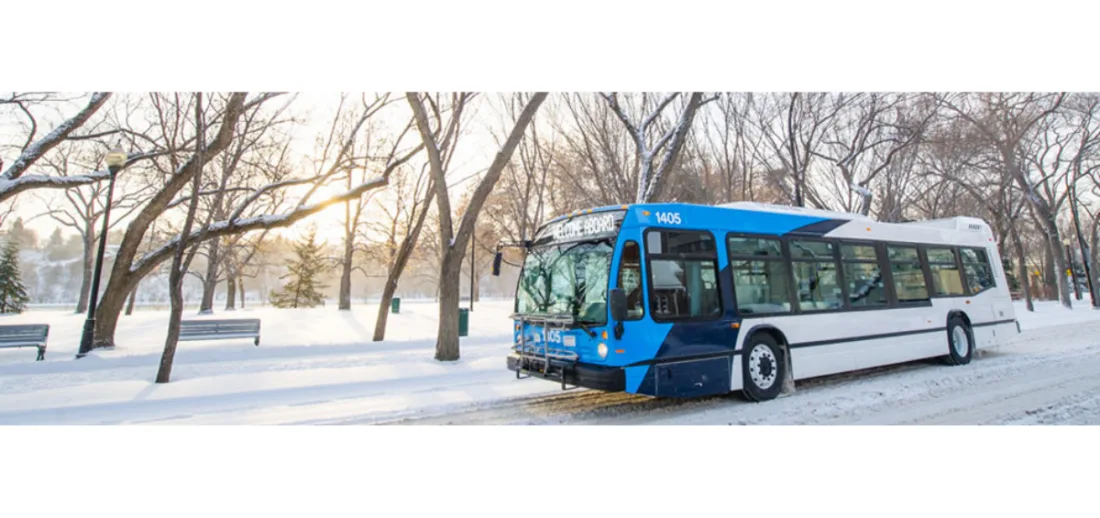
Saskatoon Transit implemented a number of changes to the city’s bus network over the summer.
Among them was the elimination of the Route 13 bus, which connected the neighbourhoods of Silverwood Heights and Lawson to the University of Saskatchewan, as well as Nutana, Buena Vista and Avalon. Its elimination has meant that students in Silverwood Heights must now either transfer downtown or walk up to an hour to the nearest bus stop. It has also meant that students in Nutana, Buena Vista and Exhibition must now walk up to 30 minutes to catch the Route 17 bus on Cumberland.
Unfortunately, the Route 13 bus was just one of several routes across Saskatoon that were either cancelled or reduced over the summer. A petition on Change.org asking Saskatoon Transit to restore bus service to Silverwood Heights has received over 800 signatures.
While the frustrations of the petition’s signatories are more than justified, their anger is misplaced. Rather than taking aim at the city for consolidating services, they should take aim at higher levels of government.
When the city eliminated the Route 13 bus, its buses were reallocated to increase frequency on Route 17, which travels along a similar path. Thus, while some areas lost service and now deal with longer walking distances, Route 17 became more useful through increased frequency. This is the central tension in transit planning: frequency and speed vs. maximizing coverage. You can either have two parallel routes running every 40 minutes, or one route running every 20 minutes.
You can either have a fast, direct route or a more circuitous route with shorter walking times but a longer overall trip. The former is most useful in low-density areas where transit serves only as a lifeline, while the latter is most useful in higher-density areas where transit must provide a higher quality of service in order to compete with cars. So under the circumstances, cutting the more circuitous Route 13 bus was the right decision.
Under the circumstances.
While Saskatoon’s population has grown by over 20 per cent since 2015, transit service hours have decreased by 8 per cent over the same period, according to Saskatoon Transit’s annual reports. Since 2015, the provincial government has never covered more than 4 per cent of Saskatoon Transit’s operating costs, a number which has only dropped since then. The federal government does not fund public transit operations at all.
Let us compare this funding model to that of Victoria, B.C. BC Transit is B.C.’s provincial transit agency, responsible for providing local and regional transit service across B.C. outside of Metro Vancouver. BC Transit shares the costs of operation with local governments, and takes responsibility for procurement, while local governments take responsibility for the planning and configuration of bus routes.
Through BC Transit, the provincial government covers roughly 32 per cent of Victoria’s public transit operating costs, a number that rises to 46 per cent in rural BC. Greater Victoria has a population roughly 30 per cent larger than Saskatoon’s population. However, both cities have a similar population density and are home to major post-secondary institutions. Victoria also boasts a public transit work commute mode share of 7.7 per cent, high for a mid-sized Canadian city and more than double Saskatoon’s 3.4 per cent, according to Statistics Canada.
Now, let us imagine a funding model similar to BC Transit’s cost-sharing model in Saskatchewan, wherein the cost of operating public transit is shared more or less 50/50 between the province and the municipality. The cost to the provincial government to match municipal public transit operating spending and effectively double service in Saskatoon, Regina, Prince Albert, Moose Jaw, Swift Current, Yorkton and North Battleford would amount to roughly $87 million/year. That’s less than 1 per cent of the provincial budget. For an additional $3 million/year, the province could support the operation of a basic transit system for every municipality with over 4,000 people. Considering that BC Transit provides service to towns such as 100 Mile House with as few as 2000 people, this is the bare minimum we should be demanding from our government.
Under such a system, Saskatoon’s Route 13 bus need not have been cut. Here, we need not choose between frequency and coverage.
Alternatively, the province could match transit operational spending by covering half of local governments’ current operational spending. In Saskatoon, this could pay for a 9.8 per cent residential property tax reduction, or $233 per year for the average household.
Another advantage of having a provincial agency responsible for public transit is the ability to procure buses and the possibility of light rail vehicles in large numbers at reduced costs eventually. A standard 40-ft bus can cost upwards of $1 million. The cost of procuring and maintaining a fleet large enough to provide an adequate level of service is out of reach for nearly all of Saskatchewan’s municipalities.
This is why cities such as Saskatoon generally rely on grants from the federal government to help pay for new vehicles. A provincial agency responsible for the procurement of new buses would have the ability to purchase in bulk quantities, driving down the cost of procurement and enabling smaller municipalities with more limited funds to provide their residents with transit service.
The urgency of this conversation should not be understated. Saskatoon is currently in the process of redesigning its bus network to accommodate its Bus Rapid Transit (BRT) system. This system promises faster and more frequent bus service on three main “trunk routes,” which would be fed by a series of short local “feeder routes.” Stops along these trunk routes are to feature heated shelters with digital real-time bus information. Here we make another trade-off. While the BRT will almost certainly lead to faster trips, more riders will need to transfer from a feeder route to a trunk route. What remains to be seen is how willing riders will be to wait in order to transfer buses, which will depend largely on the frequency of service.
The BRT promises bus service on the three trunk routes up to every ten minutes at peak hours, or six buses per hour. This is not high frequency. The Institute for Transportation & Development Policy defines low peak frequency as anything less than eight buses per hour. Considering that the three levels of government are expected to spend $250 million in capital funding on the project, the lack of any additional operational funding is egregious.
To be clear, Saskatoon’s BRT is a generally good plan. However, without the operational funding needed to provide adequate frequency, riders will be forced to wait exponentially longer, and the system will fail to meet its potential of increasing transit ridership.
Saskatchewan deserves public transit that provides frequent and reliable coverage to communities and neighbourhoods of all sizes. Such a service is beyond the means of municipal governments, but represents a drop in the bucket to the provincial or federal governments. Senior levels of government must step in and provide operational, not just capital funding, to our public transit systems by offering to match local operating funds.

Leave a Reply