
THE UNIVERSITY OF SASKATCHEWAN’S MAIN CAMPUS IS SITUATED ON TREATY 6 TERRITORY AND THE HOMELAND OF THE MÉTIS.
THE UNIVERSITY OF SASKATCHEWAN’S MAIN CAMPUS IS SITUATED ON TREATY 6 TERRITORY AND THE HOMELAND OF THE MÉTIS.
ADRIAN KAATS
McGill Daily (McGill University)
MONTREAL (CUP) — Can Canadians read? According to a Human Resources and Skills Development Canada study, not really.
As of 2003, 48 per cent of Canadians are functionally illiterate, and another 35 per cent only met “the minimum skill level for successful participation in society.”
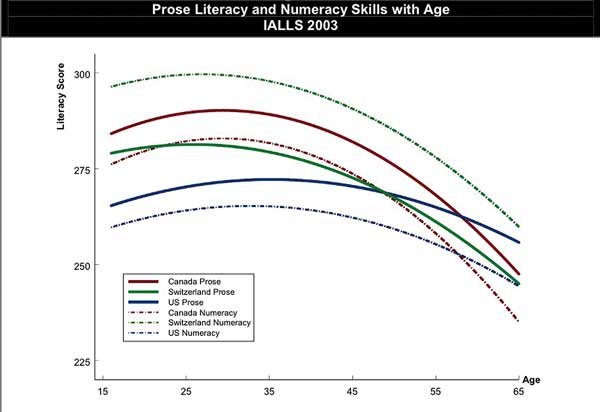 Can Canadians count? Again, not really. According to HRSDC, as of 2003, 56 per cent of Canadians lacked the math skills to “function well in Canadian society,” and another 30 per cent met only the minimum level of numeracy associated with successful participation in society.
Between 1994 and 2003 — the most recent statistics available — literacy rates mostly stayed constant and in some cases actually declined.
If the differences in the literacy statistics between 1994 and 2003 indicate a trend, we’re doing nothing to fix the situation. In fact, the situation has become worse. The number of people who have “strong literacy skills” and “strategies for dealing with complex materials” has declined. A significant portion of the population can just barely read or count their way out of a paper bag.
That leaves maybe about 20 per cent of our population with sufficient literacy and numeracy to understand what the hell is going on in our country.
Compare this with voter turnout in federal elections. In the past four polls — about 10 years — voter turnout has hovered around 60 per cent. This should sound blaring alarm bells. At best, about 40 per cent of voters have little to no ability to understand the election platforms and financial plans they voted for. What really worries me is if so many voters can’t do their own homework, what makes them decide how to vote?
Enter social media: Small, easily-digested, low-complexity text. Popular consumption of social media necessarily comes from the quasi-literate majority, those for whom they were designed. Combine this with the narcissism, and often megalomania, of most social media “authors” and you have a recipe for disaster. So just what is the role of social media — blogs, tweets, Facebook posts — in our political discourse?
Lauded by their proponents for the ability to broadcast “information” to huge audiences, social media is undoubtedly an important vehicle for “the triumph of spectacle.” The masses are easily fed ridiculously de-contextualized and often bizarre interpretations of current events, rhetoric and personal ideology. Risking poor analysis, I’ll venture that if the functionally illiterate majority of the population wanted to pretend that it wasn’t, it might turn to “information” sources that allow it to propagate its delusion of literacy.
Using superficial marketing media techniques as the primary vehicle for important news, or substantive discourse, is a spectacle of the first degree. We need a truly informed population that consults meaningfully and participates in an informed manner, not a population that fools itself into thinking it’s informed. This requires true literacy and numeracy, neither of which is promoted by social media.
Consider that more than a quarter of our population is in reading level two, out of a possible five, and according to the Canadian Literacy and Learning Network, “often do not recognize their limitations” — they can’t identify or dismiss tripe, or demand better.
Many pointed to Obama’s success as proof of the power of social media for awakening the bright forces of an informed electorate. The recently-concluded U.S. mid-term elections demonstrated what actually occurred in 2008. Identical social media strategies employed by Obama have been put to work against his regime. The content of the messaging was different, but the support elicited was essentially the same: the quasi-literate.
Real movements require real intellectual foundations, which in turn, require substantive communication.
– –
graph by Human Resources and Skills Development Canada
Leave a Reply