
THE UNIVERSITY OF SASKATCHEWAN’S MAIN CAMPUS IS SITUATED ON TREATY 6 TERRITORY AND THE HOMELAND OF THE MÉTIS.
THE UNIVERSITY OF SASKATCHEWAN’S MAIN CAMPUS IS SITUATED ON TREATY 6 TERRITORY AND THE HOMELAND OF THE MÉTIS.
NICOLE BARRINGTON
News Writer
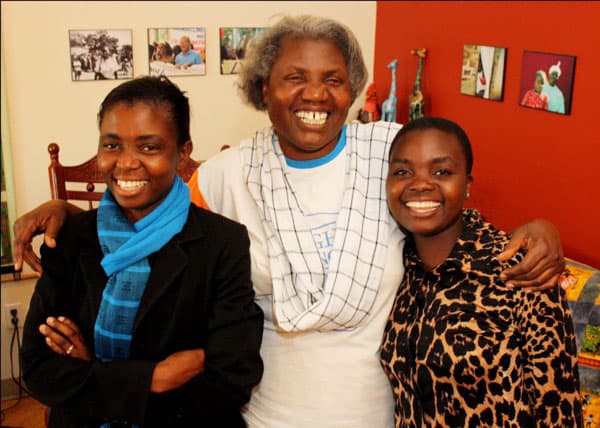 The Stephen Lewis foundation brought three Malawian women to Saskatoon Oct. 20. The cause: Afrigrand Caravan, a caravan full of African grandmothers and granddaughters showing how grassroots organizations are helping youth in HIV/AIDS stricken countries.
A gathering of an older and a younger generation, along with 40 batches of cookies, were present at Neatby-Timlin theatre last Wednesday.
This group of women were part of Grandmothers to Grandmothers, another initiative of the Stephen Lewis foundation. They are dedicated to raising money for local grassroots organizations in Africa. These organizations support African communities with food, housing grants, school fees and grief counselling.
The Saskatoon branch of Grandmothers to Grandmothers was formed in 2005, and is one of 240 groups across Canada. Grandmothers to Grandmothers has helped raise $10 million in total for African grandmothers and the orphaned children they care for.
“The money goes where it should,” said Wilma Roosdahl of donations.
There is an emphasis on “education and advocacy” in the organization.
Convincing the Canadian government to take action on behalf of those in foreign countries can be difficult, but in 2004, advocates succeeded. The government implemented Bill C-393, which allowed Canadian medicine to be shipped to other countries for humanitarian purposes.
At first, it appeared the government would take a serious commitment to aiding third world countries, but only one shipment of medicine ever made its way across a Canadian border.
Notably, three of the AfriGrand speakers have been directly affected by the success of the funding, and the hardships of life in Malawi.
The life expectancy in Malawi is 39. Women are more susceptible to the HIV/Aids virus as they cannot defend themselves in cases of physical altercations and are poorly educated about the virus.
Women are not given the same respect and opportunities as men. It is a vicious cycle: once a family member is infected with HIV/AIDS, the rest of their family must care for them and stay home from school, primarily the girls. This prevents girls from learning about the dangers of HIV/Aids and how to prevent it.
For these reasons, Grandmothers to Grandmothers focuses on helping young girls through programs to prepare them for secondary learning and set them up with jobs.
Maness Kamwaza, 18, is in her second year of university and is studying to become a doctor. But in order to go to school, she needed help with buying school supplies.
“[Grassroots organizations] help children by discussing issues and how they can solve them,” said Kamwaza. “They give opportunities to children and youth, and encourage them to go back to school.” .
Rosemary Makandanje, one of the grandmothers, has also been assisted and helps assist others when in need. Families affected by HIV/AIDS often require external support, usually because a parent has died. Although these situations are frustrating and tiring, it encourages those who have been helped to help others. Whatever can be done is important, according to Rosemary, even if it is just “singing songs” to support one another in the community.
Ruth Maulana, who raised several siblings at the age of 14 while going to school full-time, has witnessed and experienced this first-hand.
“Every child who receives assistance goes on to help others.”
Ruth helps in a community-based care centre called a “console home” as a childhood development officer. She has seen first-hand the help that girls receive This includes people from the organization helping with chores around the home, infant care and education funds. It is important that the program “emphasizes” girls since in most communities “boys are seen as more important.”
“Children got back hope when they were hopeless.”
According to Grandmothers to Grandmothers organizers, $100 million would reverse the effects that the AIDS pandemic has had on Africa. In order to keep raising money, the organization has started a new campaign called “Dare to Remember.”
From the end of October to the beginning of December, anyone can dare themselves to complete a challenge, like running a marathon, and receive pledges to complete their dare.

Leave a Reply