
THE UNIVERSITY OF SASKATCHEWAN’S MAIN CAMPUS IS SITUATED ON TREATY 6 TERRITORY AND THE HOMELAND OF THE MÉTIS.
THE UNIVERSITY OF SASKATCHEWAN’S MAIN CAMPUS IS SITUATED ON TREATY 6 TERRITORY AND THE HOMELAND OF THE MÉTIS.
PAYTON BYRNS
Opinions Writer
It’s 6 a.m., and the maddening techno ring-tone that serves as my alarm clock is lighting up the dark room.
I turn off the ringing phone and pull the mosquito net out from underneath the thin mat that I’ve been sleeping on. Sunlight is streaming in through the gap between the mud bricks and the grass thatch, but it’s cold — cold enough for me to see my breath and warrant a toque. After a trip to the pit latrine, I fold up my bedding, roll up the grass mat, light a candle and sweep out the small hut that has been my home for three and a half months.
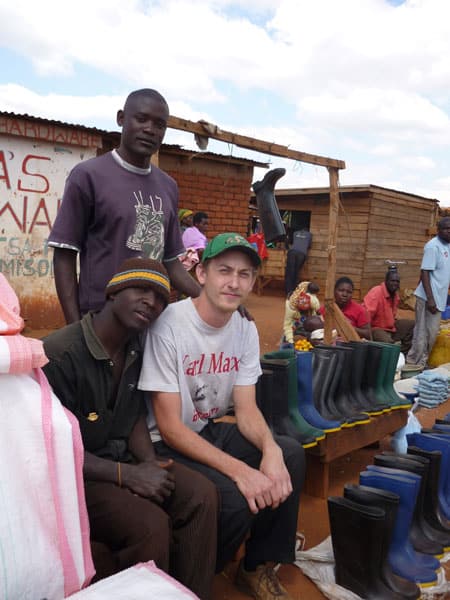 It seems a little silly, stirring up the dust as I sweep the dirt floor, pushing yesterday’s dusty debris out into the equally dusty yard. With the three small rooms swept out, my host-brother Peter and I sweep the yard, leaving behind a pattern in the dust that looks like an artist’s rough brush strokes. This task finished, I take a basin of steaming hot water into the crude bathhouse and splash water over my dusty body, the contrast between the cold air and the hot water truly awakening me.
I look up from the basin into clear blue morning sky, no roof to obstruct my view, and smile: this is Malawi, the warm heart of Africa.
This past summer I had the good fortune and opportunity to take part in Engineers Without Borders’ Junior Fellowship Program, through which I spent four months volunteering in Malawi, Africa. It wasn’t a two week trip to build houses or dig wells but an intensive introduction to the frustrating complexities of long-term development work and a four month immersion into a totally unique culture.
I spent the time living in a village with a family, learning from the ground level just what it takes for development to work.
I worked with small-scale, rural entrepreneurs who sell inputs to farmers — things like fertilizers, seeds and chemicals. As it stands right now, farmers have to travel too far to purchase too little, and their yields (and thus food security) suffer for it.
I was volunteering with an NGO called RUMARK, which seeks to enable small-scale business to expand into new locations, making supplies more readily available to subsistence farmers. The work is fraught with challenges like high transportation costs, lack of business skills and attitudes, and a financial system reluctant to make small loans. The point of my work was to learn about these factors that influence business and communicate back to donor agencies, who want to do the best work possible but often don’t know what the field reality is.
After four months of living in small villages, far away from the amenities that seem so essential here in Canada, I can honestly say the things that I value have shifted a great deal.
Since I’ve been back, I have frequently been asked what I miss most, what I learned or what my favorite part of Malawi was. The answer is the same to all three questions: community. In Malawi, communities are very tight-knit, open and free. People show up at each others’ houses and stay for hours, just sitting together and sharing the day. Any event is a community event, whether it is a birthday, a funeral or a harvest. It is this sense of community that I learned to love most, missed the most upon leaving and would say is my favourite part of Malawi.
Since returning to Saskatoon, I’ve tried to emulate my Malawian lifestyle where I can and I feel much more connected and grounded than before. Whether it’s poetry night at Lydia’s, philosophy nights at the Refinery, or any number of other ways of getting involved in the community, I’ve never felt so at home, here at home.
Engineers Without Borders is an equal-opportunity student group (you don’t have to be an engineering student to join). If you are passionate about development, check out their weekly meetings, Thursdays at 6 p.m., in room ENG 1B79.
– –
image: Payton Byrns

Leave a Reply