
THE UNIVERSITY OF SASKATCHEWAN’S MAIN CAMPUS IS SITUATED ON TREATY 6 TERRITORY AND THE HOMELAND OF THE MÉTIS.
THE UNIVERSITY OF SASKATCHEWAN’S MAIN CAMPUS IS SITUATED ON TREATY 6 TERRITORY AND THE HOMELAND OF THE MÉTIS.
VICTORIA MARTINEZ
News Editor
Paper money is on the way out and plastic is in.
Not to fear, however, the disappearance of physical cash. The plastic in question will replace bills themselves, not reduce Canadians to a card only currency.
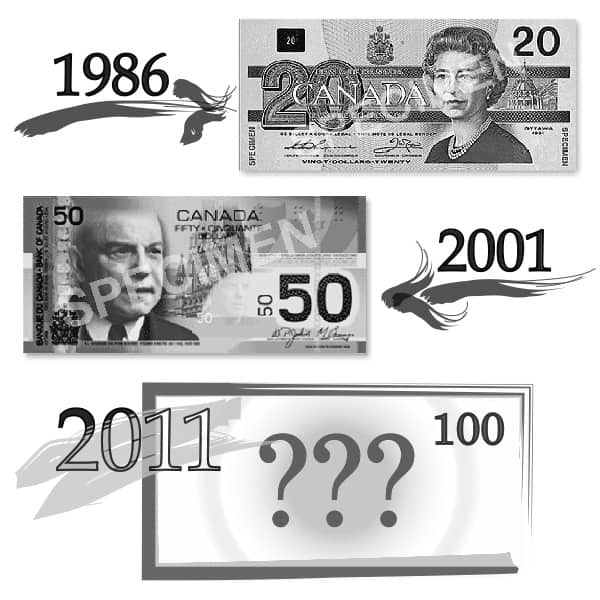
The Bank of Canada will be introducing new notes in 2011, though few details have been released so far for security reasons.
The plastic polymer will be more durable than our current cotton fibre bills, with a life about four times as long, and will be recyclable. Paper notes are destroyed when they are unfit for circulation, so the likely environmental impact of plastic notes will actually be less than with our current money.
Australians have used fully plastic banknotes since 1996, which are harder than paper money to counterfeit. A cursory study of their bills suggest safety features new Canadian notes might use.
The Australian currency contains a clear embossed plastic window that is printed within the bill. Any inserted windows are obvious indicators of false bills. The embossing, too, is only visible at certain angles.
Like cotton-paper money, polymer money would have a specific feel and weight which would require the use of the same polymer to copy properly. However, the polymer should be harder than cotton paper to duplicate.
Current anti-counterfeiting tools including microprinting, raised type and holograms will likely continue to be used.
The previous series of bills already saw a steady decline in counterfeiting since the release of our current set of notes, and the change will prevent counterfeiter technology to catch up to the Bank of Canada’s.
– –
image: Danielle Siemens

Leave a Reply