
THE UNIVERSITY OF SASKATCHEWAN’S MAIN CAMPUS IS SITUATED ON TREATY 6 TERRITORY AND THE HOMELAND OF THE MÉTIS.
THE UNIVERSITY OF SASKATCHEWAN’S MAIN CAMPUS IS SITUATED ON TREATY 6 TERRITORY AND THE HOMELAND OF THE MÉTIS.
RORY MACLEAN
News Editor
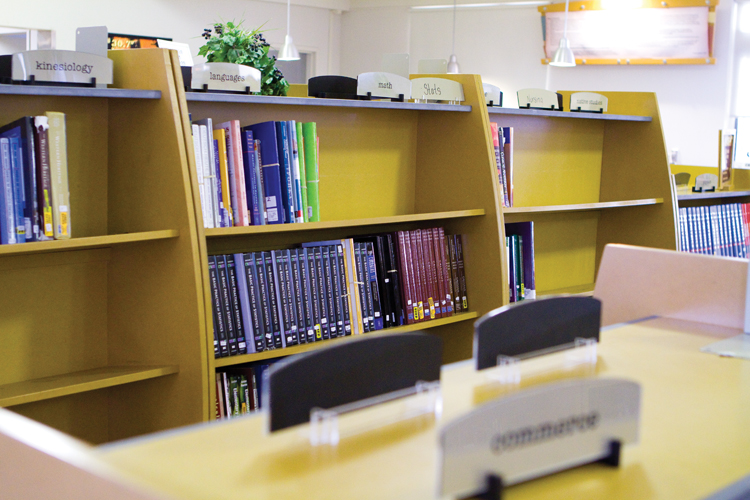
Browsers, the student union-run consignment bookstore, is preparing to phase out the books in the coming years as more students turn to online sources for their textbooks.
“We have seen a decrease in sales over the years and a decrease in the number of students coming in to consign books,” said Warren Kirkland, the University of Saskatchewan Students’ Union president.
The USSU is leaving the bookselling business due to dwindling sales but they are in the process of developing an online service to help students sell and trade books amongst themselves, said Kirkland.
This would free up some valuable retail space in the upper floor of the Memorial Union Building that could be rented out to other tenants.
“In the end, it’s the book they need,” he said. “And if it’s at the price they like, it’s all good, right?”
There may have been better deals online, but Kirkland still purchased all of his books at the U of S bookstore this year.
“If I were an intelligent individual I would have done some comparative shopping but I was lazy,” he said.
Not so for fourth year business student Adina Tsintziras. She says the U of S bookstore is the last place she looks for her books. Tzintziras and most of her friends buy their books on the Internet.
“It’s just cheaper to buy them online. That’s why I usually go to Amazon or Kijiji,” she said.
“I bought a book for a business class last term. At the U of S bookstore it was $140; at Browsers it was $90. On Amazon, it was $35, $42 with the shipping.”
She said she doesn’t understand why the university charges so much for books.
According to Mark Jagoe, director of consumer services at the U of S bookstore, lowering prices is not an option — they are barely making money as it is.
“It’s not really profitable,” he said. “It’s really for the academic mission of the university to provide the course material that students need.”
Bookstores are an expensive type of business to operate, he said.
They take up a lot of space, and the market is becoming increasingly crowded — not only with the rise of online booksellers like Amazon and Indigo but also from increasing competition from stores like Costco and Shopper’s Drug Mart, said Jagoe.
“Books are available everywhere,” he said.
Jagoe says the bookstore has definitely lost sales to Amazon, but they are in the process of developing their own online operation.
Currently, 10 per cent of their offerings are available online.
Simply being on the web won’t help the bookstore compete with the economies of scale achieved by large companies like Amazon, who sell to a much larger group of consumers and don’t have to pay for an expensive retail space.
If the number of students getting their books from the web continues to increase, the U of S bookstore may soon find itself in the same position as Browsers.
Yet in spite of being slowly driven out of the used book business, Kirkland is not bothered.
“Absolutely, online options and any competition, really, will detract from the bookstore and Browsers, but I think the bottom line is, it’s for the betterment of students.”
– –
photo: Robby Davis

Leave a Reply