
THE UNIVERSITY OF SASKATCHEWAN’S MAIN CAMPUS IS SITUATED ON TREATY 6 TERRITORY AND THE HOMELAND OF THE MÉTIS.
THE UNIVERSITY OF SASKATCHEWAN’S MAIN CAMPUS IS SITUATED ON TREATY 6 TERRITORY AND THE HOMELAND OF THE MÉTIS.
SHEALA KONECSNI
News Writer
Â
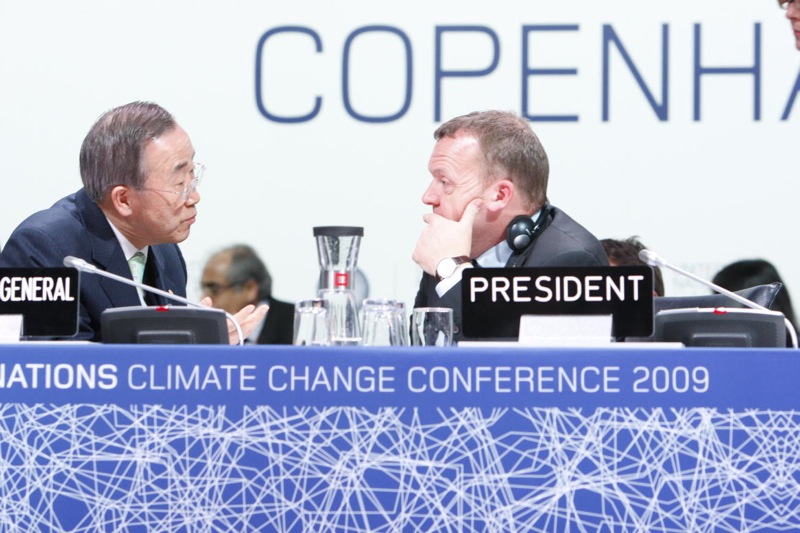
From Dec. 7 to 18, 2009, leaders from around the world gathered in Copenhagen, Denmark, for the United Nations Climate Change Conference (COP15).
After belligerent talks and the presentation of a controversial document — the Danish Text — climate talks did eventually come to a close. The conference produced an agreement called the Copenhagen Accord.
The accord states that climate change is among the greatest challenges currently facing humanity and needs to be dealt with immediately. However, it also acknowledges that not all nations are capable of contributing to the fight against global warming in the same way.
The goals the accord sets out are to maintain global temperature increases below two degrees Celsius and to stabilize the level of greenhouse gases in the atmosphere at a level that will not negatively affect the Earth’s climate.
The Copenhagen Green Climate Fund was established in the accord. Developed nations will contribute and the funds will be used for the development of sustainable futures for developing countries through financial resources, technology and capacity building. (Capacity building includes training people and improving infrastructure to help decrease the effects of climate change.)
Between 2010 and 2012, developed countries are expected to contribute US $30 billion and to assemble a total of US $100 billion by 2020. According to the accord, this funding will come from “a wide variety of sources, public and private, bilateral and multilateral, including alternative sources of finance.”
The fund will be the operating system that controls the flow of funds into projects, programs, policies and other activities in developing nations that may include reduced emissions from deforestation and forest degradation, adaptation, capacity building and technology development.
 The Copenhagen Accord was decided upon through a non-democratic decision making process. Early on in the conference, it was evident that balancing the advancement of emerging economies and the maintenance of well-established ones was an impractical dead-end.
Four emerging nations — Brazil, South Africa, India and China — played key roles in the decision making. They became known as the BASIC group that proved a “powerful force in climate change negotiations, especially in the face of relentless pressure from richer countries,” Jairam Ramesh, India’s Environment Minister told BBC News.
After seven long hours of talks with President Obama, a deal was created and presented to the other countries, who were then given the opportunity to accept it on a voluntary basis. Whether countries have agreed with the accord or not, all are required to submit what mitigation actions they will implement to the secretariat by Jan. 31.
It is unusual for international talks to be so undemocratic. During United Nations panels, countries are all given equal say in policy making. Time magazine’s “Lessons from the Copenhagen climate talks” suggests that COP15 “marks a shift to decision making by smaller groups of powerful nations working in more manageable numbers. As undemocratic as that may be, Copenhagen showed that it may also be the only way to get something done.”
The UN climate change talks will continue in Mexico City in December 2010 at COP16. The countries should have filled in their proposed commitments to mitigate global climate change by then.
It can only be assumed that the road to finding a global co-operative solution to climate change mitigation will be a bumpy one. It is an exciting time for science, politics, economics and global relationships — all demonstrating that climate change is no longer the new buzzword but a true reality. Even that simple realization can be a positive thing to come out of Copenhagen.
– –
photo via Flickr

Leave a Reply