
THE UNIVERSITY OF SASKATCHEWAN’S MAIN CAMPUS IS SITUATED ON TREATY 6 TERRITORY AND THE HOMELAND OF THE MÉTIS.
THE UNIVERSITY OF SASKATCHEWAN’S MAIN CAMPUS IS SITUATED ON TREATY 6 TERRITORY AND THE HOMELAND OF THE MÉTIS.
MATTHEW STEFANSON
Arts Writer
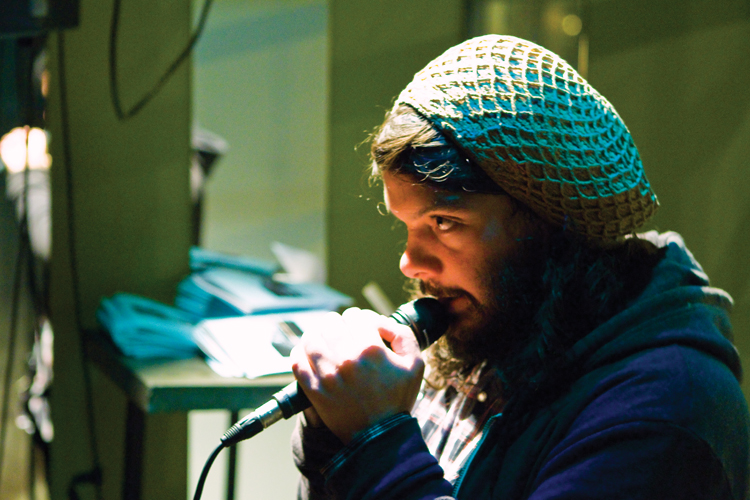
Charles Hamilton first got into spoken word poetry at the Ness Creek Music Festival where he saw TOFU, the spoken word supergroup formed by Mike McGee, Shane Koyczan and C.R. Avery. Inspired by their performance he went home and started recording pieces on a borrowed 8-track.
He has been working for the past year to build up the slam poetry and spoken word scene in Saskatoon, starting monthly poetry slams at FLINT with local poet Taylor Leedahl. He also helped organize Saskatoon’s first poetry slam team, which he captained and led to seventh place out of 12 teams at the nationals in Victoria last month.
During this past summer he toured across North America, competing in slams and working on new material. Hamilton talked to the Sheaf about the slam scene, the ideals of spoken word poetry and one of his favourite poets, Derrick Brown.
The Sheaf: Both you and Derrick Brown use music a lot in your poetry. Is there a reason you do that?
Hamilton: I first started doing it because it gives kind of an atmosphere to it. I used to play a little guitar behind my stuff. The music kind of went away for me because I got more into the slam aspect and the competition aspect. I gravitated towards where all of the best poetry in Canada and the United States is, and right now it’s in the slam community — aside from guys like Derrick Brown who have kind of grown out of the community and become spoken word artists.
Sheaf: So, is their room in the slam world for spoken word?
Hamilton: Actually, I don’t think slam is separate from spoken word. I think they’re one and the same. It’s just that the best spoken word art in the world, in my opinion, happens at slam poetry competitions.
Sheaf: Because it’s spontaneous?
Hamilton: Yeah, all my favourite spoken word artists were once Grand Slam Champions and members of teams who have won world slam competitions, so it’s kind of a training ground for spoken word art. Getting a score makes you take the performance more seriously. And, at the same time, the scores aren’t really the point. I don’t remember what my scores are, ever, but I remember how the audience reacts to them. There’s definitely just more pressure on you to perform well and to do well because there is this silly little game involved in it.
Sheaf: How did you first hear of Derrick Brown and what drew you to him?
Hamilton: I listen to this podcast called IndieFeed; it’s where I’ve found most of my favourite spoken word artists.
There’s a tendency in spoken word to gravitate toward the same style of poems. There are a lot of guys who sound the same, but Derrick Brown’s stuff is completely different. He’s very, very literary. He’s kind of the first guy that I ever heard who was doing poetry that sounded like it could almost be read off a page. That’s the main thing about him; he combines the literary world with the spoken word world.
I went and saw him when I was in this small town in upstate New York. It was in a library full of these little old ladies who have their weekly poetry reading, but his poetry goes over very well, even though it’s a lot different than “academic poetry.”
Sheaf: What do you think the difference is between spoken word and academic poetry?
Hamilton: Hopefully there isn’t one. I think Derrick Brown is an example of how there isn’t really a difference.
Spoken word is a lot more focused on not being done in a stuffy room. It’s done in a room full of people yelling and drinking, and that’s why Derrick Brown is one of my favourite poets. He makes a roomful of little old ladies laugh about a line that is something like, “I want to fuck you with figure skates on until our hardwood floors are like tooth picks.” And stuff like that. He’s very good at combining those worlds and making poetry that’s not this esoteric thing that only people with university degrees understand. It’s people on the streets that do better poetry.
It’s more of a subculture than academic poetry. I think the cool thing about Derrick Brown is that he has this publishing company called Write Bloody Press and he publishes people in the spoken word scene who are also just poets. People don’t think of it as a legitimate form of art, they just think of it as a funny thing that these kids do.
Sheaf: What do you think of people who say that slam poetry is just the snapping of fingers and the beating of bongo drums, and that you people don’t really have any connection to what’s actually happening in the world?
Hamilton: I say we have more connection than people in stuffy rooms. I think that this is more real poetry. I got into it because it was a musical thing in some ways; the same way that you get into music I got into spoken word. But since I have been into it, I have read more poetry than I ever have before in my life because it’s legitimized poetry. And I mean everyone has something to say, and some of it’s really shitty and most of it’s really shitty, but some of it’s awesome. And that’s why slams rule.
Everyone has something to say, and some of it’s really shitty and most of it’s really shitty, but some of it’s awesome. And that’s why slams rule.
It’s the democratization of poetry. That’s why we have five random people in the audience doing a stupid thing where they take a subjective piece of art and put a numerical value on it.
Sheaf: So, you feel that spoken word is a more democratic medium for poetry?
Hamilton: Yeah, also I published my book at Staples, right? And some of my favourite poets in Canada have done the same thing. It’s beyond the whole publishing world. In some ways it’s divorced from all that shitty stuff that happens when you try to get involved in literary publishing. It’s DIY poetry. And the scene is becoming big enough where you can make a living at it.
Sheaf: Do you see a world where people can be the T.S. Eliot of the spoken word world without being a publishing house sweetheart like most older poets were?
Hamilton: Yeah, you look at some of the best poets and that’s how they got around. It was pamphleteers and that’s how it got started. And then eventually publishing companies jumped on board and that’s happening now. There are major spoken word artists who are signing major poetry book deals too — if there is such a thing.
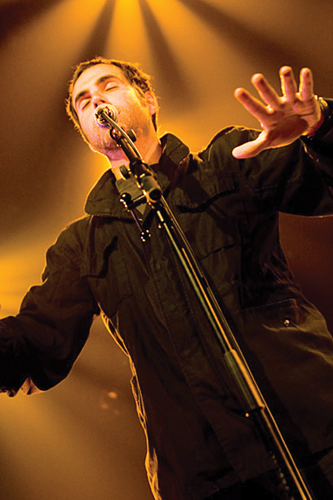
The fact that we care about how you read your poem has a lot to do with it too. I’ve been to brilliant poetry readings before where people’s poems are really good but they can’t read really well. And it turns out that in the end your art becomes better because the way you read it makes more of a difference than it does with someone who has just written a brilliant book of poetry but can’t read it worth shit.
Sheaf: You just went through your tour of the States. Did you get to perform your stuff in front of Derrick Brown?
Hamilton: Yeah, I performed at an open mic, and afterwards we did this thing called poetry tag. And again he’s like one of the best spoken word artists in the world but he still cares about what I do. Derrick Brown makes a living writing poetry and publishing his books but he doesn’t think he’s better than anyone else because he started in a community that was supportive of him — just doing art for art’s sake and not for fame’s sake.
– –
photos: Matthew Stefanson / Joachim Beckers

Leave a Reply