
THE UNIVERSITY OF SASKATCHEWAN’S MAIN CAMPUS IS SITUATED ON TREATY 6 TERRITORY AND THE HOMELAND OF THE MÉTIS.
THE UNIVERSITY OF SASKATCHEWAN’S MAIN CAMPUS IS SITUATED ON TREATY 6 TERRITORY AND THE HOMELAND OF THE MÉTIS.
PAUL BRESCHUK
The Lance (University of Windsor)
WINDSOR (CUP) ”“ In June of this year, Margaret Chan of the World Health Organization officially declared H1N1 (swine flu) influenza a pandemic with an alert level of six, the highest on the scale. Transmittable between humans through airborne means, this new strain circled the globe in just a few short months, making it the first flu pandemic in 41 years.
The reason for this particular virus’s virulence is said to be found in H1N1’s recent mutation, combining four pre-existing influenza strains into one.
Through a genetic process called reassortment, the hybrid virus now contains strains derived from humans, birds and pigs. This phenomenon occurs when a host is simultaneously infected by two different strains of the virus.
There is, however, a much simpler explanation for its lightning-quick circulation around the globe. Because it is a new virus, its hosts haven’t yet had the chance to build any immunity. It seems, therefore, that we are more susceptible to contracting the virus. Yet, could that be the extent of the bad news?
The symptoms of H1N1 infection mirror those of the common seasonal flu, including sore throat, fever, nausea, diarrhea, coughs and sneezes, headache and muscle or joint soreness. Fortunately, the duration of the sickness is said to last approximately one week, also on par with more typical flu strains.
Just hype?
While its spread has been remarkably quick, the overall severity of its symptoms has been far less than initially predicted. With approximately 4,000 worldwide deaths to date, H1N1 appears to be no more dangerous than the seasonal flu — yet health officials remain concerned about the possibility of further mutations of the strain which could cause a drastic increase in its strength.
It is this concern that fuels daily media reports that increasingly resemble dramatic, if not apocalyptic, Hollywood scripts.
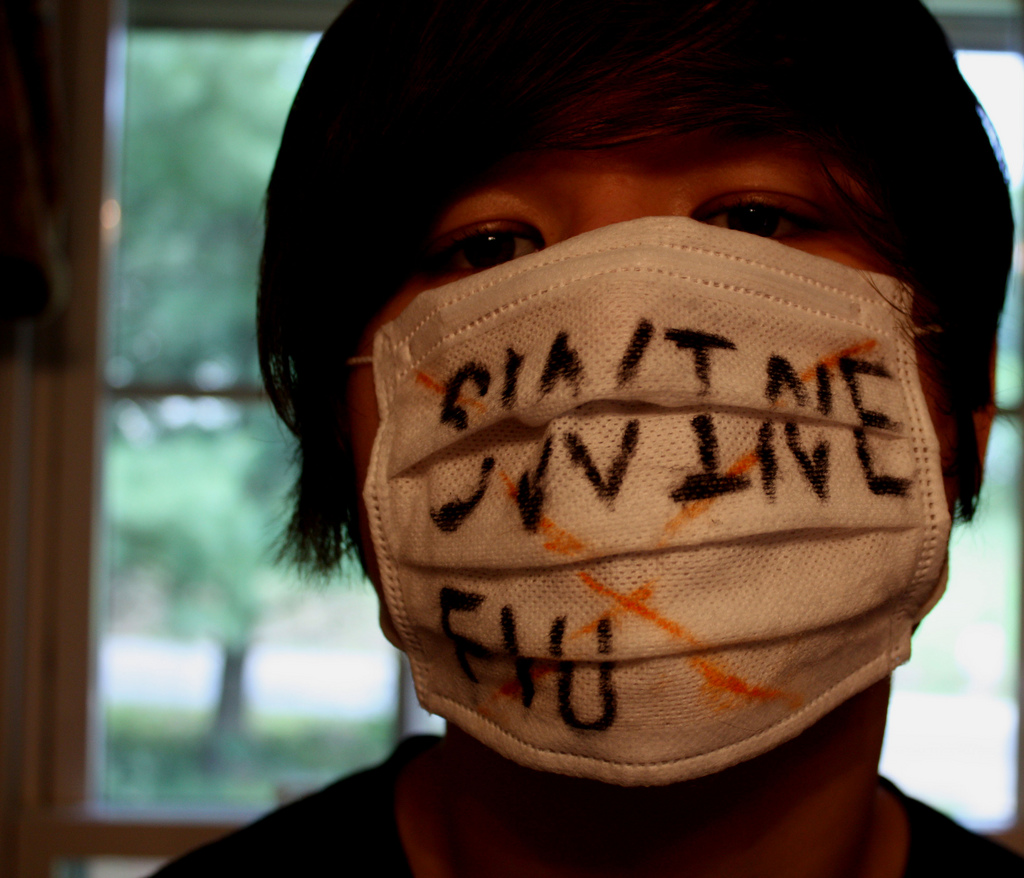
The emergence of such a superbug would mean the world could be ravaged by an antibiotic-resistant killing machine: the stuff horror films are made of. With this in mind, it is not difficult to imagine scores of misled citizens stocking up on gloves, duct tape and breathing masks. After all, this better-safe-than-sorry philosophy is what also drove Y2K survivalists into bomb shelters.
It is not entirely irrational to fear H1N1. But certain groups’ actions in recent months seem to cross the boundary of reasonable preventative measures.
The Egyptian government, for example, deemed it necessary to slaughter 400,000 pigs despite having reported no confirmed swine flu cases. Various citizens of New York have been seen walking the streets wearing face masks, despite their proven ineffectuality. In Mexico, soccer teams played to completely empty stadiums and in China, more than 70 Mexican vacationers were rounded up and quarantined despite being completely healthy.
Strange incidents have been occurring in Canada as well. Manitoban First Nations reserves received body bags from Health Canada when they had merely asked for medical supplies. Aside from being a public relations nightmare, this symbolic gesture cast a dark shadow over whole communities. It is no wonder, then, that Chief Ken Chalmers of Manitoba’s Birdtail Sioux First Nation felt his only option was to completely isolate his community from the rest of Canada until everyone has been immunized against H1N1.
One has to ask how long they would be willing or able to segregate themselves. Is this the kind of precautionary planning we have to look forward to in the coming months?
The vaccine
Perhaps the most frustrating aspect of H1N1, besides the repeated bathroom visits for its unlucky victims, is the growing confusion regarding vaccinations. In recent years, many Canadians have become accustomed to seasonal flu shots. These inoculations, however, do little to minimize the risk of catching the new flu.
Through a $400 million contract with American pharmaceutical giant GlaxoSmithKline the Canadian government has purchased 50.4 million doses of a new H1N1 vaccine (an amount that covers the country’s entire population).
Since the World Health Organization has raised the pandemic alert level to its maximum category, the Canadian government has fast-tracked the approval process for the vaccine, guaranteeing its availability by November or December. While this rushed delivery has many concerned about the safety of the vaccine, Dr. Andrew Potter, director of the Vaccine and Infectious Diseases Organization at the University of Saskatchewan, says the rush isn’t much different than any other year.
“If it were anything other than influenza, I might worry,” he said, “but every year new strains are put into the vaccine. The manufacturing process is exactly what it is for other influenza vaccines.”
He adds that normally the vaccine would be given an extended testing period but it is instead getting an accelerated testing period.
“However, you have to realize it has already been tested in Europe,” said Potter. “I have no worries above and beyond what you would usually have with the seasonal vaccine.”
The Government of Saskatchewan Ministry of Health is encouraging individuals to get immunized against both the seasonal flu and H1N1. When the H1N1 vaccine arrives, it will be available for free but the seasonal flu vaccine will still cost a small amount.
– –
Prevention is the key to overcoming the challenges posed by H1N1. Such preventative measures include:
For more information about H1N1, visit: http://www.health.gov.sk.ca/influenza-monitor
– –

Leave a Reply