
THE UNIVERSITY OF SASKATCHEWAN’S MAIN CAMPUS IS SITUATED ON TREATY 6 TERRITORY AND THE HOMELAND OF THE MÉTIS.
THE UNIVERSITY OF SASKATCHEWAN’S MAIN CAMPUS IS SITUATED ON TREATY 6 TERRITORY AND THE HOMELAND OF THE MÉTIS.
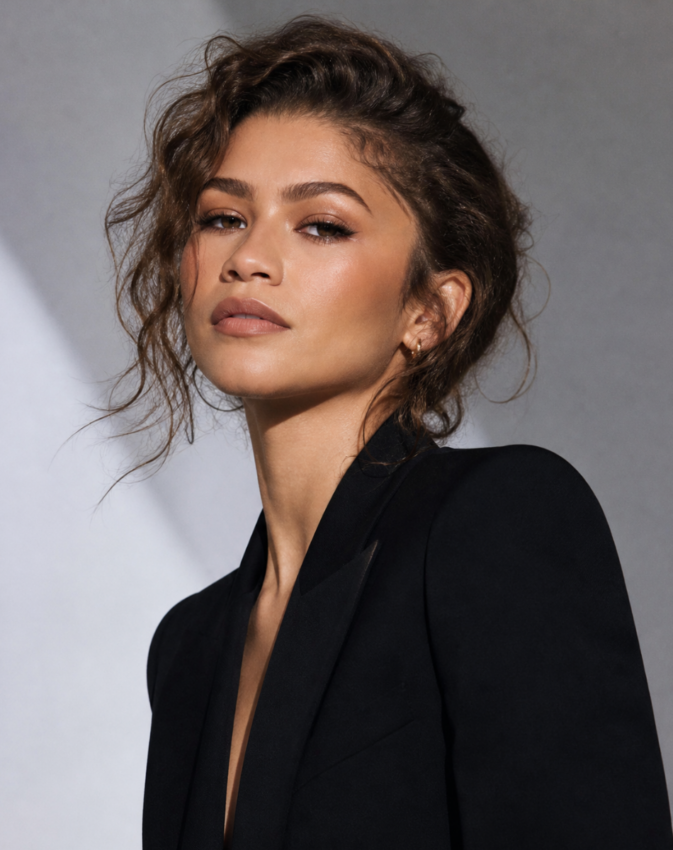
You don’t usually get to watch a real movie star take shape in real time, but with Zendaya, it kind of feels like we have.
There’s a feeling of strange, undeserved pride that comes with watching someone you (basically) grew up with start to become one of the most respected actors working right now. It’s like the pride of investing early in Bitcoin or calling a hit song before it’s being played on radios everywhere — totally unearned, but you still feel like you somehow had a hand in it.
For a lot of people right now, watching any press with Zendaya in it evokes that same feeling.
The star, now 29, has spent the majority of her life in the limelight, singing, dancing and acting away. She’s become known around the world for her beauty, charm and of course, her talent.
Her charisma and magnetism have drawn people to her and her work for over a decade, starting with her role as Rocky Blue on Disney Channel’s Shake It Up. The show, if you never watched it, followed two girls — Zendaya and Bella Thorne — as they started working as dancers on their favourite show. It was fun, chaotic and incredibly early-2010s Disney in every possible way. Not exactly the place you expect to discover a future Emmy-winning dramatic actor.
Then came K.C. Undercover, which, in my opinion, deserves way more credit in her career’s timeline. This show was where you could really see Zendaya begin to take control of her career as a young woman. She had input on the character, the tone of the show, even elements like wardrobe and cast representation. It already seemed like she was figuring out how to steer her own career and not just play along with whatever was handed to her, like other child stars her age.
After watching her lead her own show on Disney for 3 seasons, most people probably didn’t expect the leap in her career that was coming next.
When she first appeared as Rue on HBO’s Euphoria, it genuinely shocked people who only knew her from Disney. Not just because the show itself was intense, but because she went all in emotionally. The performance wasn’t flashy — it was raw, exhausted and sometimes uncomfortably authentic. More than that, this was where she began her career as an executive producer, heavily influencing a lot of the show’s creative direction.
Winning two Emmys and a Golden Globe for her role confirmed what a lot of viewers had already started to notice: she had much more range than she’d previously been given the space to show.
At the same time, her film career was building in a completely different direction.
The Spider-Man movies gave her a level of global visibility that very few actors reach. Her version of MJ felt more guarded, more observational, less defined by the usual expectations of a love interest. She didn’t try to dominate scenes, but she consistently drew focus anyway.
That’s a big part of what makes her so watchable. There’s a kind of magnetism that doesn’t rely on being loud or overly performative. It’s more controlled than that — something closer to presence than effort, such as in the case of Denzel Washington or Meryl Streep.
That same quality carries into her work in Dune and Dune: Part Two. In the first film, her role as Chani is minimal, almost dreamlike. By the second, Chani becomes one of the emotional anchors of the story. What’s interesting is how she adjusts her performance to match the scale. She becomes quieter, more deliberate, but still central. Even when she’s not driving the action, you feel her influence on the tone of the film.
Looking back, it’s easy to see how each phase of her career added something specific. Disney built her screen presence. Euphoria revealed her emotional depth. Marvel made her globally recognizable. Dune showed she could exist comfortably inside large, serious cinematic worlds.
But beyond the structure of her career, there’s a throughline that explains why people stay invested: she’s consistently compelling to watch.
Some actors develop reputations. Others develop audiences that follow them from project to project. She’s clearly in the second group. There’s a level of curiosity attached to her work that feels closer to classic movie stardom — the kind associated with actors from Hollywood’s earlier eras, where part of the appeal was simply watching them, regardless of the role.
That’s why even smaller projects like Malcolm & Marie work. The film is minimal — just two actors, one setting — but it holds attention because of how she uses stillness, tension and timing. She doesn’t need large-scale production to stay engaging.
At the same time, there’s a personal dimension that adds to that investment. Her relationship and marriage to Tom Holland, which grew out of the Spider-Man films, feels like a natural extension of that long-running public trajectory. For people who watched those movies — and watched both of their careers develop alongside each other — it’s perceived differently than other celebrity relationships. It feels like part of the same ongoing story.
All of this contributes to a sense of continuity. We didn’t just discover her at one moment — we watched the progression happen in real time. From Disney Channel to awards shows to major film sets, each stage connects clearly to the next. That’s what makes the current moment feel less like a peak and more like a setup. Because now, everything seems to be lining up at once.
There’s The Drama, which leans more toward character-driven storytelling. There’s Spider-Man: Brand New Day, bringing her back to one of the most recognizable roles of her career. Dune: Part Three is expected to expand Chani’s role even further, pushing her deeper into that world. Then there’s The Odyssey, directed by Christopher Nolan — the kind of project that tends to redefine how actors are perceived within the industry.
On top of that, Euphoria season 3 is finally approaching, bringing her back to the role that reshaped her entire career. Returning to Rue now, after everything she’s done in between, adds another layer of interest. It’s not just a continuation — it’s a revisit from a completely different point in her development as an actor.
What’s especially interesting is how close together all of this is happening. Instead of being spread out over years, these projects are arriving in a relatively tight window — almost back to back. It creates a rare moment where you can watch multiple sides of her career unfold at once: franchise work, prestige television, large-scale epics and more intimate films. That kind of run tends to define how an actor is seen for years afterward.
In her case, it doesn’t feel like a sudden jump. It feels like the result of everything that came before it. Every phase — Disney, television drama, blockbuster films, smaller experimental work — feeds directly into this stretch.
That’s why there’s so much anticipation around what’s coming next. Not just because the projects are big, but because she’s proven to be the kind of performer who makes those projects more interesting simply by being in them. There’s a consistency to her presence, whether she’s leading a scene or sitting quietly within it.
So heading into this run of releases, the appeal isn’t just about checking off new titles. It’s about watching how all of these different pieces come together at the same time.
It’s rare to see an actor reach a point where their past work, current visibility and future opportunities all align this clearly. With everything arriving so close together, this summer feels like one of those moments where you don’t just follow a career — you watch it accelerate in real time. Which, more than anything, makes it hard not to be excited to see what she does with it.
Leave a Reply