
THE UNIVERSITY OF SASKATCHEWAN’S MAIN CAMPUS IS SITUATED ON TREATY 6 TERRITORY AND THE HOMELAND OF THE MÉTIS.
THE UNIVERSITY OF SASKATCHEWAN’S MAIN CAMPUS IS SITUATED ON TREATY 6 TERRITORY AND THE HOMELAND OF THE MÉTIS.
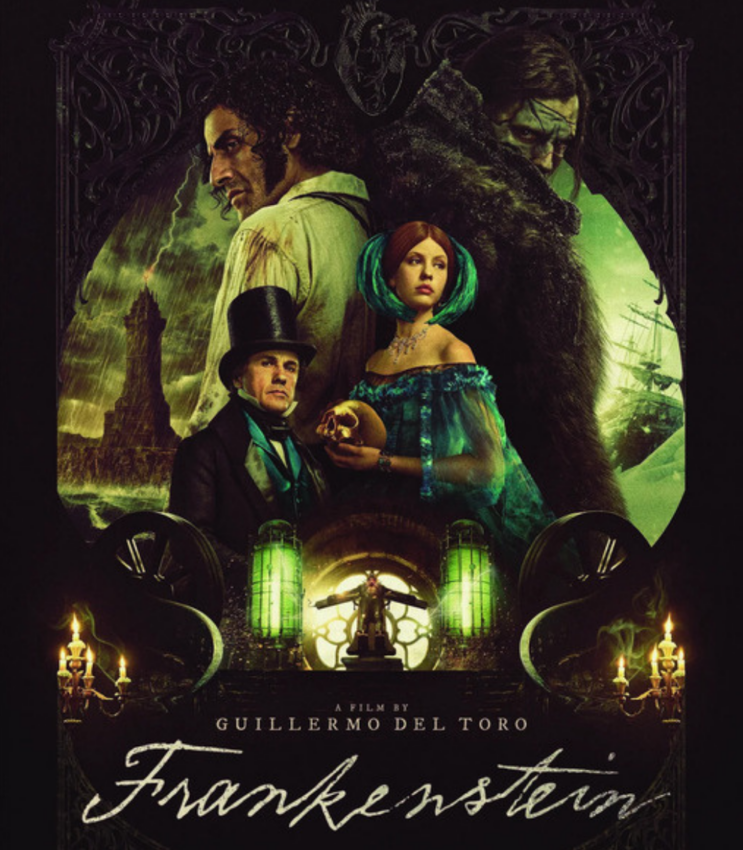
From Nosferatu to The Bride!, why every generation keeps resurrecting the same monsters — and making them its own.
Every few years, it happens again. A “new” wave of interest in a very old story suddenly emerges, taking on a “completely unique” interpretation of the classic, now modern and everywhere. This time, it’s Frankenstein.
With Guillermo Del Toro’s Frankenstein and Maggie Gyllenhaal’s The Bride! arriving almost back-to-back, Mary Shelley’s 1818 novel is once again being reinterpreted for a generation that didn’t grow up with Boris Karloff’s monster or black-and-white horror marathons. Just last year, vampires once again had their time in the sun (or out of it) with Nosferatu and Renfield — two wildly different takes on the same enduring myth.
The fact of the matter is that classic monsters don’t disappear. They just wait for the right cultural moment, and more importantly, the right generation, to emerge from their places in the shadows for new audiences to rediscover them. It’s a constant cycle of rest and revival. What’s interesting about right now isn’t that Frankenstein is back, but how it’s coming back and what that says about how these stories evolve over time.
Vampires are a good recent comparison. In 2024, they returned in two distinct forms: the stylized, atmospheric horror of Nosferatu and the comedic, self-aware spin of Renfield. One played it straight, the other played it sideways, but both relied on the same core mythology that audiences already understood. You don’t need to explain to the audience who Dracula is, how a vampire works or what the rules of the movie are. They’re already baked in.
Frankenstein is a completely different beast — literally. With Mary Shelley being a foundational figure in the history of the Gothic horror genre, and her novel being the birth of science fiction altogether, there is a different weight to the story. It’s less about the rules and more about the interpretation.
The 2025 iteration of Frankenstein leans into the emotional and philosophical side of the story and the complex nature of humanity through Victor and Adam’s relationship as inventor and creation — something Del Toro has been drawn to throughout his career.
Del Toro described this film as a “dream project” of his and was determined to remain faithful to Shelley’s work while exploring the relationships between the characters in a new way. Del Toro worked to ensure that practical effects were used as frequently as possible and that his interpretation of the classic would be as thrilling as the novel itself.
Critics described the project as a distinctly Del Toro tale that utilized the skeleton of Shelley’s work to its full potential, transforming it into a story of monstrous fathers and abandoned sons that remained faithful to the core pathos of the original text.
Meanwhile, Gyllenhaal’s The Bride! takes a more stylized, character-driven approach, focusing on the Bride in a way that older versions rarely did. She was eager to explore the character of the Bride of Frankenstein, who was technically introduced in the original novel but was destroyed before ever being brought to life.
In 1935, director James Whale decided to create a sequel film to the 1931 film Frankenstein, which explores a reality in which the Bride was not destroyed, and the creature was given a mate.
Gyllenhaal’s film was spurred on by the realization that, despite being the titular character, the Bride only had three to four minutes of screen time and never spoke an actual word of dialogue. Her film takes a more absurd and campy angle (setting the movie in 1930s Chicago), exploring a world in which the Bride is brought to life and finally given a voice and autonomy.
Both films used the same source material, but took completely different angles. That’s the key to why Frankenstein keeps returning. A true classic doesn’t come back as a replica. It comes back as a reinterpretation.
This cycle is especially noticeable with stories that have been adapted across multiple eras. Frankenstein has gone from early-stage productions to Universal Studios’ horror films, to modern reimaginings that range from serious drama to action-heavy spectacle. Each version reflects the time it was made in, but the core idea remains intact: creation, responsibility and what it means to be human. What changes in each iteration is the emphasis.
In earlier decades, Frankenstein was often framed as a warning about science and ambition. Later, it leaned more into horror and visual spectacle. Now, it’s being revisited with a focus on character and perspective, with Frankenstein (2025) discussing generational cycles of trauma and The Bride! shifting attention to a historically underdeveloped character.
These timeless stories influence every new wave of filmmakers. They grow up watching these classics, enthralled with the development of cinema and how a story that may seem outdated can repeatedly withstand the test of time. They’re not encountering Frankenstein for the first time; they’re responding to versions they’ve already seen. So instead of retelling the story exactly, they adjust it, question it or invert it entirely.
That’s exactly what audiences saw with vampires last year. Nosferatu revisited the origins of cinematic horror, exploring the tale of the unauthorized 1922 adaptation of Bram Stoker’s original Dracula, while Renfield modernized the dynamic and turned it into something closer to a character study with comedic elements. Neither film replaced nor rewrote the original myth. They added to it.
There’s also something practical about why these stories keep coming back. Studios know that recognizable material carries built-in interest. Audiences may not be familiar with the individual stories of the characters, but they know the basics of who or what these monsters are. This is the same reason why franchise films are almost always guaranteed to make their money back on opening weekend at the box office. People want to watch stories that are fully fleshed out, rather than having to spend half of a movie learning about new worlds and characters that they aren’t guaranteed to enjoy. But with monsters like Frankenstein or Dracula, there’s the added advantage of flexibility.
These stories aren’t locked into a single tone or genre, thanks to the history of storytelling that accompanies them. They can be horror, drama, romance, satire or all of the above. That flexibility makes them ideal for reinvention.
It’s also why the gap between major adaptations often lines up with generational turnover. Roughly every 10 to 20 years, there’s a new audience that hasn’t seen a definitive version in theatres. For them, the movies aren’t exactly a revival; they’re more of an initial introduction to a well-worn classic. They allow new generations entry into a world that has existed and evolved through decades of storytelling.
A student watching Frankenstein in 2026 isn’t comparing it to a 1931 film. They’re experiencing it as something current. The same way audiences approached Nosferatu last year, even though the original dates back over a century. That reset is what keeps these stories alive.
It’s also why tone matters so much in each cycle. The vampire resurgence leaned into contrast, one serious, one comedic, reflecting a broader trend of mixing genres and expectations. Frankenstein’s return seems to be doing something similar, but with a stronger emphasis on perspective, particularly through The Bride!.
And that may be the most telling part of this cycle. Not just that Frankenstein is back, but that the story is expanding to include voices and viewpoints that were previously sidelined. That’s how classics stay relevant. They don’t just repeat themselves; they adapt to what new audiences are interested in exploring. They step up to the plate to provide the current audience with a story that appeals to them in particular. At a certain point, it becomes less about the monster itself and more about what each generation chooses to do with it.
Frankenstein isn’t back because Hollywood ran out of ideas. It’s back because it never actually left. It was just waiting for a new generation to decide what it means.
The same thing will happen again, and again. In a few years, another classic will resurface, maybe werewolves or (my personal favourite) Dr. Jekyll and Mr. Hyde. Maybe something else entirely. It’ll be framed as a comeback, a revival, a trend. But really, it’ll just be the next turn in a long cycle that never fully stops.
Leave a Reply