
THE UNIVERSITY OF SASKATCHEWAN’S MAIN CAMPUS IS SITUATED ON TREATY 6 TERRITORY AND THE HOMELAND OF THE MÉTIS.
THE UNIVERSITY OF SASKATCHEWAN’S MAIN CAMPUS IS SITUATED ON TREATY 6 TERRITORY AND THE HOMELAND OF THE MÉTIS.
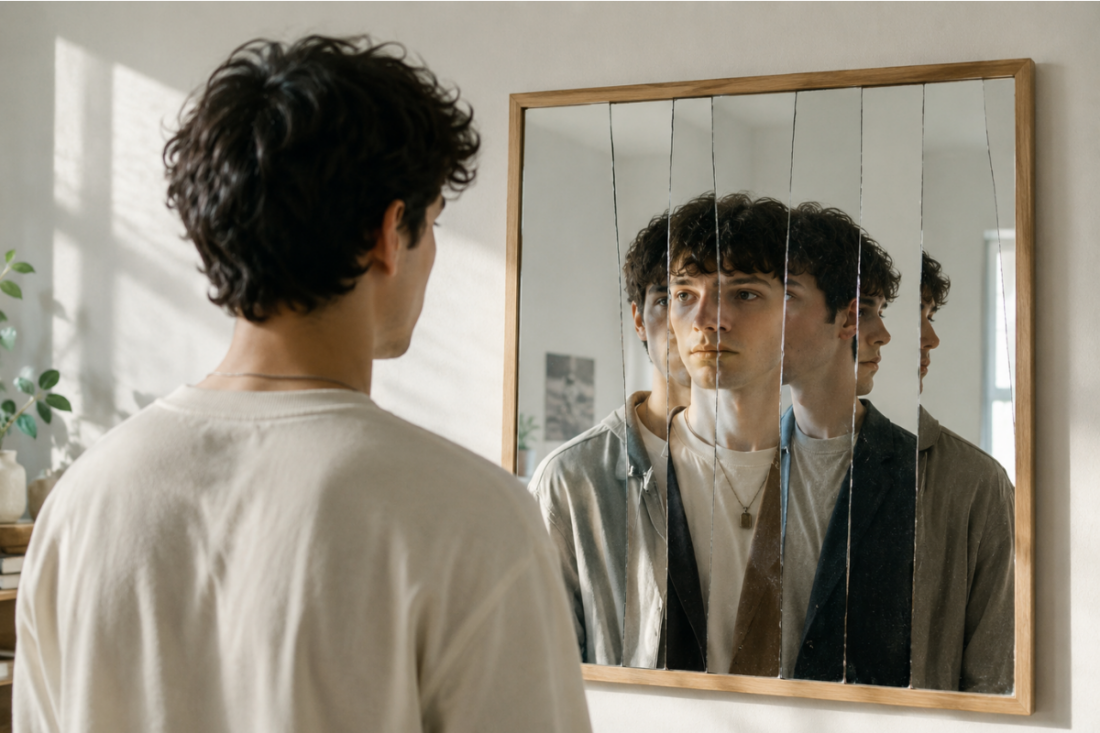
The world is a stage, and we are the actors. A reflective piece on the role masculinity has played in this author’s life and the roles he’s taken in women’s lives.
The “performative male” is a man who has taken on feminine traits in a disingenuous or potentially nefarious manner to seek the approval of women. The “performative male” of this trend uses matcha, feminist literature, sapphic music and tote bags to slither into women’s lives. What scared me about this trend was that I enjoy some of these things. I feared they were referring to me.
I often seek the approval of women, especially when they wear cool pants. Fortunately, I only like a few Beabadoobie songs, although if they listed Mitski or Rina Sawayama, I would have been distraught. Still, these are songs women often enjoy. Spotify often recommends me playlists named something like “Sapphic love ballads,” so I think it’s safe to say I am a performative male. Of course, Spotify recommendations aren’t the perfect barometer. By that measure, I am also apparently a performative coke dealer, but it’ll have to do.
Even if I am not a “performative male,” I’m certainly a “male who is performative.”
Why do I relate to this label? Why does a feeling of judgement well up within me? Why does it frustrate me even as it makes me laugh?
This answer that I seek, I believe it can only be found within myself. Within my past, a past strongly influenced by masculinity.
Part One: My history with toxic masculinity and women
I think back to when I was young. In Grade 2, I was obsessed with proving I was strong. To prove it, I threw a rock at a bird’s nest. There was a consequence. An innocence was lost. Someone so young is not well-equipped to understand the difference between strength and cruelty.
By Grade 4, I realized that I did not want to be feared by others and gave up on appearing strong. I had a falling out with my mother at 18, fell into poverty, fell out of it. While I was no longer preoccupied with strength, I was very concerned with power, because I knew what could happen if you lacked it. Then, at the age of 23, I finally began to learn how to talk to women.
The first friend I’d made in nine years was a woman. She was also my first real friendship with a woman. I fell for her, I hated myself for it. I decided that it had happened because I wasn’t friends with enough women and that I needed to understand and befriend them to grow as a person. As for that friend, I eventually realized I fell for her because of who she was. Everything else was just a story I told myself to avoid admitting it.
Anyways, I learned many lessons, many of them the hard way. Toxic masculinity, I came to understand, is closely tied to power. It is pervasive, and it appears in ways that are often subtle until they are not. Many of my friends are women now. I have often found those friendships harder to build, but more enduring once they exist. About half of my relationships with men end up withering away due to the very reputation that earned them the “performative male” label.
I have made women uncomfortable, women have made me uncomfortable and I have confronted men who make women uncomfortable. I’ve played the role of the hero, the villain and the victim in different people’s stories.
This journey of mine is the story of how I grappled with the toxic aspects of my own masculinity. I’m confident I would not have achieved this growth had I not been given grace by many women.
I believe people “perform” as a form of expression. They want to be seen a certain way. I relate to the “performative male” term because I want to be seen in a certain way, too. The way I want to be seen is a reflection of my inner self, adapted to be palatable to the world. I see someone, I think they are cool, perhaps they are wearing cool pants. I want to show them parts of myself that I think are cool, build rapport and lay down some yaps.
The “performative male” trend mirrors my own internal frustration and fear. It reflects the tension between the part of me shaped by masculinity to pursue women and the part of me that simply wants to know them, respect them and befriend them. In this trend, I see a microcosm of the increasingly complex dynamic between men and women. I understand it well, yet it frustrates me endlessly, and the perfect solution evades me.
Yes, men lie to women. However, matcha, feminist literature and the softer aesthetics? These are also green flags. A guy who reads feminist literature and engages in feminine hobbies should, at least in theory, be a green flag, right?
I work in a tech department where people often steal things. The thieves often dress and look a certain way, and this results in prejudice against other people who resemble them. So I ask this: if you were constantly treated as a thief, would you not grow to disdain those who treated you this way? Would the culture of judgment make you paranoid? Would it change how you moved through the world?
Something similar happens with men, though not in identical ways and not with identical consequences. When every man is treated as deceptive by default, suspicion can harden into a culture of judgment that leaves little room for growth.
There are males who genuinely enjoy these things, and they perform because they want women to feel safe. There are “performative males” who are lying, and they need to ask themselves why women feel safe around men who do these things. Then there is a middle ground of men who are drawn to feminine cultural traits, but don’t understand why.
Prejudice reduces these individuals into one “type”. Allowing this culture of judgment to thrive only serves the patriarchy. I think men who engage in feminine hobbies and read feminist literature should be celebrated. While I understand the “performative male” is not genuinely interested in these things, I remember a time when I was drawn to feminine hobbies largely because I was trying to make sense of the conflict that existed within my heart.
I know this prejudice exists because I’ve experienced it myself. I have been treated poorly by women who made quick assumptions about my appearance and intentions. I’ve even been within earshot as I was being mocked as someone’s friends tried to convince them I was just a friendly person. There are little tests, little disappearances, little rejections that arrive without explanation, and I have adapted to them. I act a certain way around new women to make them feel safe, a performance I engage in because I want to be accepted.
It hurts me, but I completely accept it because I know what some guys are like, I know what I used to be like and I know that women experience the consequences of that.
When I dress and act a certain way because I want to be accepted, I am making my own calculation about safety, trust and social consequence. Just as women frequently do. When I get rejected early because someone thinks I’m hitting on them, maybe they’re right? Maybe I’d catch feelings later or drift into some other kind of nonsense.
Still, I think if men constantly have bad experiences and are not given proper guidance, they will grow to resent and reject femininity altogether.
I don’t want the world to be this way. I want to live in a world where men and women can befriend and date each other without worrying about their physical safety. The frustration I carry is similar in nature to the frustration that started this trend. It’s also similar to the frustration carried by those salty dudes in the Instagram comments.
If you put a seed in a box, it will be protected, but it will not grow. Labels exist to organize and define things, but definitions can also become boxes. I believe that to give someone grace is to give them space to grow, and growth of individuals results in growth in community, which is one of our best tools for resisting cruelty, domination and reaction. The “performative male” moniker identifies something real, but it can also become a label that leaves no room for change.
Part two: Why it matters — the end result
Articles like this often end by assigning blame, clearing one side and condemning the other. I do not want to do that. If someone does not feel comfortable engaging with another person, that discomfort usually comes from a real sense of vulnerability. In any community, responsibility is shared, but those with the most power carry the greatest obligation to create change.
The breakdown of trust between men and women is not a small cultural annoyance. It shapes how people move through public life, how they understand power and how easily resentment can be weaponized. A culture built entirely on suspicion does not make people freer, but instead makes them feel lonelier and easier to radicalize.
What motivates us to perform? To be disingenuous? To be truthful? It comes from our own reflections and perceptions of ourselves and others. One of my favourite quotes by Ryokuu Saito puts this tension well:
“There are some people who hold the mirror and are not demons. They do not shine a light on demons, but create them. That is, a mirror is not something to be gazed at, but something to be contemplated.”
To me, the quote is about the difference between reflection and fixation. These judgments we inflict upon ourselves, and others can grow into powerful things.
Fear, hope, hatred and love.
All these things we carry within us give rise to who we are. They do not exist only internally; we release them through our expressions. These expressions accumulate and give rise to ideas, ideologies and trends. What we normalize in small cultural moments eventually becomes part of a larger political atmosphere.
The internet, like the heavens of old, has become a depository for these thoughts and desires. A vast mirror where our inner desires can be amplified and then be reflected back upon us. So, try not to gaze into it too much.
We are all expressing ourselves. Our words, our laughs, our tears. They are all but strokes on the canvas we paint for others to see. We contain multitudes, our inner desires and fears flicker like a candle and our companions are left interpreting the dancing shadows on the wall. It is worth it to seek wisdom, to understand the whims and desires of your own heart and the hearts of others.

Leave a Reply