
THE UNIVERSITY OF SASKATCHEWAN’S MAIN CAMPUS IS SITUATED ON TREATY 6 TERRITORY AND THE HOMELAND OF THE MÉTIS.
THE UNIVERSITY OF SASKATCHEWAN’S MAIN CAMPUS IS SITUATED ON TREATY 6 TERRITORY AND THE HOMELAND OF THE MÉTIS.
TOMAS BORSA
Opinions Writer
The federal government recently awoke from its catnap, and while rubbing their eyes and yawning contentedly, attempted to cut funding to Insite, Vancouver’s controversial safe-injection facility. For the time being at least, it will remain open since the B.C. Court of Appeal dismissed the appeal.
Insite receives federal and provincial funding and has been praised unanimously by the mayors of Vancouver and the premier of British Columbia, as well groups ranging from the British Medical Association to the International AIDS Society.
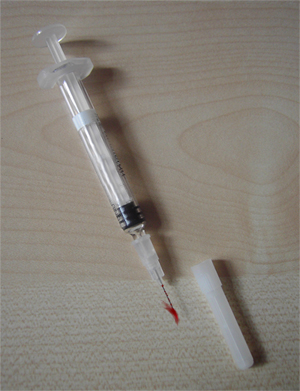
Insite is a provincial health care facility and it is hardly a scene from Trainspotting: paramedics, therapists and doctors are available to treat infections or respond to overdoses and a detox facility is housed upstairs. Insite’s primary aim has never been to prevent drug use, cure drug addiction or stand on a soapbox and preach about its wrongs.
Instead, the facility was created to reduce the risk of overdose, prevent the transmission of AIDS and Hepatitis C due to needle sharing and act as a point of first contact for addicts who, by nature of their lifestyle, are difficult to reach or are ill-informed about treatment options available to them. Thus, Insite is considered a “harm reduction strategy.”
The debates and interference surrounding Insite’s operations have never been about whether harm reduction is a better overall strategy than drug prevention: common sense dictates that it’s better to never have an epidemic than to mitigate it. But on the Downtown Eastside of Vancouver — where Insite operates — common sense can be left at the door.
The neighbourhood’s main industries are drugs, sex and robbery, and it is by far one of the most downtrodden postal codes in Canada. There is no place more desolate, desperate, or destructive; it is a rust puddle where spirits go to die.
To understand the rationale behind harm reduction — in lieu of prevention, without question a better overall strategy — you have to understand Insite’s geography, atmosphere, and demographic. The United Nations reports that 70 per cent of residents of the Downtown Eastside have hepatitis C and more than 30 per cent have AIDS. It is what hell had its interior décor modelled after.
I suppose the obvious question is this: why do I, a non-junkie (or so you presume, dear reader) care about the goings-on of a small but controversial outfit in Vancouver? I object to the federal government’s interference with Insite because while I am in no way supportive of drug use, I am fully supportive of rationality.
The list of third-party or commissioned studies that have concluded that Insite is not just effective, but indeed an exemplary program, are too many to fully list here. A short summary of the findings might read that Insite has reduced the number of people injecting in public, has reduced the amount of discarded needles in the Downtown Eastside, and is neither increasing relapse rates nor preventing those interested in quitting from kicking their habit (in fact, it has done the opposite).
The federal government’s stance is that Insite is little more than a glossy peddling front, which represents an ideological showdown between good and evil. The suggestion appears to be that, because Insite operates under an exemption from federal drug policy, addicts are more comfortable in experimenting with niche drugs, higher dosages or combinations of drugs. No evidence, either reputable or fantastical, has ever been advanced to support this.
The other claim that has been made is that Insite undercuts efforts of the Vancouver Police in prohibiting the use of drugs altogether. Well, addicts have moments of clarity, not hours or days. If an addict chooses to inject in a well-lit, warm room instead of in the park at your child’s fourth birthday party, I would say that represents more than a minor victory.
If one looks at the results — and I hope I’m not going out on a limb by suggesting that’s what social programs are meant to deliver — the arguments on behalf of the federal government are dead on arrival. Insite has drastically reduced the spread and incidences of hepatitis C and AIDS in the Downtown Eastside, has led to increased uptake into detox and behavioural therapy programs and has reduced needle sharing by 70 per cent.
Since opening, there have been around 700 overdoses at Insite. Not one has resulted in a fatality. As a harm-reduction and disease prevention strategy, Insite works. It always has. That is in no way incompatible with a concurrent drug-prevention strategy — and if a provincial or federal body wants to use their time to draft such a program, I’m sure it would be met with open arms.
And of course, the timing of this most recent surge in federal moral concern is more than a little suspicious. As the Olympics approach, our government is inevitably and understandably going to want to polish the silverware and starch the napkins a little more than normal. But is an interpretation of morality really worth risking lives over?
As it stands, the federal government’s stance would seem to be: “Addicts: please refrain from dying in public places and kindly clean up the mess if you do.” Beijing had cultural training workshops and built shelters for the homeless to divert their grubby gaze from the cameras, but here in Canada, we don’t build safe houses; we board them up.
– –
photo: Flickr / CC BY-ND 2.0