
THE UNIVERSITY OF SASKATCHEWAN’S MAIN CAMPUS IS SITUATED ON TREATY 6 TERRITORY AND THE HOMELAND OF THE MÉTIS.
THE UNIVERSITY OF SASKATCHEWAN’S MAIN CAMPUS IS SITUATED ON TREATY 6 TERRITORY AND THE HOMELAND OF THE MÉTIS.
JOEL RACKEL
The Gateway (University of Alberta)
EDMONTON (CUP) ”“ Scholars of English will probably roll their eyes when they see a new 3D animated Disney adaptation of A Christmas Carol, the Charles Dickens classic. “Oh, poor Dickens is being toyed with yet again,” they’ll say. But the film’s writer, producer and director, Academy Award-winner Robert Zemeckis, hopes to show those stodgy literary purists that they’re wrong.
Zemeckis’s respect for Dickens is obvious, calling him “the greatest writer in the English language.” The new film was made using performance capture animation, a medium Zemeckis pioneered with 2004’s The Polar Express and again in 2007 on Beowulf. He believes using the style of animation gave him and his crew the ability to tell Dickens’s story accurately.
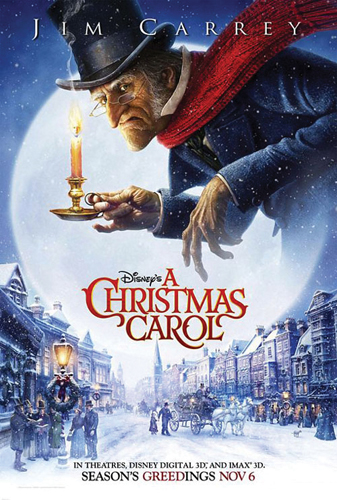
“I think A Christmas Carol is one of the classic books that has such scale and such scope. It’s so fantastic and deals in the realms of time travel and ghosts, and the supernatural and all this great stuff. We never had the cinematic tools to really present it as spectacularly as it was written . . . (It has) always been adapted to the screen with limitations,” Zemeckis explained.
Performance capture filming has no traditional cameras. Instead, it uses a process of placing numerous infrared sensors on an actor and digitally recording or capturing their movements, right down to facial and eye twitches. The performance is saved to a computer and given digital hair, skin and clothing. The result is not only stunningly realistic animation, but also the ability to control how the actors look at all times.
Therefore, in A Christmas Carol, Jim Carrey is able to play numerous characters, including Scrooge at four different ages and the three ghosts of Christmas past, present and yet to come.
“I felt that I have a great actor who can do any kind of character, so it was a logical extension in my mind,” said Zemeckis of using Carrey for multiple roles in the film. “Let’s say Scrooge is having this nightmare. These ghosts would be an extension of his alter ego, so there could be some of Scrooge in all the ghosts.”
The virtual characters are placed into a digitally created set. The creation of a virtual set from scratch gave Zemeckis power to represent Victorian London in a way that previous adaptations of A Christmas Carol could not.
“One of the most spectacular things we do is we create London in the 1840s. But not just a hundred-yard facade of set . . . you can do anything, it’s digitally painted. We no longer have any technical limitations.”
Zemeckis is careful to let the Dickens story tell itself, trying to maintain the tone and language of the original piece, he says. He sees 3D animation as merely embellishing Dickens’s intellectual material and giving the audience an emotional handle on the story. The result, he hopes, is that people will be more interested and enlightened by Dickens.
“The test audiences we’ve been showing the movie to, people think they know the story but . . . they say ”˜Oh I didn’t know it had all this in there.’ That, I think is what I’d like people to take away from it. It’s really one of the greatest stories, and maybe they might want to go back and read it after they see it, which might be a nice thing.”

Leave a Reply