
THE UNIVERSITY OF SASKATCHEWAN’S MAIN CAMPUS IS SITUATED ON TREATY 6 TERRITORY AND THE HOMELAND OF THE MÉTIS.
THE UNIVERSITY OF SASKATCHEWAN’S MAIN CAMPUS IS SITUATED ON TREATY 6 TERRITORY AND THE HOMELAND OF THE MÉTIS.
JORDAN HARTSHORN
Arts Writer
There is no shortage of love for AMC’s Mad Men.
The drama, centered around 1960s ad executives on New York’s Madison Avenue, has rarely received a review that did not christen it modern television’s golden child. The Emmy wins have been endless and Mad Men-themed parties are in vogue.
Benjamin Schwarz describes Mad Men as the “megamovie of the moment,” that being a sophisticated, expansive drama in the vein of similar productions such as The Wire and Deadwood. Series producer Matthew Weiner was praised by Tim Goodman of the San Francisco Chronicle for his “writing prowess and original vision.”
Yet, the more I watch this show I can’t help but feel it is only an echo of a previous drama — one Weiner helped produce: the similarly acclaimed The Sopranos which ended its seven-season run in 2007.
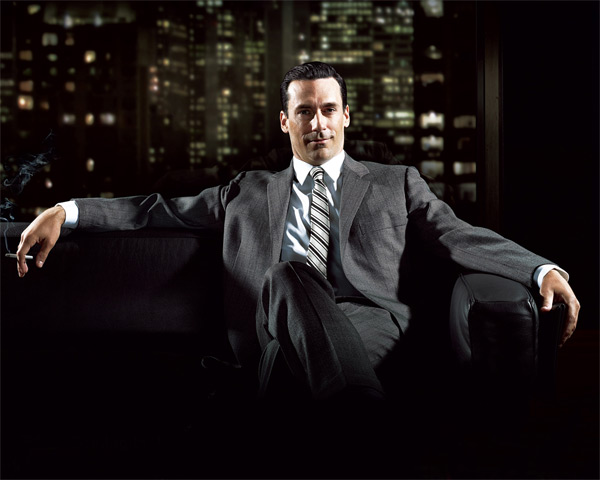
The two series share a protagonist who is pained by an overwhelming existential crisis while struggling to maintain the highest office in his profession and still fulfill the role as family patriarch. New Jersey Mafia boss Tony Soprano opens the pilot episode with a visit to his psychiatrist, stating his fear that he “missed out” on America’s golden era, setting the stage for his angst throughout the course of the series.
Meanwhile, Mad Men’s Don Draper struggles to provide adequate material for advertising agency Sterling-Cooper, all the while attempting to come to terms with the apparent futility of existence. In one of the series’ memorable scenes, Don, after a few too many tokes of marijuana, remarks to some beatniks that “there is no big lie. There is no system. The universe is indifferent.”
Both Soprano and Draper seek to fill their emptiness via an abundance of extramarital affairs, but only succeed in the sexual. Their philandering results in the collapse of their family unit and the mistrust of their spouses and children.
The similar character archetypes continue. Pete Campbell, a young, yet eager employee bristles under Don’s leadership and comes across as a rehashing of Christopher Moltisanti, The Sopranos’s troubled heir apparent who, while ambitious, struggles to co-operate with his boss Tony. Vito Spatafore, a closet homosexual in Tony Soprano’s crew, is forced to confront the ardent homophobia of his fellow Mafioso, while Salvatore Romano must do likewise in the white-washed, hetero-normative world of 1960s ad executives.
The Sopranos and Mad Men possess dark and borderline depressing narratives that lament the loss of the ego in the postmodern model world. The Mafioso in The Sopranos attempt to assuage their loss of meaning in the world by becoming the centre of it, asserting themselves over weaker, more ineffectual individuals. Mad Men fares no better in answering who we are and where we’re going with its protagonist Draper. He is the engine of the Sterling-Cooper advertising agency but wants nothing more than to flee his family and job and start over in the French Riviera.
It is this strong sense of moral ambiguity — much praised during The Sopranos — that makes Mad Men just as alluring. As Schwarz explains, despite the inherent wrong he commits against his wife Betty via his extramarital affairs, Don’s suave yet chivalrous manner makes the viewer almost hope Betty doesn’t find him out. And since when was rooting for the success of an ad campaign for smoking the thing to do?
However, the commonalities between the two shows does not diminish the Mad Men experience. The show’s aesthetics are, as a friend once described, akin to visual masturbation. Although somewhat similar to character types of a previous show, there is a depth to the Mad Men characters which one can appreciate all on their own account.
Yet, whenever Don laments his existence and pines for a better day, I cannot help but think that he is an early manifestation of Tony Soprano, the difference being that Tony actually went to a psychiatrist.

Leave a Reply