
THE UNIVERSITY OF SASKATCHEWAN’S MAIN CAMPUS IS SITUATED ON TREATY 6 TERRITORY AND THE HOMELAND OF THE MÉTIS.
THE UNIVERSITY OF SASKATCHEWAN’S MAIN CAMPUS IS SITUATED ON TREATY 6 TERRITORY AND THE HOMELAND OF THE MÉTIS.
MATT CHEETHAM
News Writer
Going green doesn’t just mean recycling anymore; it also involves conserving computer use.
The U of S Office of Sustainability is trying to do just that. They had a talk on computer-related energy use as part of the University of Saskatchewan Student Union’s Green Yourself Week on Oct. 19. Margret Asmuss, sustainability coordinator for the Office of Sustainability, organized* a lecture in the Arts building on this very topic.
Asmuss, who has done some research in this area, wanted to get the ball rolling so more people would be aware of the problem. This will hopefully lead to some solutions around campus about conserving computer energy within the information technology departments and service centers.
“The university is making really good progress on the sustainability front in a number of ways but we haven’t really tackled the question, ”˜What is IT’s role in all of this?’”
IT plays a huge part in the new global economy and community, so any impact it has is necessarily huge.
“It’s not just the personal computer but also the infrastructure. Current estimates are that it is producing more greenhouse gas emissions than the aviation sector,” said Asmuss.
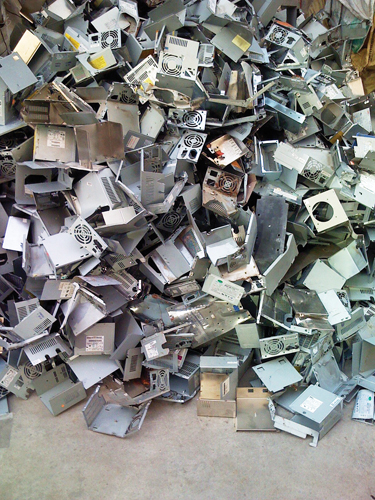
Asmuss is also concerned about the increasing amount of built-up energy in server rooms, service centres that are being stored with no real function and electronic waste, which Asmuss says is now becoming a major issue because people are switching over computers more frequently.
“Obviously the whole IT sector is part of the sustainability problem, as much as we don’t want to recognize it,” she said. “The question now is, does that have to be the case or can IT be part of the solution?”
Asmuss said she is happy that steps are being taken to better conserve energy but there is still a long way to go both on campus and in society.
“I think in some ways, computers themselves have become more energy efficient. The laptop you have now is more efficient than (the one) you had five years ago, but at the same time this infrastructure keeps growing. There is efficiency being gained but at the same time the IT sector is not going to stop growing.”
Asmuss had one suggestion for the U of S ”“ people could be informed about the amount of energy campus computers are using or putting out.
“For example, you could have monitors in buildings in real time that would be showing people what is going on.”
Asmuss realizes the discussion on Oct. 19 didn’t answer all the questions or offer any final solutions, but she wants to get the message out there so people will start talking. In the future there could be a panel discussion with members of the IT department to have a discussion on the subject.
“Computers are so much a part of our life (that) we don’t really take a step back and think beyond the impact on our desk. We don’t think about the bigger picture. Someone told me that every time you do a Google search, you use the same amount of electricity that you would use to boil a kettle.”
– –
photo: Bert Van Dijk
*The article originally stated that Margaret Assmuss delivered a talk at the Arts building. Asmuss only organized the talk; others spoke at the event.

Leave a Reply